Equipment
Ingredients
Produce
- 1 yellow onion, finely diced
- 2 garlic, minced
- 250 g green cabbage, shredded, core removed
Meat
- 300 g sweet italian sausage, casings removed
Pantry & Dairy
- 1200 ml chicken broth, hot
- 15 ml olive oil
- 300 g arborio rice
- 120 ml dry white wine
- 50 g parmigiano-reggiano, freshly grated
- 30 g unsalted butter, cold, cut into cubes
- kosher salt
- black pepper
Nutrition (per serving)
Method
Pour the chicken broth into a medium saucepan and bring to a gentle simmer over medium heat. Reduce heat to low to keep it hot throughout the cooking process.
Heat olive oil in a heavy-bottomed pot over medium-high heat. Add the sweet Italian sausage, breaking it up into bite-sized pieces with a wooden spoon. Cook until browned and the internal temperature reaches 74 degrees Celsius (165 degrees Fahrenheit). Use a slotted spoon to transfer the sausage to a plate, leaving the rendered fat in the pot.
Lower the heat to medium. Add the finely diced yellow onion and shredded green cabbage to the residual sausage fat. Cook, stirring occasionally, until the onion is translucent and the cabbage has wilted significantly.
Stir in the minced garlic and Arborio rice. Cook, stirring frequently, until the garlic is fragrant and the edges of the rice grains become translucent while the center remains opaque.
Pour the dry white wine into the pot. Stir constantly and scrape up any browned bits from the bottom of the pan. Cook until the sharp smell of alcohol dissipates and the liquid is almost entirely absorbed by the rice.
Begin adding the hot broth using a ladle, about 150ml at a time. Stir frequently and gently, allowing the rice to absorb most of the liquid before adding the next ladle. Continue this process until the rice is tender but still retains a slight firmness in the center.
Return the browned sausage and any accumulated juices from the plate back into the pot. Stir to combine and warm the meat through.
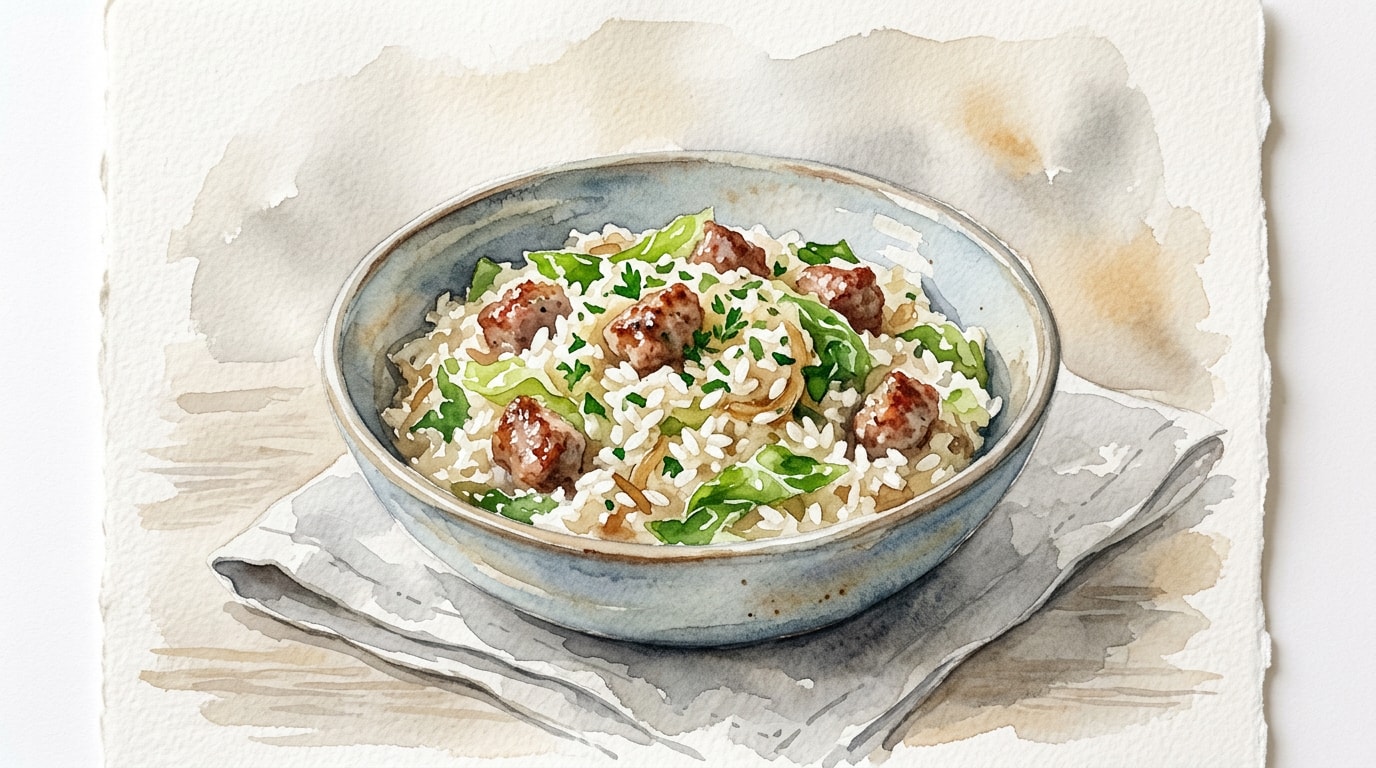
Remove the pot entirely from the heat. Vigorously stir in the cold, cubed unsalted butter and grated Parmigiano-Reggiano until completely melted and emulsified into a glossy, velvety sauce. Season with kosher salt and black pepper to taste.
Cover the pot and allow the risotto to rest undisturbed before serving. Ladle into warm shallow bowls.
Chef's Notes
- The mantecatura, which translates roughly to 'making it buttery', is the final off-heat stirring phase. Using cold butter is essential because it melts slowly, allowing the fat to emulsify with the starches seamlessly rather than separating into an oily pool.
- Always keep your broth hot in a separate pot. Adding cold liquid to the cooking rice drops the temperature, shocking the starch and causing the grain to cook unevenly or shed its starch improperly.
- Toasting the rice initially is crucial. It creates a subtle shell around the grain, ensuring it holds its shape during the prolonged cooking process while slowly releasing starches into the surrounding broth.
- Cabbage varieties and ages differ in their moisture content. If your cabbage is particularly mature or dry, you may need a splash more broth to achieve the perfect flow in your final risotto.
Storage
Refrigerator: 3 days — Store in an airtight container.
Reheating: Reheat gently on the stove over low heat, stirring in a splash of water or broth to restore creaminess.