Equipment
Ingredients
Beef Stew Base
- 900 g beef chuck roast, cut into 3cm cubes
- 30 ml olive oil
- 1 yellow onion, diced
- 3 carrots, peeled and cut into thick chunks
- 2 celery stalks, sliced
- 400 g potatoes, peeled and cubed
- 4 garlic, minced
- 30 g tomato paste
- 900 ml gluten-free beef broth
- 30 ml gluten-free worcestershire sauce
- 5 g fresh thyme, tied in a bundle
- 2 bay leaf
- 15 g cornstarch
- 15 ml water, cold
Gluten-Free Dumplings
- 180 g gluten-free 1-to-1 baking flour
- 10 g baking powder
- 3 g salt
- 45 g unsalted butter, cold and cut into small cubes
- 120 ml whole milk, cold
- 5 g fresh parsley, finely chopped
Nutrition (per serving)
Method
Heat the olive oil in a large skillet over medium-high heat. Season the beef cubes generously with salt and pepper, then sear on all sides until a dark brown crust forms, about 5 to 7 minutes. Transfer the browned beef to the slow cooker.
In the same skillet, saute the diced yellow onion, chunks of carrots, and sliced celery for 4 minutes until they begin to soften. Add the minced garlic and tomato paste, stirring constantly for 1 minute until fragrant. Scrape this mixture into the slow cooker.
Add the cubed potatoes, gluten-free beef broth, gluten-free Worcestershire sauce, fresh thyme bundle, and bay leaves to the slow cooker. Stir everything gently to combine and distribute the ingredients evenly.
Cover the slow cooker and cook on the low setting for 7 hours. The beef must reach a safe internal temperature of 74°C/165°F, though it will naturally exceed 93°C/200°F during this long cooking process, which breaks down the connective tissues and ensures maximum tenderness.
About 45 minutes before the stew is finished, prepare the dumpling dough. In a mixing bowl, whisk together the gluten-free baking flour, baking powder, salt, and chopped parsley. Cut the cold butter into the dry ingredients using a pastry blender or clean fingers until the mixture resembles coarse crumbs.
Gradually pour the cold whole milk into the flour and butter mixture. Stir gently with a spoon or fork just until a thick, sticky dough forms. Be careful not to overwork the dough, which can make gluten-free baked goods dense.
In a small bowl, whisk the cornstarch and cold water together to create a smooth slurry. Remove the lid from the slow cooker, discard the thyme bundle and bay leaves, and stir the slurry into the hot stew. Turn the slow cooker heat setting to high.
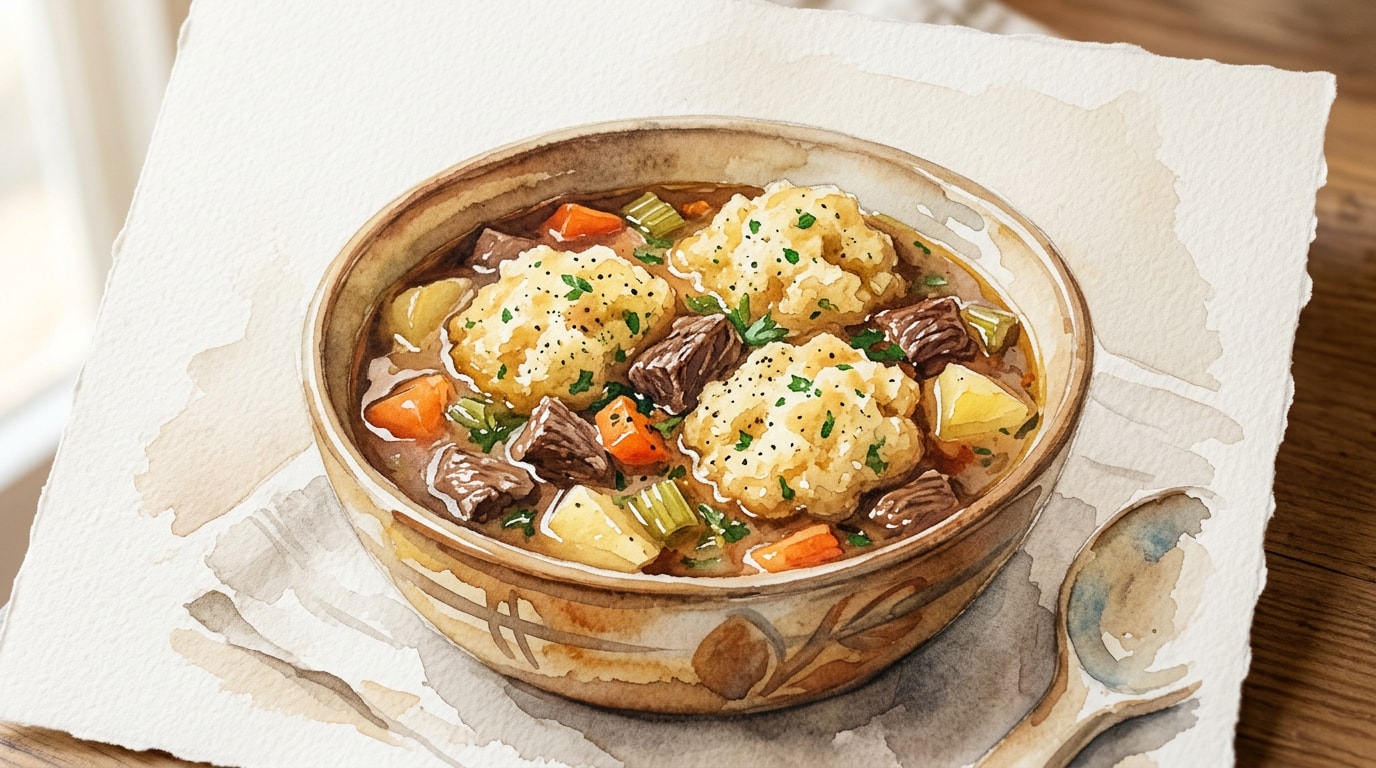
Drop tablespoon-sized mounds of the dumpling dough directly onto the simmering surface of the stew, spacing them out slightly so they have room to expand. Quickly place the lid back on the slow cooker and cook on high for exactly 30 minutes. Do not lift the lid during this time.
Check the center of the largest dumpling by inserting a toothpick; it should come out clean without wet batter. Serve the stew hot in wide bowls, ensuring each portion gets a generous ladle of thick gravy and a fluffy dumpling.
Chef's Notes
- Always take the time to deeply sear your beef chuck before slow cooking. The Maillard reaction creates a complex, savory flavor foundation that a slow cooker simply cannot achieve on its own.
- For the lightest, fluffiest gluten-free dumplings, keep your butter ice cold and avoid overworking the dough. Gluten-free flours absorb liquid differently than wheat flour, so a shaggy, slightly wet dough is exactly what you want before steaming.
- Resist the urge to peek while the dumplings are cooking. The trapped steam is the only leavening environment they have to puff up. Releasing that steam halts the rise instantly.
- If your gluten-free flour blend does not include xanthan gum, you must add 2 grams to the dry mixture to provide the elasticity and structure the dumplings need to avoid disintegrating into the broth.
- Using a gluten-free Worcestershire sauce is critical, as many traditional brands contain malt vinegar derived from barley. Always check labels meticulously when adapting savory sauces.
Storage
Refrigerator: 3 days — Store leftover dumplings separately from the stew broth if possible to prevent them from becoming completely waterlogged and disintegrating.
Freezer: 3 months — The stew freezes exceptionally well. Do not freeze the dumplings; prepare a fresh batch when reheating the thawed stew.
Reheating: Reheat stew gently on the stove over medium heat until simmering. If reheating with dumplings, place a lid on top to allow the steam to warm them through without stirring vigorously.