Equipment
Ingredients
Halibut
- 4 halibut steaks, skin-on or skinless
- salt
- black pepper
- 30 ml olive oil
Red Wine Olive Sauce
- 120 ml dry red wine
- 1 shallot, finely minced
- 2 garlic, minced
- 60 g kalamata olives, pitted and roughly chopped
- 30 g capers, drained
- 45 g unsalted butter, cold, cubed
- 10 g fresh parsley, chopped
Nutrition (per serving)
Method
Pat the halibut steaks very dry with paper towels. This ensures a good sear rather than steaming. Season liberally with salt and black pepper on both sides.
Heat 20ml of olive oil in a large skillet over medium-high heat until the oil shimmers but does not smoke. Carefully place the fish in the pan.
Sear the fish undisturbed for 3-4 minutes until a golden crust forms and the fish releases easily from the pan. Flip and cook for another 2-3 minutes until the internal temperature reaches 55°C-60°C (130°F-140°F) for medium doneness, or up to 63°C (145°F) for full safety.
Transfer the fish to a warm plate and set aside. In the same pan, reduce heat to medium and add the remaining 10ml olive oil and minced shallot. Sauté for 1 minute until fragrant.
Add the minced garlic and cook for another 30 seconds, being careful not to burn it.
Deglaze the pan with the red wine, scraping up any browned bits (fond) from the bottom. Simmer briskly until the liquid reduces by about half.
Reduce heat to low. Stir in the olives and capers. Add the cold cubed butter one piece at a time, whisking constantly until the sauce is glossy and emulsified.
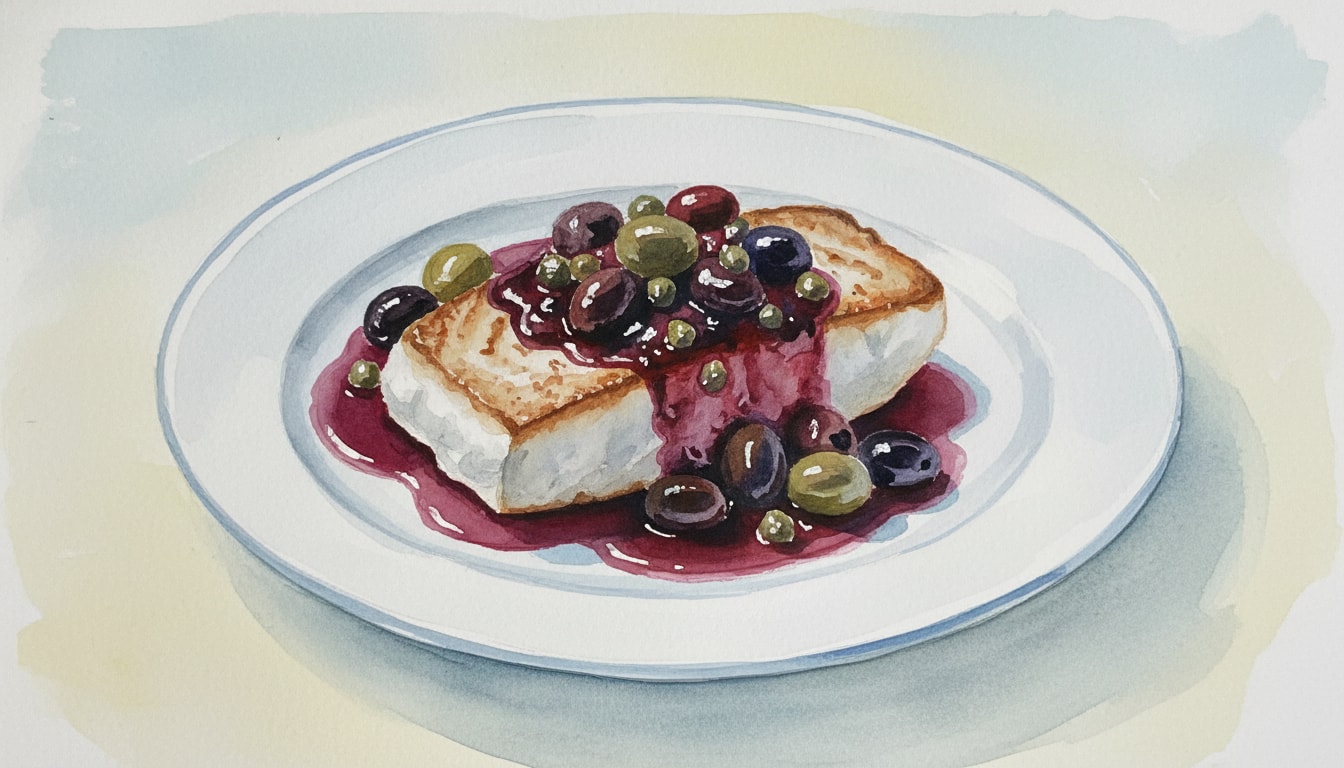
Stir in the fresh parsley, taste and adjust seasoning if needed (capers and olives are salty, so you may not need extra salt). Spoon the sauce generously over the rested halibut steaks and serve immediately.
Chef's Notes
- Halibut is a lean fish that can dry out quickly. It is better to slightly undercook it in the pan and let the residual heat finish it while you make the sauce.
- Using cold butter is crucial for the sauce; as it melts slowly, the milk solids help bind the fat and wine into a creamy emulsion.
- If red wine feels too heavy for you, a dry white wine or rosé works equally well with this flavor profile, though red provides a classic 'meaty' contrast to the white fish.
- Serve this with roasted potatoes or a simple arugula salad to cut through the richness of the sauce.
Storage
Refrigerator: 2 days — Store fish and sauce in separate airtight containers if possible. Reheat gently to avoid overcooking fish.
Reheating: Gently warm in a skillet over low heat with a splash of water, or steam briefly.