Equipment
Ingredients
Fish
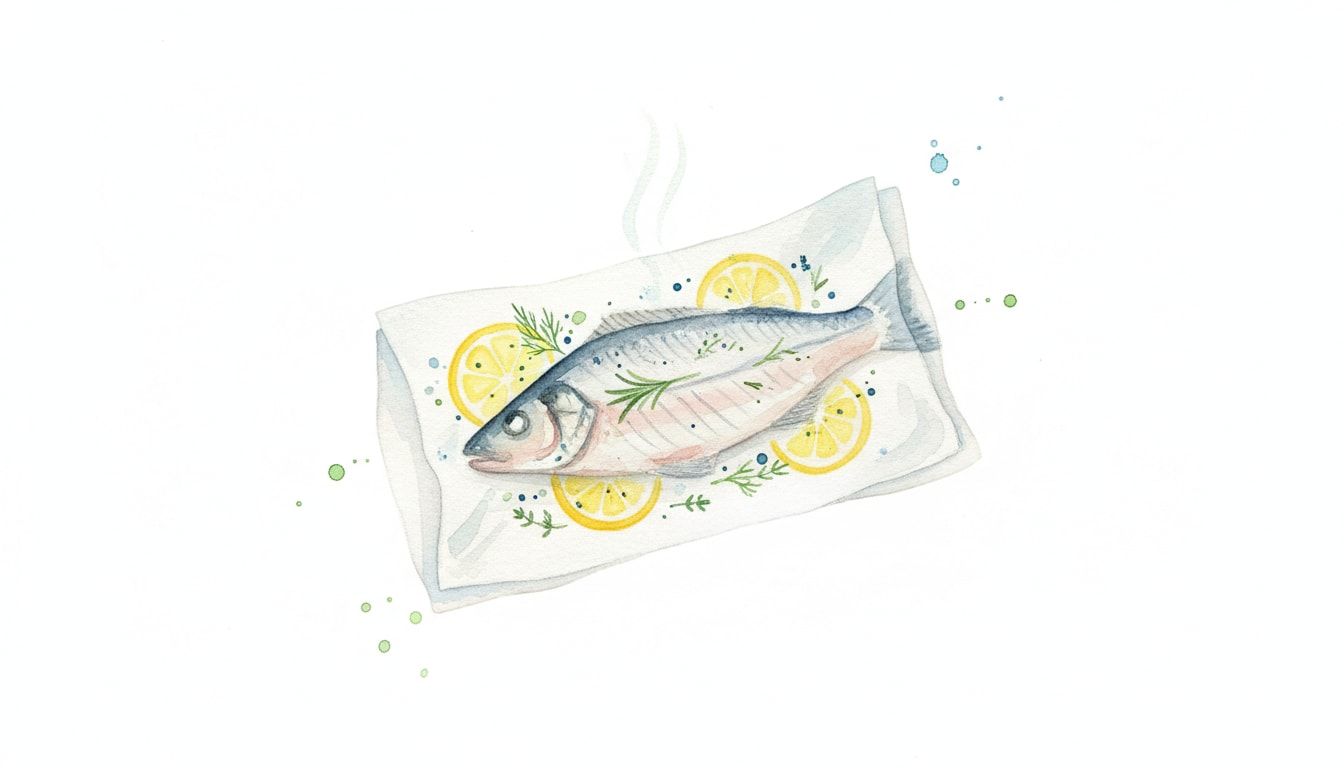
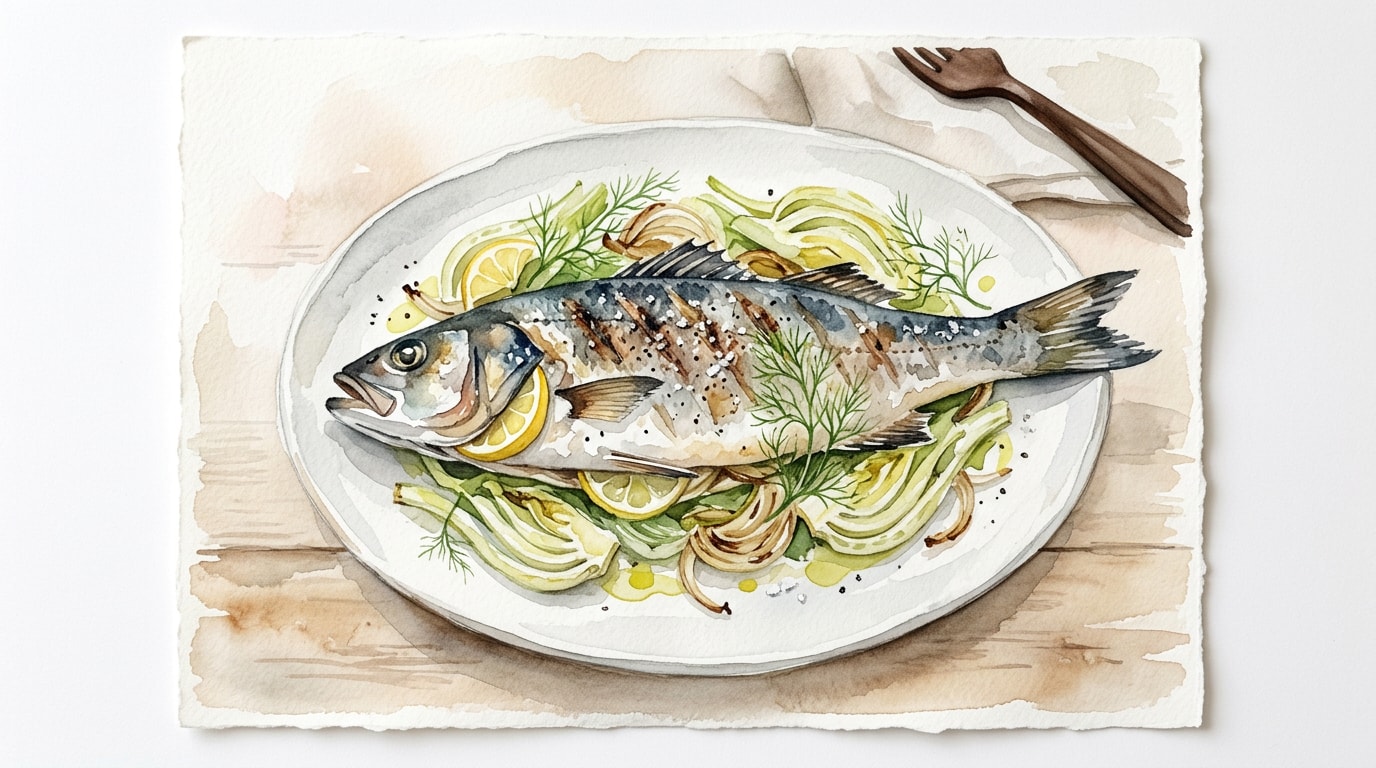
- 800 g whole sea bass, cleaned, scaled, and gutted
Aromatics and Seasoning
- 150 g fennel stalks and fronds, washed and kept whole
- 100 g fennel bulb, thinly sliced
- 1 lemon, thinly sliced
- 2 garlic, smashed
- 45 ml extra virgin olive oil
- 10 g coarse sea salt
- 2 g black pepper, freshly cracked
Nutrition (per serving)
Method
Preheat the outdoor grill to medium-high heat, approximately 200°C/400°F. Ensure the grates are very clean to prevent the fish from sticking.
Using paper towels, pat the sea bass completely dry inside and out. Use a chef's knife to score the skin diagonally 3 to 4 times on each side.
Rub the extra virgin olive oil generously over the exterior and interior of the fish. Season thoroughly inside the cavity and outside on the skin with the coarse sea salt and black pepper.
Stuff the cavity of the sea bass evenly with the smashed garlic, lemon slices, and thinly sliced fennel bulb.
Lay half of the whole fennel stalks and fronds flat on a cutting board. Place the stuffed fish on top, then cover it with the remaining fennel stalks. Tie kitchen twine around the fish in three to four places to secure the fennel envelope.
Place the fennel-wrapped fish onto the preheated grill. Cook undisturbed for 8 minutes on the first side. The fennel will char heavily and begin to smoke, imparting an aromatic anise flavor to the flesh.
Carefully slide a fish spatula under the fish and flip it. Grill for another 7 to 8 minutes on the second side, until the thickest part of the fish registers 63°C/145°F and the flesh is completely opaque and flakes easily.
Remove the fish from the grill and let it rest on a clean cutting board for 5 minutes. Carefully snip away the kitchen twine and discard the heavily charred outer fennel stalks before transferring to a platter. Serve immediately.
Chef's Notes
- Enveloping the fish in fennel stalks protects the delicate flesh from harsh, direct grill heat while infusing it with a sweet, herbaceous aroma.
- Always pat your fish completely dry before oiling and seasoning. Excessive moisture turns to steam, which prevents a proper sear and can lead to a mushy texture.
- The charred outer fennel stalks are meant to act primarily as a protective, flavor-enhancing barrier; they are generally too fibrous and burnt to eat and should be discarded after grilling.
- If you cannot find whole fennel stalks, you can achieve a similar protective effect using a grilling basket lined with slices of lemon and fennel bulb.
Storage
Refrigerator: 2 days — Store in an airtight container. The fennel wrapping should be discarded before storage.
Reheating: Reheat gently in an oven at 150 degrees Celsius until just warmed through to prevent overcooking.