Equipment
Ingredients
Lamb
- 4 lamb shanks
- 10 g kosher salt
- 5 g black pepper, freshly ground
- 30 ml olive oil
Vegetables and Aromatics
- 500 g waxy potatoes, peeled and quartered
- 300 g carrots, cut into large chunks
- 200 g red onion, cut into thick wedges
- 4 garlic, smashed
- 10 g dried oregano
Braising Liquid and Finish
- 120 ml dry white wine
- 500 ml chicken broth, low sodium
- 5 g lemon zest, finely grated
- 60 ml lemon juice, freshly squeezed, divided
- 15 g fresh parsley, finely chopped
Nutrition (per serving)
Method
Pat the lamb shanks completely dry with paper towels. Season generously on all sides with the kosher salt, black pepper, and half of the dried oregano.
Preheat the oven to 160C/320F.
Heat the olive oil in a large Dutch oven over medium-high heat. Sear the lamb shanks until deeply browned on all sides. Remove the shanks using tongs and set them aside on a plate.
Reduce the heat to medium. Add the red onion, carrots, and potatoes to the Dutch oven. Saute until the onions soften slightly and the vegetables pick up some color.
Pour in the dry white wine to deglaze the pot, using a wooden spoon to scrape up any browned bits from the bottom. Simmer until the wine has reduced by half.
Return the lamb shanks to the pot, nestling them among the vegetables. Add the smashed garlic, remaining dried oregano, lemon zest, half of the lemon juice, and chicken broth. Bring the liquid to a gentle simmer.
Cover the Dutch oven with a tight-fitting lid and transfer it to the preheated oven. Braise for 2 to 2.5 hours, or until the lamb meat easily pulls away from the bone and reaches an internal temperature of at least 74C/165F.
Carefully remove the pot from the oven. Skim any excess fat from the surface of the braising liquid. Let the shanks rest in the sauce for 15 minutes.
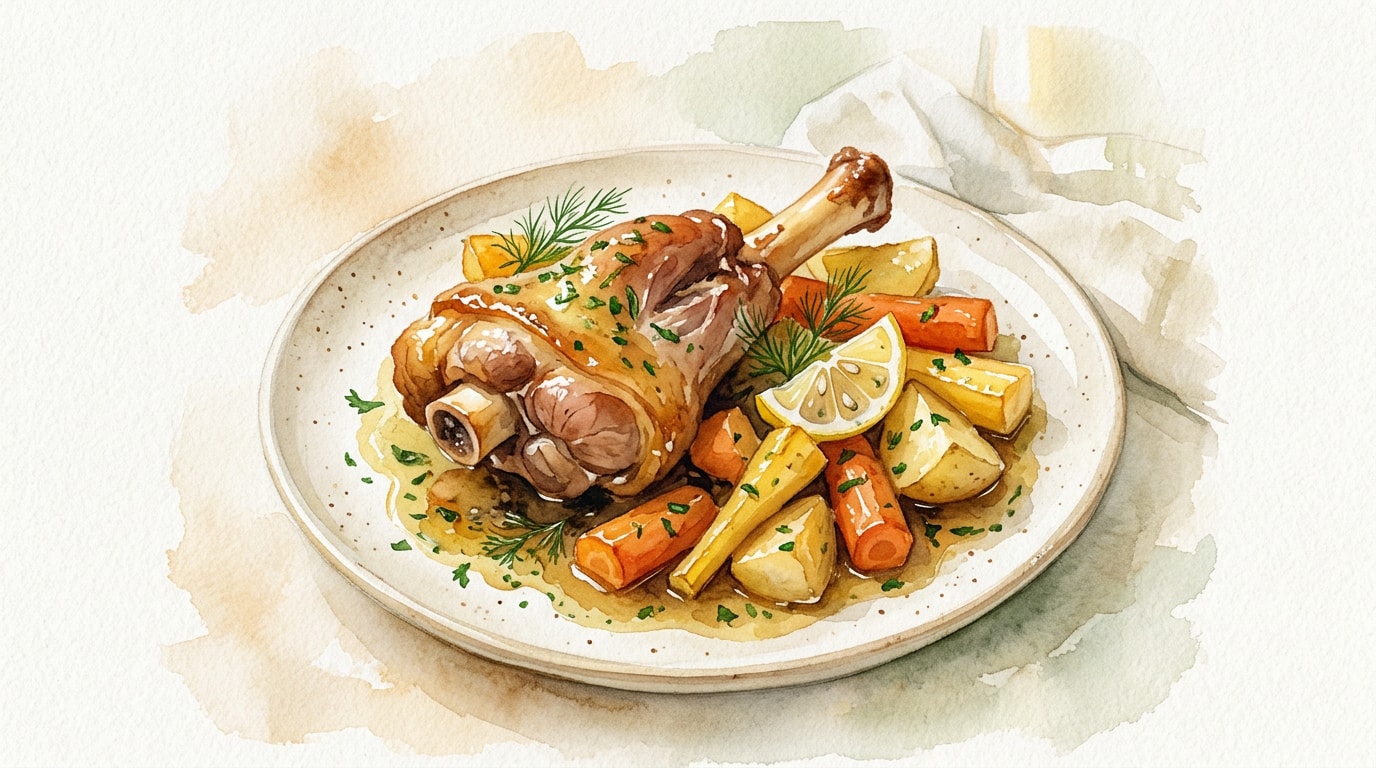
Stir the remaining lemon juice into the sauce to brighten the flavors. Garnish the lamb shanks and vegetables with fresh chopped parsley before serving.
Chef's Notes
- For the absolute best sear, ensure the lamb shanks are patted completely dry with paper towels before seasoning. Moisture is the enemy of a good crust.
- Do not rush the braising process. The magic of lamb shanks happens when the tough collagen slowly melts into rich gelatin, which requires time and gentle, moist heat.
- Skimming the fat after braising is crucial for a clean-tasting sauce. If you plan to serve this as leftovers, chill the entire pot overnight in the refrigerator; you can easily lift off the solid fat cap the next day.
- Dividing the lemon juice ensures depth of flavor from cooking, while the final addition provides fresh, acidic brightness to cut through the rich lamb fat.
Storage
Refrigerator: 4 days — Store shanks in the braising liquid to keep the meat moist. The fat will solidify on top, making it easy to remove before reheating.
Freezer: 3 months — Freeze meat and strained sauce in airtight containers. Potatoes may change texture upon freezing and thawing.
Reheating: Reheat gently in a covered pot over medium-low heat until the meat reaches an internal temperature of 74C/165F.