Equipment
Ingredients
Goan Spice Paste (Recheado-style base)
- 8 kashmiri dried chilies, stemmed and seeded
- 5 g coriander seeds
- 3 g cumin seeds
- 2 g turmeric powder
- 5 garlic, peeled
- 15 g fresh ginger, peeled and roughly chopped
- 15 g tamarind paste, seedless
- 15 ml coconut vinegar
- 45 ml water
Curry Base
- 30 ml coconut oil
- 1 brown onion, finely chopped
- 2 fresh tomatoes, diced
- 400 ml full-fat coconut milk
- 100 ml water or fish stock
- 5 g salt
Seafood & Garnish
- 400 g firm white fish fillets, cut into 4cm chunks
- 200 g raw prawns, peeled and deveined, tails left on
- 15 g fresh coriander, roughly chopped
Nutrition (per serving)
Method
Place the dried Kashmiri chilies in a small bowl and cover with hot water. Let them soak for 10 minutes to soften, then drain well.
In a blender or food processor, combine the soaked chilies, coriander seeds, cumin seeds, turmeric, garlic, ginger, tamarind paste, coconut vinegar, and measured water. Blend until a smooth, bright red paste forms. Scrape down the sides as needed.
Heat the coconut oil in a heavy-bottomed pot over medium heat. Add the finely chopped onions and saute until soft and translucent, but not heavily browned.
Add the prepared spice paste to the pot. Cook, stirring constantly, until the raw smell of the garlic and ginger disappears and the oil begins to slightly separate from the paste.
Stir in the diced tomatoes. Cook until they break down entirely and meld into the spice base.
Pour in the coconut milk, water (or fish stock), and salt. Stir well to combine. Bring the mixture to a gentle simmer, lower the heat, and let it cook uncovered to allow the flavors to meld and the sauce to thicken slightly.
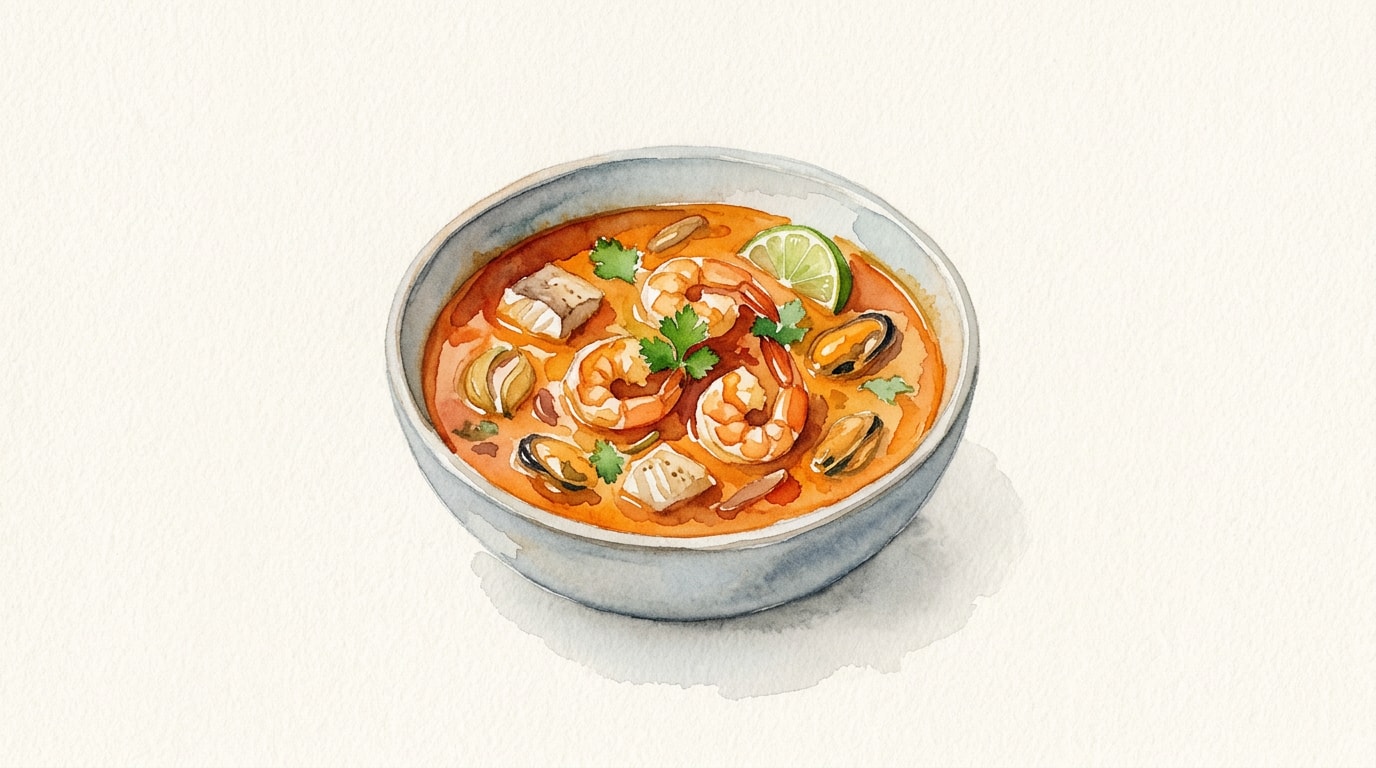
Gently nestle the fish chunks into the simmering liquid. Cook for 2 minutes, then add the prawns. Continue to simmer gently until the internal temperature of the thickest piece of fish reaches 63°C/145°F, and the prawns turn pink and opaque.
Remove the pot from the heat immediately to prevent overcooking the seafood. Taste for seasoning and adjust with additional salt or a splash of vinegar if needed. Garnish with chopped fresh coriander before serving.
Chef's Notes
- Kashmiri chilies are crucial for authentic Goan cuisine; they provide an iconic fiery red hue without overwhelming heat, allowing the delicate flavor of the seafood to shine.
- When selecting fish, avoid delicate, thin fillets like sole or flounder as they will disintegrate into the sauce. Firm, meaty fish hold their shape best.
- Tamarind provides a specific fruity sourness that defines Goan curries. If you cannot find tamarind, a mix of equal parts lime juice and brown sugar can mimic its sweet-tart profile.
- For the best texture, always ensure your prawns are added after the fish, as they typically cook in exactly half the time.
Storage
Refrigerator: 2 days — Store in an airtight container. Seafood degrades quickly, so consume promptly.
Freezer: 1 month — It is recommended to freeze the curry base without the seafood, adding fresh seafood when reheating.
Reheating: Reheat very gently on the stovetop over medium-low heat until just warmed through to avoid overcooking the seafood.