Equipment
Ingredients
Seafood
- 500 g raw large shrimp, peeled, deveined, tails left on
Aromatics and Fat
- 45 g unsalted butter, divided into two portions
- 15 ml olive oil
- 30 g shallot, finely minced
- 10 g garlic, finely minced
Sauce
- 60 ml dry vermouth
- 120 ml heavy cream, room temperature
- 15 ml lemon juice, freshly squeezed
Seasoning and Garnish
- kosher salt
- black pepper, freshly cracked
- 10 g fresh parsley, finely chopped
Nutrition (per serving)
Method
Thoroughly pat the peeled shrimp dry with paper towels. Season evenly with kosher salt and freshly cracked black pepper.
Heat the olive oil and half of the butter in a large skillet over medium-high heat. Once the butter is melted and foaming, add the shrimp in a single layer. Sear for 1 to 2 minutes per side until they turn opaque, pink, and reach a safe internal temperature of 63°C/145°F. Remove the shrimp to a plate and set aside.
Reduce the heat to medium. Add the remaining butter to the skillet. Stir in the minced shallot and cook for 1 to 2 minutes until translucent. Add the minced garlic and cook for 30 seconds until fragrant, being careful not to let it brown.
Pour the dry vermouth into the skillet to deglaze, scraping up any browned bits from the bottom of the pan. Allow the liquid to bubble vigorously and reduce by half.
Lower the heat to medium-low. Whisk in the heavy cream and let the mixture come to a gentle simmer. Cook for 2 to 3 minutes until the sauce slightly thickens and can coat the back of a spoon.
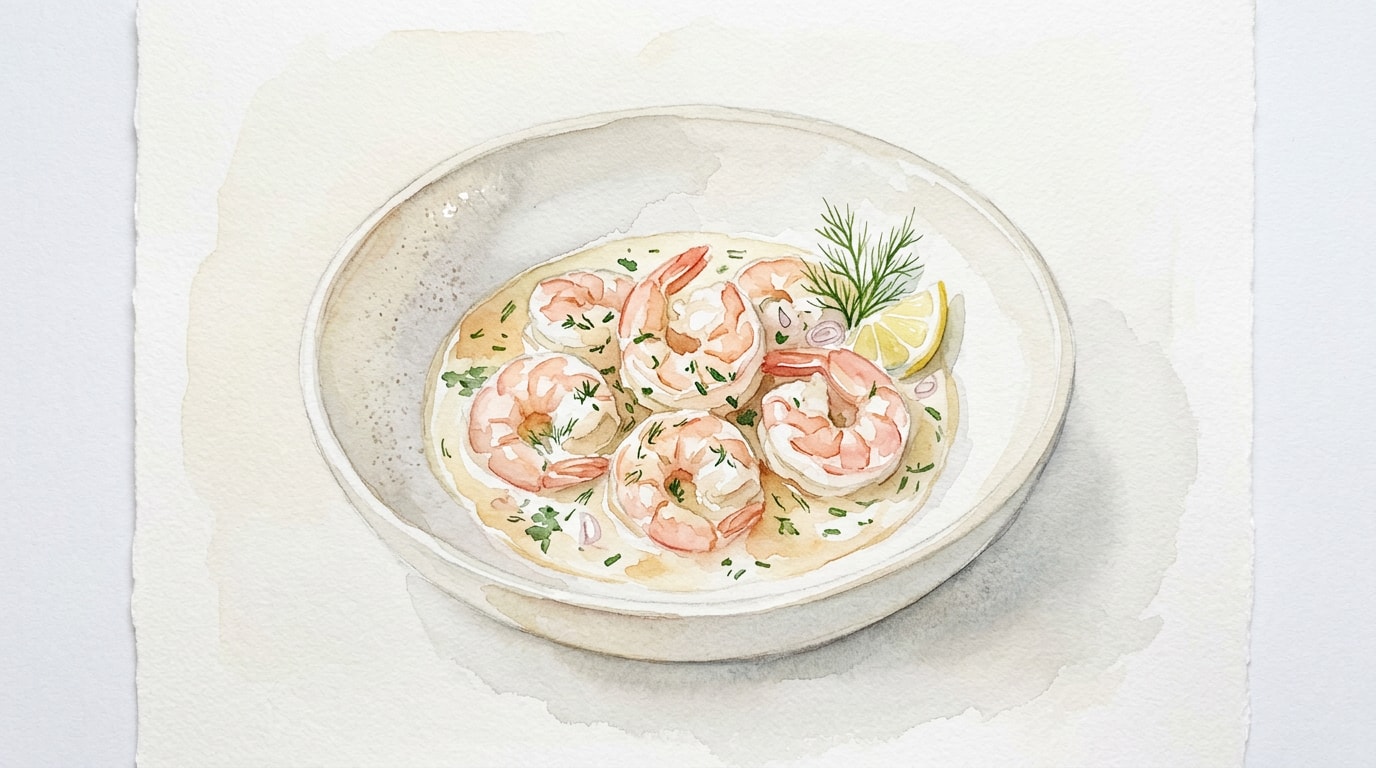
Remove the skillet from the heat. Stir in the fresh lemon juice, then return the cooked shrimp and any resting juices back to the pan. Toss to coat the shrimp completely in the warm sauce. Garnish with freshly chopped parsley before serving.
Chef's Notes
- Always pat your shrimp thoroughly dry before searing. Excess moisture will cause the shrimp to steam in the pan rather than develop a flavorful crust.
- Dry vermouth offers a distinct botanical complexity and mild acidity that standard white wine lacks, elevating the rich cream sauce without overpowering the delicate seafood.
- Using room temperature heavy cream prevents the sauce from immediately breaking when it hits the hot skillet.
- Leaving the tails on the shrimp is entirely optional, but it provides a better aesthetic presentation and adds a slight amount of residual flavor to the pan juices during the sear.
Storage
Refrigerator: 3 days — Store in an airtight container. The sauce may thicken significantly when chilled.
Reheating: Reheat gently in a skillet over low heat. Do not let it boil, or the sauce will separate. Add a splash of water if the sauce is too thick.