Equipment
Ingredients
marinade
- 2 lemon
- 18 g thyme leaves
- 6 g sage, chopped
- 5 g parsley, chopped
- 11 garlic, smashed
- 2 g red pepper flakes
- 45 ml olive oil
chicken
- 9 chicken thighs, bone-in, skin-on
- 18 sage, whole leaves
- 3½ garlic, thinly sliced
- 24 g salt
- 2 lemon
- thyme sprigs, fresh
Nutrition (per serving)
Method
Using a vegetable peeler, remove 9 wide strips of peel from 2 lemons. In a large bowl, combine the lemon peels, thyme leaves, chopped sage, chopped parsley, smashed garlic, red pepper flakes, and olive oil.
Pat the chicken thighs dry with paper towels. Create a pocket between the skin and meat of each thigh. Insert 2 sage leaves and 2 garlic slices into each pocket. Toss the thighs in the marinade, cover, and chill for 2 hours or overnight.
Remove the chicken from the bowl. Reserve the garlic and lemon peels, but discard the liquid marinade. Place chicken on a baking sheet and season both sides evenly with 24g of salt.
Heat a cast-iron skillet over high heat. Place 5 thighs skin-side down in the pan. Place a heavy weight or another skillet on top to flatten the chicken.
Reduce heat to medium once the pan sizzles loudly. Cook undisturbed for 10 to 12 minutes until the skin is dark brown and releases easily from the pan.
Transfer the first batch of chicken to a plate, skin-side up. Pour off excess fat and repeat the searing process with the remaining 4 thighs.
Preheat the oven to 230°C (450°F). Slice the remaining 2 lemons into 3mm (1/8-inch) rounds and pat them dry with paper towels.
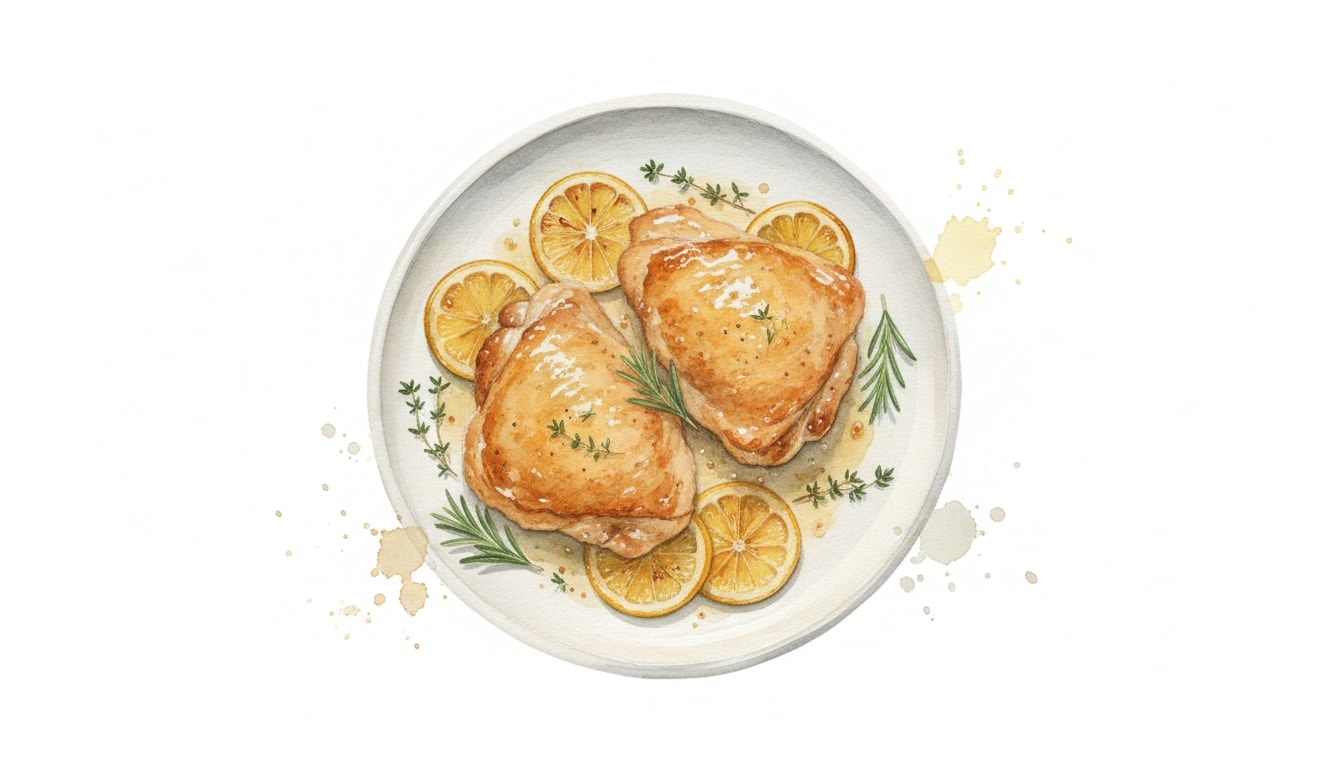
Cover the bottom of the skillet with lemon slices. Arrange all chicken thighs skin-side up on top of the lemons. Scatter the reserved garlic and lemon peels between the chicken pieces.
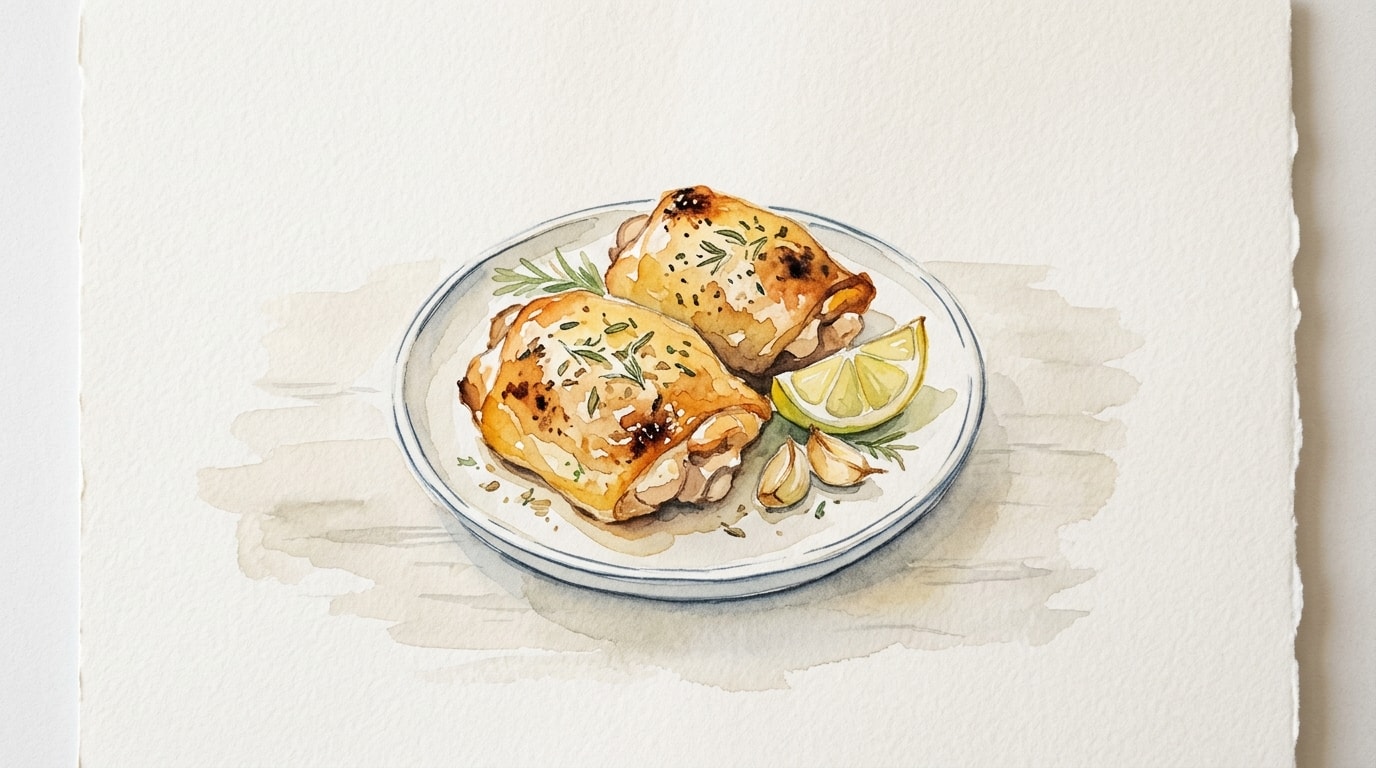
Roast in the oven for 20 to 30 minutes until the internal temperature reaches 74°C (165°F). Remove from the oven and rest for 10 minutes. Garnish with herb sprigs and serve.
Chef's Notes
- Ensure chicken thighs are thoroughly patted dry before searing. Moisture is the enemy of crispy skin.
- Don't overcrowd the pan when searing. Cook in batches if necessary to achieve a deep, even crisp on the skin.
- Using a cast-iron skillet is ideal for searing as it retains heat exceptionally well, promoting even browning.
- The flattening process is crucial for even cooking and maximum skin contact with the hot pan.
- Allow the chicken to rest for at least 10 minutes after roasting. This allows the juices to redistribute, resulting in more tender and moist meat.
Storage
Refrigerator: 3 days — Store in an airtight container; skin will lose crispness.
Freezer: 1 month
Reheating: Reheat in a 175°C (350°F) oven until the internal temperature reaches 74°C (165°F) to maintain skin texture.