Equipment
Ingredients
Risotto Base
- 1550 ml chicken stock
- 475 ml white wine
- 10 ml olive oil
- 100 g onion, finely chopped
- 2 garlic, minced
- 350 g arborio rice
- 1900 g escarole, chopped
- 6 g salt
- 1 g black pepper, freshly ground
Duck
- 2 duck breasts
- 5 ml olive oil
Nutrition (per serving)
Method
Mix the chicken stock and white wine in a medium saucepan. Bring the liquid to a boil, then reduce the heat to maintain a simmer.
Heat 10ml of olive oil in a large pot over medium heat. Add the chopped onion and minced garlic and cook until they are soft, approximately 3 minutes.
Add the arborio rice to the pot and stir for 1 minute to toast the grains lightly.
Add the simmering stock mixture to the rice 120ml at a time. Stir constantly with a wooden fork and wait for the liquid to be absorbed before adding more. Repeat until the rice is tender, about 50 minutes.
Add the chopped escarole to the rice and cook for 2 minutes until wilted.
Season the risotto with 6g of salt and freshly ground pepper.
Heat the remaining 5ml of olive oil in a large nonstick skillet over medium-high heat.
Place the duck breasts in the skillet and cook for 3 minutes per side until the internal temperature reaches 57°C/135°F for medium-rare.
Remove the duck from the pan and let it rest for 5 minutes. Slice the duck thinly on a diagonal and season with salt and pepper.
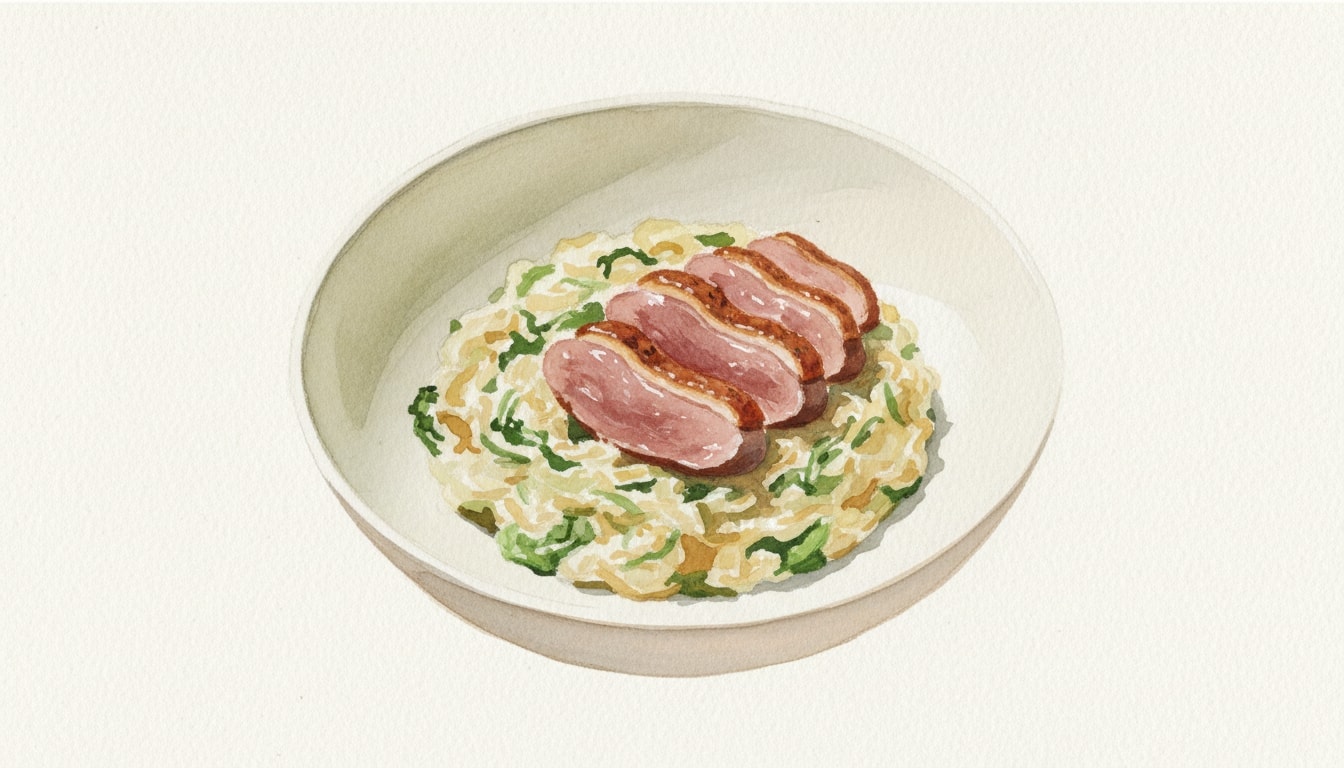
Divide the risotto into bowls and place the duck slices on top. Serve immediately.
Chef's Notes
- For the creamiest risotto, use a good quality, low-sodium chicken stock and ensure it's kept at a gentle simmer throughout the cooking process.
- Don't rush the risotto. The slow, gradual addition of stock and constant stirring is crucial for releasing the starch from the Arborio rice, creating that signature creamy texture.
- When searing the duck breast, start with a cold pan to render the fat slowly and achieve a beautifully crispy skin. Score the duck skin in a crosshatch pattern to help with rendering.
- Allowing the duck breast to rest after searing is critical for juicy, tender meat. This allows the juices to redistribute throughout the breast.
- The escarole should be added at the very end to wilt slightly, retaining some of its texture and vibrant green color. Overcooking it will make it mushy and dull.
Storage
Refrigerator: 3 days — Store duck and risotto in separate airtight containers.
Reheating: Reheat risotto on the stovetop with a splash of stock to restore creaminess.