Equipment
Ingredients
Duck & Braise
- 4 duck legs, skin-on, bone-in
- 15 ml extra virgin olive oil
- 250 ml dry red wine
- 500 ml chicken stock, low-sodium, heated
Soffritto & Aromatics
- 150 g yellow onion, finely diced
- 100 g carrot, finely diced
- 100 g celery, finely diced
- 15 g garlic, minced
- 50 g tomato paste
- 200 g crushed tomatoes
- 1 fresh rosemary, whole sprig
- 2 bay leaf, dried
Pasta & Finishing
- 400 g bigoli pasta, dry
- 80 g roasted peeled chestnuts, roughly chopped
- 20 g unsalted butter
- 50 g parmigiano-reggiano, freshly grated
- kosher salt
- black pepper, freshly cracked
Nutrition (per serving)
Method
Pat the duck legs completely dry with paper towels and season generously with salt and pepper on both sides. Ensuring the skin is dry helps achieve a better sear and renders the fat more efficiently.
Heat the olive oil in a Dutch oven over medium heat. Place the duck legs skin-side down and cook until the skin is deeply browned and much of the fat has rendered, about 12-15 minutes. Flip and brown the meat side for 3 minutes. Remove the duck to a plate.
Carefully pour off all but 2 tablespoons (about 30ml) of the rendered duck fat from the Dutch oven. Save the remaining fat in a jar for roasting potatoes or other vegetables later.
Return the pot to medium heat. Add the diced onion, carrot, and celery. Sauté until the vegetables are softened and translucent, scraping up any browned duck bits from the bottom of the pot, about 8-10 minutes. Add the minced garlic and cook for 1 minute until fragrant.
Stir in the tomato paste, cooking for 2 minutes until it darkens to a rust color. Pour in the red wine to deglaze, bringing to a simmer. Allow the wine to reduce by half, about 5 minutes.
Pour in the crushed tomatoes and heated chicken stock. Add the rosemary sprig and bay leaves. Return the duck legs to the pot, ensuring they are submerged in the liquid. Bring to a gentle simmer, cover, and reduce heat to low. Simmer gently until the meat is completely fall-off-the-bone tender, reaching an internal temperature above 90C/195F to break down connective tissue.
Carefully remove the duck legs to a cutting board. Discard the rosemary sprig, bay leaves, and any loose duck bones or skin. Using two forks, shred the duck meat, discarding bones, cartilage, and flabby skin. Return the shredded meat to the sauce.
Simmer the ragu uncovered over medium-low heat for 15-20 minutes to thicken the sauce and concentrate the flavors. Skim any excess fat that rises to the surface with a spoon. Taste and adjust seasoning with salt and black pepper.
While the sauce reduces, melt the butter in a small skillet over medium heat. Add the chopped chestnuts and toast until fragrant and slightly crisped on the edges, about 4-5 minutes. Set aside.
Bring a large pot of heavily salted water to a rolling boil. Drop in the bigoli pasta and cook until al dente according to package directions, usually 10-12 minutes.
Transfer the cooked bigoli directly into the ragu using tongs, bringing a splash of starchy pasta water with it. Toss vigorously over medium heat for 1-2 minutes until the sauce heavily coats the pasta.
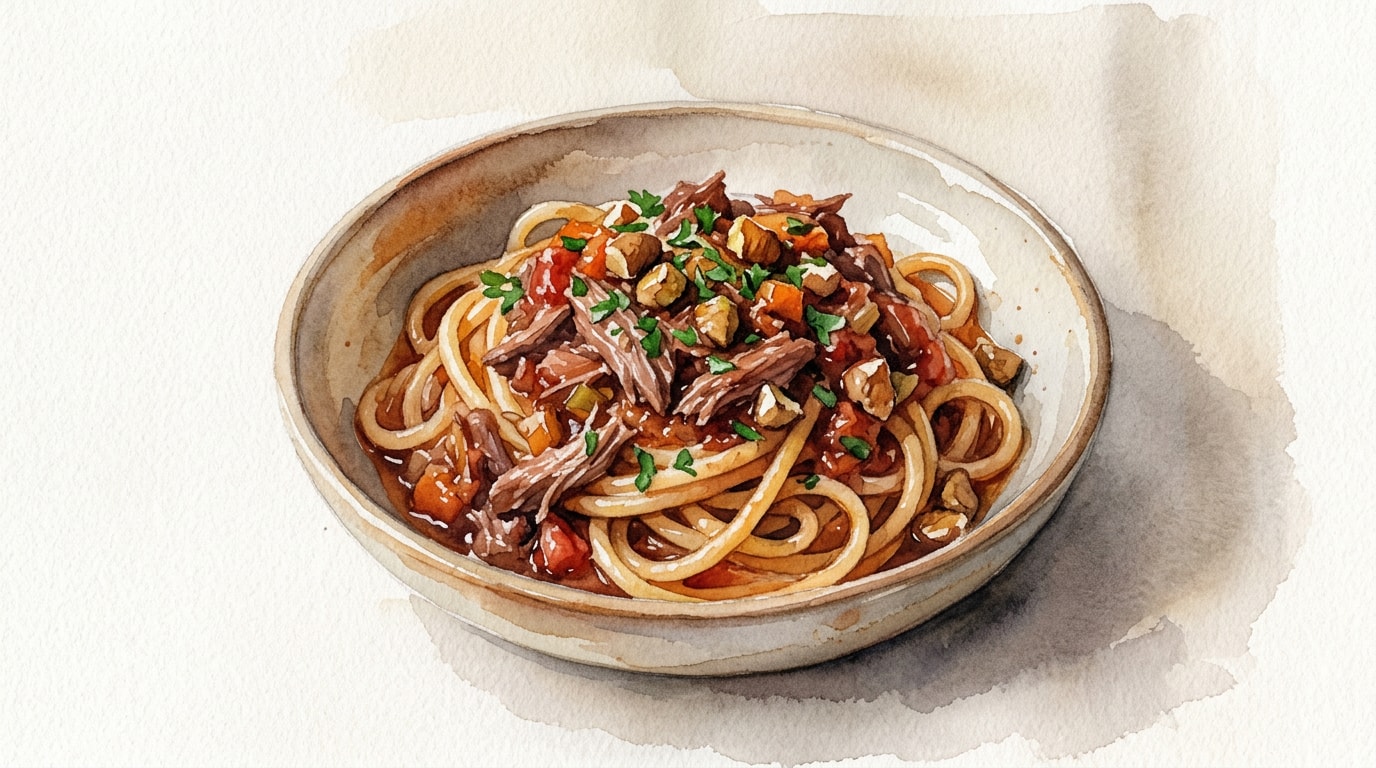
Divide the pasta among warmed shallow bowls. Top generously with the toasted chestnuts, freshly grated Parmigiano-Reggiano, and an extra crack of black pepper.
Chef's Notes
- Duck legs yield incredible flavor, but they must be treated with patience. Braising them until they easily fall apart ensures maximum tenderness and gelatin extraction, giving the ragu its luxurious texture.
- Bigoli is ideal for this robust sauce because its rough, extruded surface and thick profile hold up beautifully against heavy meat ragus, absorbing the rich liquid.
- Toasting the chestnuts in butter briefly elevates their earthy, sweet profile and adds necessary textural contrast to an otherwise entirely soft and rich dish.
- Always reserve your excess rendered duck fat. It is liquid gold in the kitchen, offering an incredibly high smoke point and phenomenal flavor for roasting root vegetables or searing steaks.
Storage
Refrigerator: 4 days — Store ragu and pasta separately. The ragu flavor deepens significantly after a day in the fridge.
Freezer: 3 months — Freeze ragu only in an airtight container.
Reheating: Reheat ragu gently in a saucepan over medium-low heat, adding a splash of water or stock. Toss with freshly cooked pasta.