Equipment
Ingredients
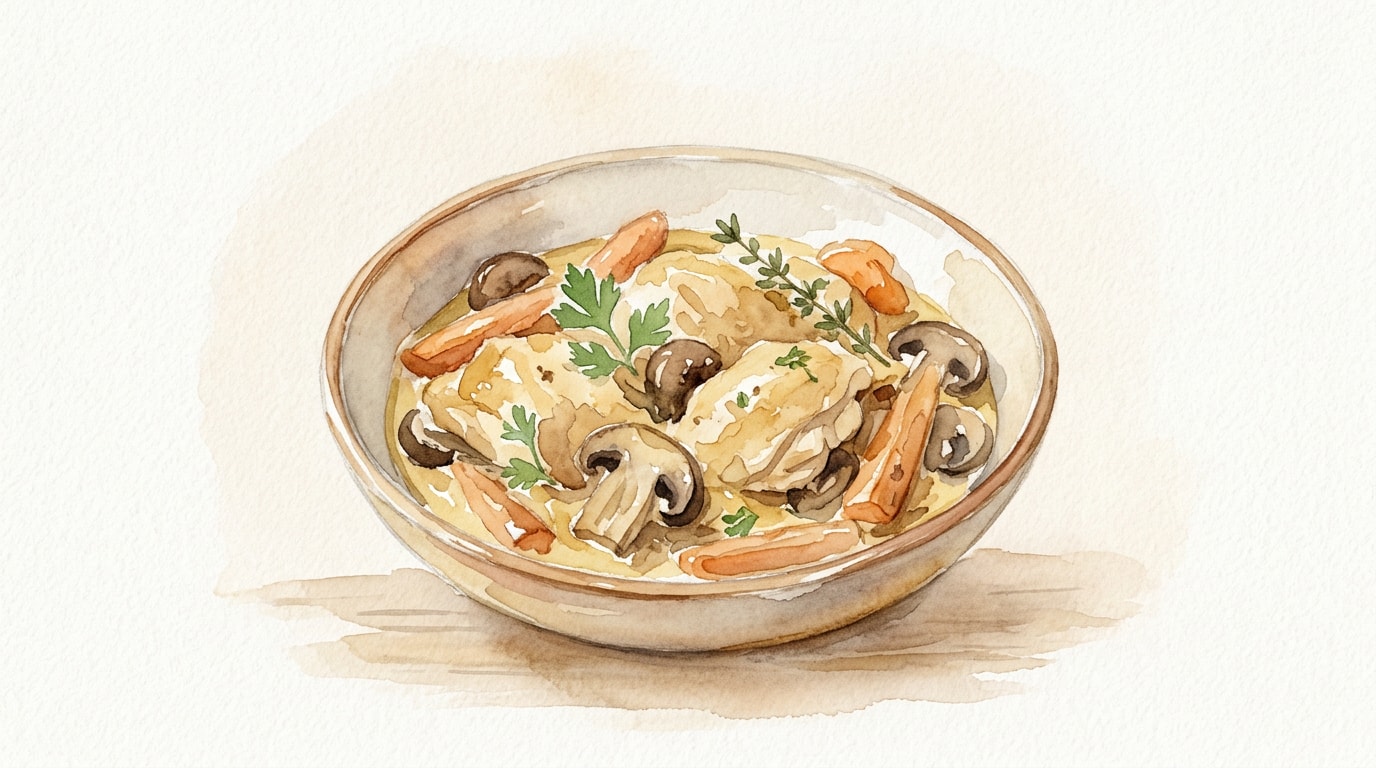
Chicken and Seasoning
- 600 g chicken breast, boneless, skinless
- 5 g kosher salt
- 2 g black pepper, freshly ground
Sauté Base
- 15 ml olive oil
- 15 g unsalted butter
- 80 g shallots, finely chopped
- 200 g carrots, peeled and sliced into half-moons
- 250 g cremini mushrooms, cleaned and sliced
- 10 g garlic, minced
Mustard Pan Sauce
- 250 ml chicken broth, low-sodium
- 100 ml heavy cream
- 45 g dijon mustard
- 15 g whole grain mustard
- 5 g fresh thyme, leaves picked and chopped
Nutrition (per serving)
Method
Pat the chicken breasts dry with a paper towel and season both sides evenly with the kosher salt and black pepper.
Heat the olive oil and butter in a large skillet over medium-high heat. Once the butter is melted and foaming subsides, add the chicken breasts. Sear for 5 to 6 minutes per side until golden brown. The chicken does not need to be fully cooked yet. Use tongs to transfer the chicken to a plate and set aside.
Reduce the heat to medium. Add the chopped shallots, sliced carrots, and sliced mushrooms to the skillet. Cook, stirring occasionally, until the mushrooms have released their moisture and the carrots begin to soften, about 6 to 8 minutes.
Stir the minced garlic and fresh thyme into the vegetable mixture and cook for 1 minute until fragrant.
Pour the chicken broth into the skillet. Use a whisk or wooden spoon to scrape up any browned bits from the bottom of the pan.
Whisk the heavy cream, Dijon mustard, and whole grain mustard into the skillet until smooth and well incorporated. Bring the mixture to a gentle simmer.
Return the chicken breasts and any accumulated juices on the plate back into the skillet. Reduce the heat to medium-low, cover partially, and simmer for 8 to 10 minutes, or until the chicken reaches an internal temperature of 74C/165F on a meat thermometer.
Remove the skillet from the heat. Let the dish rest for 5 minutes before serving to allow the chicken to retain its juices and the sauce to stabilize.
Chef's Notes
- Pounding your chicken breasts to an even thickness is the most important prep step you can take. It ensures the meat cooks at exactly the same rate, preventing the thin tail end from drying out while the thick center comes to temperature.
- The brown crust left on the bottom of the pan after searing the chicken is called the fond. This is pure flavor. Deglazing with the chicken broth lifts these browned proteins into the liquid, forming the complex base of your mustard sauce.
- Adding two types of mustard provides depth. Dijon offers a sharp, tangy bite that emulsifies the sauce, while the whole grain mustard adds an earthy pop of texture that survives the cooking process.
- Always practice rigorous cross-contamination protocols. Wash tongs, cutting boards, and hands thoroughly after handling the raw chicken in step 1 and step 2 before touching other kitchen tools or the fresh herbs.
Storage
Refrigerator: 4 days — Store in an airtight container. The sauce may thicken significantly upon cooling.
Freezer: 1 month — Freeze in an airtight container. Cream-based sauces can separate slightly when thawed, so reheat gently while whisking.
Reheating: Reheat gently in a saucepan over low heat, adding a splash of chicken broth or water to loosen the sauce and prevent breaking.