Equipment
Ingredients
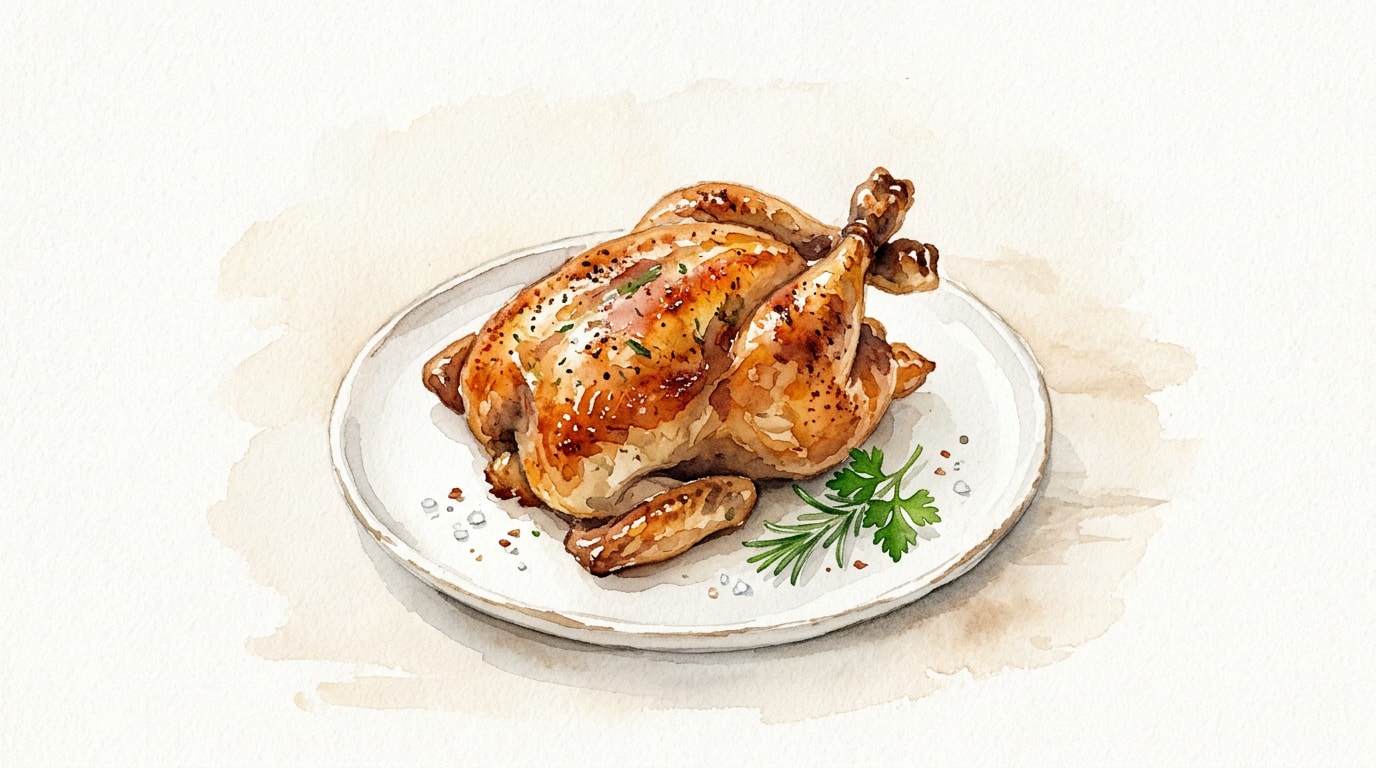
Cornish Hens
- 2 cornish game hens, thawed and patted dry
- 6 g kosher salt
Deviled Mustard Coating
- 60 g dijon mustard
- 30 g whole grain mustard
- 30 ml olive oil
- 15 ml apple cider vinegar
- 15 ml worcestershire sauce
- 2 garlic, minced
- 6 g fresh rosemary, finely chopped
- 4 g smoked paprika
- 2 g cayenne pepper
- 3 g black pepper, freshly ground
Nutrition (per serving)
Method
Preheat your broiler to high. Line a baking sheet with aluminum foil and place a wire rack on top.
Using poultry shears, spatchcock the Cornish hens by cutting along both sides of the backbone to remove it. Press down firmly on the breastbone of each hen to flatten them. Pat the skin completely dry with paper towels and season evenly with the kosher salt.
In a mixing bowl, combine the Dijon mustard, whole grain mustard, olive oil, apple cider vinegar, Worcestershire sauce, minced garlic, finely chopped fresh rosemary, smoked paprika, cayenne pepper, and black pepper. Whisk until a thick, uniform paste forms.
Using a pastry brush, generously coat both sides of the flattened hens with the deviled mustard paste, reserving a small amount to touch up any bare spots later. Place the coated hens skin-side up on the prepared wire rack.
Place the baking sheet under the broiler, about 15 centimeters or 6 inches away from the heat source. Broil for 5 to 7 minutes until the mustard coating begins to blister, bubble, and turn deep golden brown.
Immediately turn off the broiler and set the oven temperature to 190C or 375F. Move the baking sheet to the middle rack. Bake for 30 to 35 minutes, or until a meat thermometer inserted into the thickest part of the thigh registers 74C or 165F.
Remove the hens from the oven and transfer them to a cutting board. Let them rest for 10 minutes before carving into halves or quarters to serve.
Chef's Notes
- Spatchcocking the hens is essential here; it provides a much flatter surface area for the deviled crust to adhere to and brown evenly under the unidirectional heat of the broiler.
- If your broiler runs extremely hot and cannot be regulated, leave the oven door slightly cracked during the initial phase to vent some heat and prevent the mustard from turning bitter.
- The acidity in the mustard and vinegar acts as a brief surface tenderizer. You can coat the hens and leave them uncovered in the refrigerator for up to 4 hours before cooking for deeper flavor penetration.
- Save the backbones removed during the spatchcocking process. Keep them in a freezer bag and use them later to make a rich poultry stock.
Storage
Refrigerator: 3 days — Store in an airtight container. The crust will soften upon refrigeration.
Freezer: 2 months — Wrap tightly in plastic wrap and aluminum foil. Freeze before baking for best results, or freeze cooked leftovers.
Reheating: Reheat in a 175C/350F oven for 15 minutes until warmed through and the crust crisps up slightly.