Equipment
* optional
Ingredients
Pork
- 300 g boneless pork loin chops
- 2 g fine sea salt
- 1 g black pepper, freshly ground
Breading Station
- 30 g all-purpose flour
- 1 egg, lightly beaten
- 60 g panko breadcrumbs
- 500 ml vegetable oil
Homemade Tonkatsu Sauce
- 30 ml ketchup
- 15 ml worcestershire sauce
- 15 ml oyster sauce
- 10 ml soy sauce
- 5 g granulated sugar
Accompaniments
- 150 g chinese cabbage, finely shredded
Nutrition (per serving)
Method
In a small mixing bowl, combine the ketchup, Worcestershire sauce, oyster sauce, soy sauce, and granulated sugar. Mix vigorously until the sugar is completely dissolved. Set aside to let the flavors meld.
Place the finely shredded Chinese cabbage into a medium bowl filled with ice water. Soak for 5 to 10 minutes to crisp the leaves, then drain thoroughly and pat completely dry. Keep in the refrigerator until ready to serve.
Using a knife, make 4 to 5 small vertical slits through the fat cap and the connective tissue separating the fat from the meat on each pork chop. Using a meat mallet, gently pound the pork to an even 1cm thickness. Season both sides evenly with fine sea salt and black pepper.
Set up a breading station using 3 shallow dishes. Place the flour in the first dish, the beaten egg in the second, and the panko breadcrumbs in the third. Dredge each seasoned pork chop thoroughly in the flour, shaking off any excess. Dip completely into the egg, ensuring no dry spots remain, and then transfer to the panko dish. Press the panko firmly into the pork on both sides to create a thick, adherent coating.
Pour the vegetable oil into a heavy-bottomed skillet, aiming for a depth of about 2cm. Heat the oil to 170 C / 340 F. Carefully lower the breaded pork chops into the hot oil away from you to prevent splattering. Fry for 3 to 4 minutes per side, until the panko crust is deep golden brown and the internal temperature of the pork reaches 63 C / 145 F.
Remove the pork from the hot oil and transfer immediately to a wire cooling rack set over a baking sheet. Let the cutlets rest for 3 to 5 minutes to allow the juices to redistribute and prevent the bottom crust from getting soggy.
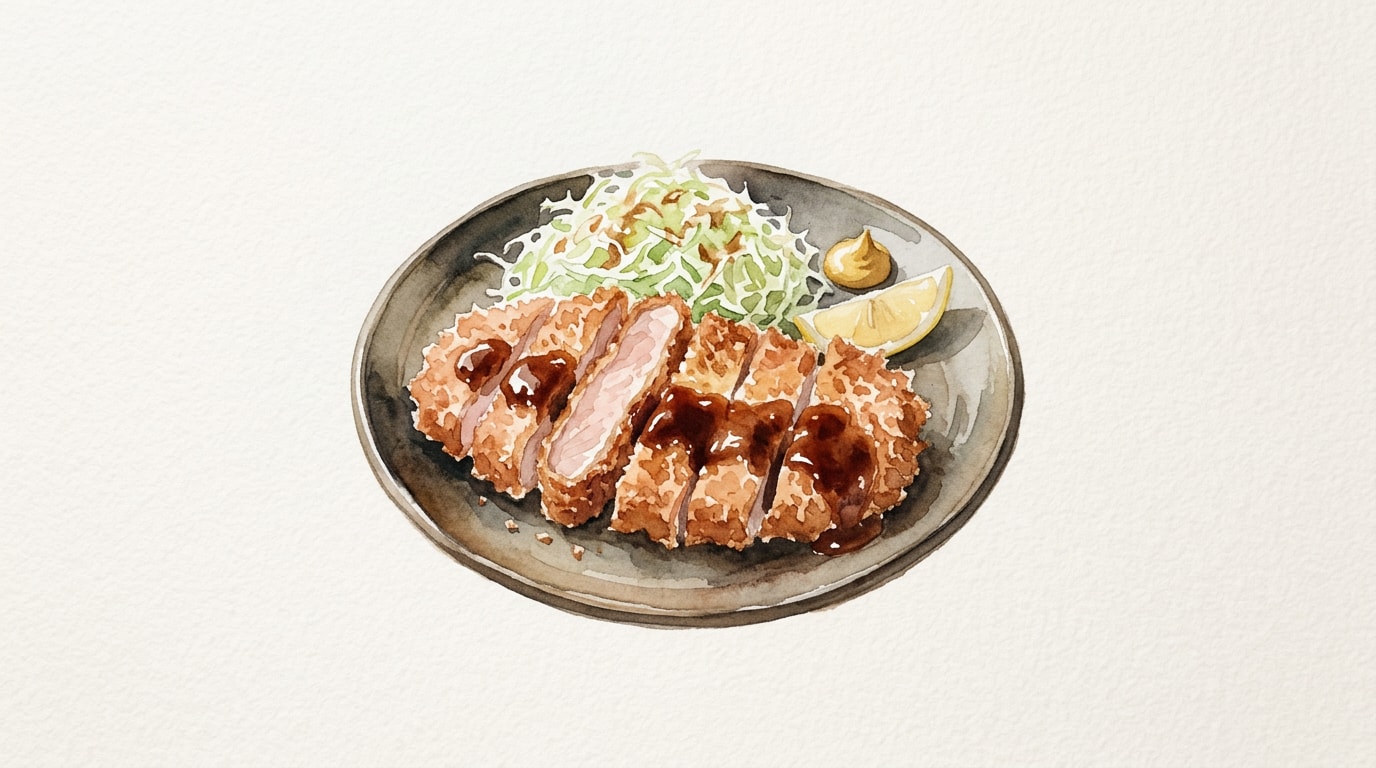
Slice the rested tonkatsu into 2cm wide strips. Arrange the slices on individual plates alongside a generous mound of the crisp shredded Chinese cabbage. Serve immediately with the homemade tonkatsu sauce poured over the meat or provided in a small bowl for dipping.
Chef's Notes
- Scoring the connective tissue between the fat and the meat is not optional; this tissue shrinks rapidly when introduced to hot oil, causing the entire cutlet to curl up into a bowl shape if left intact.
- Resting the fried pork on a wire rack rather than paper towels is crucial. Paper towels trap steam escaping from the hot meat, which will turn your perfectly crisp bottom crust soggy in minutes.
- Soaking the shredded Chinese cabbage in ice water hydrates the cellular structure, making it incredibly crisp. This crunchy, fresh texture acts as a perfect palate cleanser against the rich, fried pork.
- When breading, keep one hand dedicated to dry ingredients and the other for wet ingredients to prevent your fingers from becoming heavily breaded.
- Never press down on the pork while it is frying. Doing so squeezes out flavorful meat juices and compresses the panko, robbing the crust of its signature light and airy texture.
Storage
Refrigerator: 3 days — Store cutlets and cabbage separately. Breading will lose its initial crispness in the refrigerator.
Freezer: 1 month — Freeze cooked and fully cooled cutlets well-wrapped in foil. Do not freeze the cabbage.
Reheating: Reheat cutlets in a 200C/400F oven or air fryer for 8-10 minutes until heated through and crisp.