Equipment
Ingredients
Roasted Crab Broth
- 500 g crab shells, rinsed and dried
- 15 ml olive oil
- 150 g onion, roughly chopped
- 100 g fennel bulb, roughly chopped
- 30 g tomato paste
- 100 ml dry white wine
- 1500 ml water, cold
Pasta Dough
- 200 g type 00 flour
- 2 whole eggs
- 1 egg yolk
Prawn and Crab Mousse
- 300 g raw prawn meat, peeled and deveined
- 1 egg white
- 15 g cornstarch
- 4 g kosher salt
- 2 g white pepper
- 150 g cooked crab meat, picked clean of shells
- 10 g fresh chives, finely chopped
Crab Claws and Coating
- 8 cooked crab claws, pincer shell intact, lower shell removed exposing meat
- 50 g all-purpose flour
- 1 whole egg, beaten
- 100 g panko breadcrumbs
- 1000 ml neutral oil, for deep frying
Nutrition (per serving)
Method
Preheat your oven to 200 degrees Celsius or 400 degrees Fahrenheit. Spread the crab shells on a heavy roasting pan and roast until deeply aromatic and browned, about 20 minutes.
In a large stockpot, heat the olive oil over medium-high heat. Sauté the chopped onion and fennel until softened and lightly caramelized. Add the tomato paste and cook for 2 minutes until it darkens.
Deglaze the pot with dry white wine, scraping up any browned bits from the bottom. Simmer until the wine is reduced by half.
Add the roasted crab shells and cold water to the stockpot. Bring to a boil, then immediately reduce the heat and simmer gently for 45 minutes. Skim any foam that rises to the surface.
Strain the broth through a fine mesh strainer into a clean pot, pressing gently on the solids to extract liquid. Discard the solids and keep the broth warm.
Combine the type 00 flour, whole eggs, and egg yolk to form a dough. Knead vigorously for 8 to 10 minutes until smooth and elastic. Wrap in plastic and rest at room temperature for 30 minutes.
In a food processor, blend the raw prawn meat, egg white, cornstarch, kosher salt, and white pepper until it forms a smooth, sticky paste.
Divide the prawn paste in half. Fold the picked cooked crab meat and finely chopped chives into one half of the mixture. This is your ravioli filling.
Roll the rested pasta dough into thin sheets using a pasta machine. Place small mounds of the ravioli filling spaced evenly along the sheet. Cover with a second sheet, press out all air around the mounds, and cut into individual ravioli. Ensure edges are tightly sealed.
Pat the exposed meat of the crab claws dry and dust lightly with flour. Take the remaining half of the smooth prawn paste and mold it around the crab meat, leaving the hard pincer shell exposed to act as a handle.
Set up a breading station. Coat the prawn-wrapped portion of each crab claw lightly in flour, dip into the beaten egg, and firmly press into the panko breadcrumbs until completely coated.
Heat neutral oil in a deep fryer or heavy pot to 170 degrees Celsius or 340 degrees Fahrenheit. Deep fry the breaded crab claws for 4 to 5 minutes until golden brown and the internal temperature reaches 74 degrees Celsius or 165 degrees Fahrenheit. Drain on a wire rack.
Bring a large pot of salted water to a gentle boil. Cook the ravioli for 3 to 4 minutes until they float to the surface and the pasta is tender.
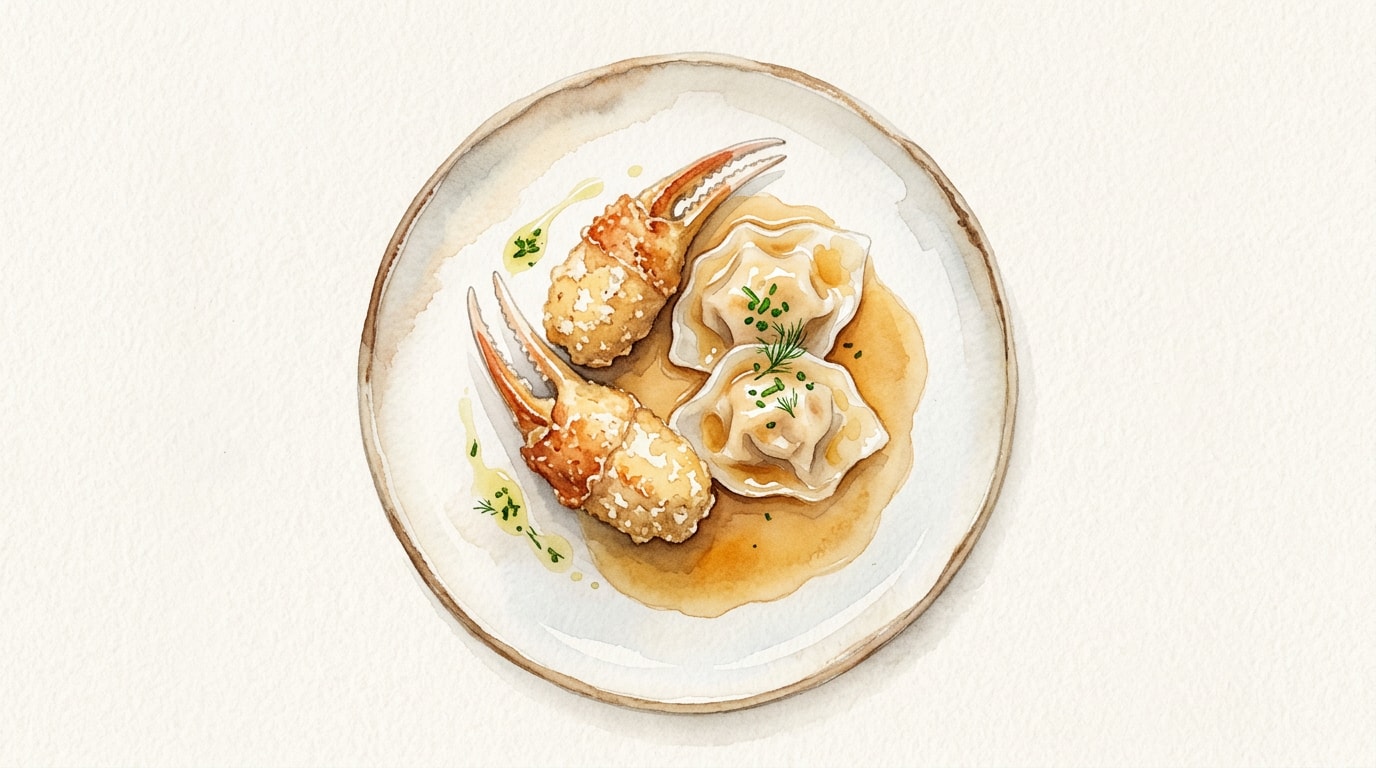
Divide the hot, drained ravioli among 4 warm shallow bowls. Pour the hot roasted crab broth over the ravioli. Carefully rest two crispy fried crab claws on top of the ravioli in each bowl, ensuring the crust remains above the liquid line. Serve immediately.
Chef's Notes
- Always maintain a strict 74C or 165F internal temperature for the stuffed crab claws to ensure the raw prawn mousse is safely cooked.
- When making the prawn mousse, ensure the prawns are as cold as possible. Chilled proteins emulsify much better, resulting in a bouncier, superior texture.
- Do not over-reduce the crab stock. Unlike meat stocks, seafood stocks become bitter or muddy if simmered for longer than an hour.
- Use the pincer of the crab claw as a natural handle for dipping. Keep it clean of breading for an elegant presentation.
Storage
Refrigerator: 1 day — Store components separately. Broth keeps for 3 days.
Freezer: 1 month — Uncooked ravioli and un-fried breaded claws can be frozen.
Reheating: Reheat broth gently on the stove. Fry claws directly from frozen or chilled. Boil frozen ravioli an extra 2 minutes.