Equipment
Ingredients
Pasta & Produce
- 400 g spaghetti, dry
- 300 g spring onions, thinly sliced, white and green parts separated
- 2 garlic, minced
- 1 lemon, zested
- 15 g fresh mint, roughly chopped
Dairy & Pantry
- 30 ml extra virgin olive oil
- 30 g unsalted butter
- 100 g pecorino cheese, finely grated
- 50 g pistachios, shelled, lightly toasted, roughly chopped
- black pepper, freshly cracked
- kosher salt
Nutrition (per serving)
Method
Bring a large pot of water to a boil. Add kosher salt until it tastes lightly seasoned, but not as salty as the ocean since the Pecorino is quite salty.
In a large skillet, heat the olive oil and butter over medium heat. Add the white and light green parts of the spring onions and cook until softened and lightly caramelized, about 6 to 8 minutes.
Add the minced garlic to the skillet with the spring onions. Cook until fragrant, roughly 1 minute. Remove the skillet from the heat.
Add the spaghetti to the boiling water and cook for 1 minute less than the package instructions for al dente.
Using tongs, transfer the cooked spaghetti directly from the water into the skillet with the onion mixture. Pour in 120ml of the starchy pasta cooking water.
With the skillet completely off the heat (below 70°C or 160°F), vigorously toss the pasta while showering in the finely grated Pecorino a handful at a time. The tossing action and residual heat will emulsify the cheese and water into a creamy sauce.
Fold in the dark green spring onion tops, lemon zest, freshly cracked black pepper, half of the chopped mint, and half of the chopped pistachios.
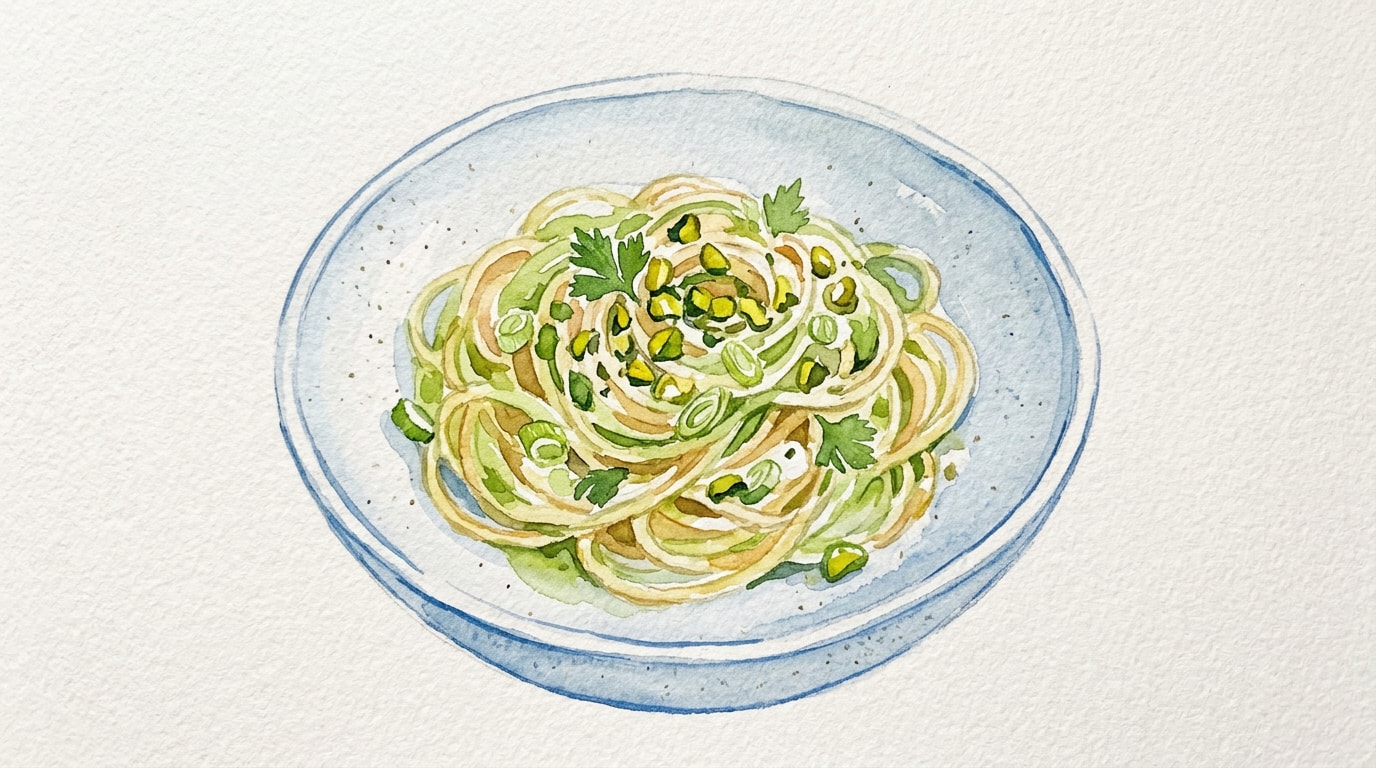
Twirl the pasta onto warm plates. Garnish evenly with the remaining pistachios, mint, and an extra grating of Pecorino cheese if desired. Serve immediately.
Chef's Notes
- To achieve a truly creamy texture without using any heavy cream, the cheese must be grated to a snow-like consistency using a microplane.
- Spring onions offer a delicate, sweet flavor that burns easily. Caramelize them slowly and patiently; do not rush this step over high heat.
- Traditional Pecorino Romano uses animal rennet. To keep this recipe strictly vegetarian, seek out a Pecorino-style cheese made with microbial or vegetable rennet.
Storage
Refrigerator: 3 days — Store in an airtight container. Emulsion may separate slightly when cold.
Reheating: Reheat gently in a skillet over low heat, adding 15 to 30 ml of water to help re-emulsify the sauce.