Equipment
Ingredients
Pasta
- 400 g spaghetti
- 10 g kosher salt
Meat
- 150 g pancetta, diced into 1cm cubes
Dairy and Eggs
- 5 egg yolks, room temperature
- 100 g parmesan cheese, finely grated
Seasoning
- 5 g black pepper, freshly and coarsely ground
Nutrition (per serving)
Method
Bring 3 liters of water to a rolling boil in a large pot. Add the kosher salt. The water temperature should reach 100 degrees C / 212 degrees F.
Place the diced pancetta in a cold skillet. Turn the heat to medium-low and cook slowly to render the fat. Cook until the edges are crispy and golden, but not burned. Remove the skillet from the heat.
While the pork cooks, combine the egg yolks, finely grated parmesan cheese, and black pepper in a mixing bowl. Whisk vigorously until it forms a thick, uniform paste.
Add the spaghetti to the boiling water. Cook until 1 minute shy of the package directions for al dente. Do not drain the pasta water.
Using tongs, transfer the cooked spaghetti directly from the water into the skillet with the pancetta and its rendered fat. The skillet must remain off the heat. Toss the pasta vigorously to coat every strand in the fat.
Spoon 30ml of the hot pasta water into the bowl with the egg and cheese paste. Whisk quickly to temper the eggs, turning the thick paste into a smooth, pourable slurry.
Pour the tempered egg mixture over the pasta in the skillet. Toss the pasta rapidly and continuously. Add splashes of hot pasta water, about 20ml at a time, continuing to toss until a glossy, creamy sauce forms that clings tightly to the noodles. The residual heat will cook the eggs safely without scrambling them.
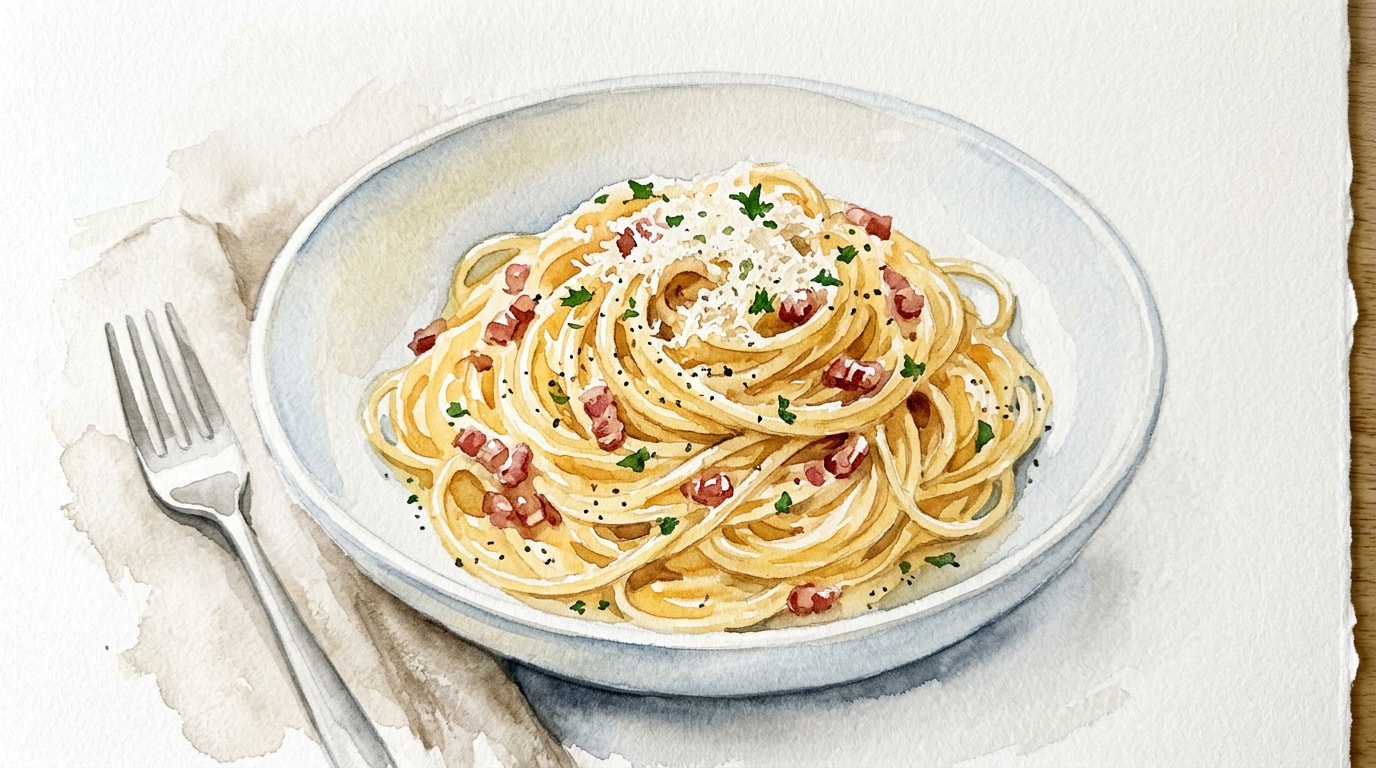
Transfer the coated pasta to warmed serving bowls. Garnish immediately with additional grated parmesan and black pepper.
Chef's Notes
- The secret to a flawless carbonara is thermal management. Tossing the pasta in the fat off the heat drops the temperature just enough to create a safe environment for the eggs to emulsify rather than scramble.
- Bronze-die extruded pasta has a rougher surface that acts like sandpaper in the boiling water, releasing more starch. This starch is the essential glue that binds the fat and liquid in your sauce.
- Tempering the egg mixture before adding it to the main pan is an insurance policy. It gently raises the temperature of the yolks so they do not experience shock when hitting the hot pasta.
- Do not salt the pasta water as heavily as you would for a tomato sauce. The rendered pork and the hard aged cheese contribute significant salinity.
Storage
Refrigerator: 1 day — Store in an airtight container. The emulsion will break upon cooling.
Reheating: Reheat extremely gently over a double boiler with a splash of water, tossing constantly. Microwaving will scramble the eggs.