Equipment
Ingredients
Roasted Squash
- 500 g butternut squash, peeled, seeded, and diced into 1.5cm cubes
- 15 ml olive oil
- 2 g salt
- 1 g black pepper, freshly cracked
Risotto Base
- 1200 ml vegetable broth
- 15 ml olive oil
- 30 g unsalted butter
- 1 yellow onion, finely diced
- 2 garlic, minced
- 300 g arborio rice
- 120 ml dry white wine
Flavor and Finish
- 10 g fresh sage leaves
- 40 g unsalted butter, very cold, cubed
- 60 g parmigiano-reggiano, finely grated
- salt
- black pepper, freshly cracked
Nutrition (per serving)
Method
Preheat the oven to 200 degrees Celsius (400 degrees Fahrenheit). Line a baking sheet with parchment paper.
Place the diced butternut squash on the baking sheet. Drizzle with 15ml of olive oil, and sprinkle with 2g of salt and 1g of black pepper. Toss well to coat evenly, then spread into a single layer.
Roast the squash in the preheated oven for 25 to 30 minutes, tossing halfway through, until fork-tender and caramelized around the edges. Remove from oven and set aside.
While the squash is roasting, pour the vegetable broth into a small saucepan. Bring to a gentle simmer over medium heat, then reduce the heat to the lowest setting to keep the broth hot.
In a heavy-bottomed pot, heat 15ml of olive oil and 30g of butter over medium heat until the butter melts and begins to foam. Add the fresh sage leaves in a single layer and fry for 1 to 2 minutes until crisp. Use a slotted spoon or tongs to remove the sage leaves to a paper towel, leaving the infused fat in the pot.
Add the finely diced onion to the sage-infused fat. Saute for 4 to 5 minutes, stirring frequently with a wooden spoon, until the onions are completely softened and translucent. Add the minced garlic and cook for 1 additional minute.
Pour the arborio rice into the pot. Stir constantly for 2 to 3 minutes to toast the grains. Ensure every grain is coated in the fat.
Pour the dry white wine into the pot to deglaze. Stir continuously until the wine has completely evaporated and been absorbed by the rice.
Begin adding the hot broth, one ladleful (about 120ml) at a time. Stir frequently, allowing the rice to absorb almost all the liquid before adding the next ladle. Continue this process for 18 to 20 minutes.
Remove the pot from the heat completely. Fold in three-quarters of the roasted butternut squash, reserving the rest for garnish. The residual heat will warm the squash through.
Add the cold cubed butter and finely grated Parmigiano-Reggiano. Stir vigorously for 1 to 2 minutes. This process, known as mantecatura, emulsifies the fats with the rice starches to create the signature creamy sauce. Taste and adjust seasoning with salt and black pepper.
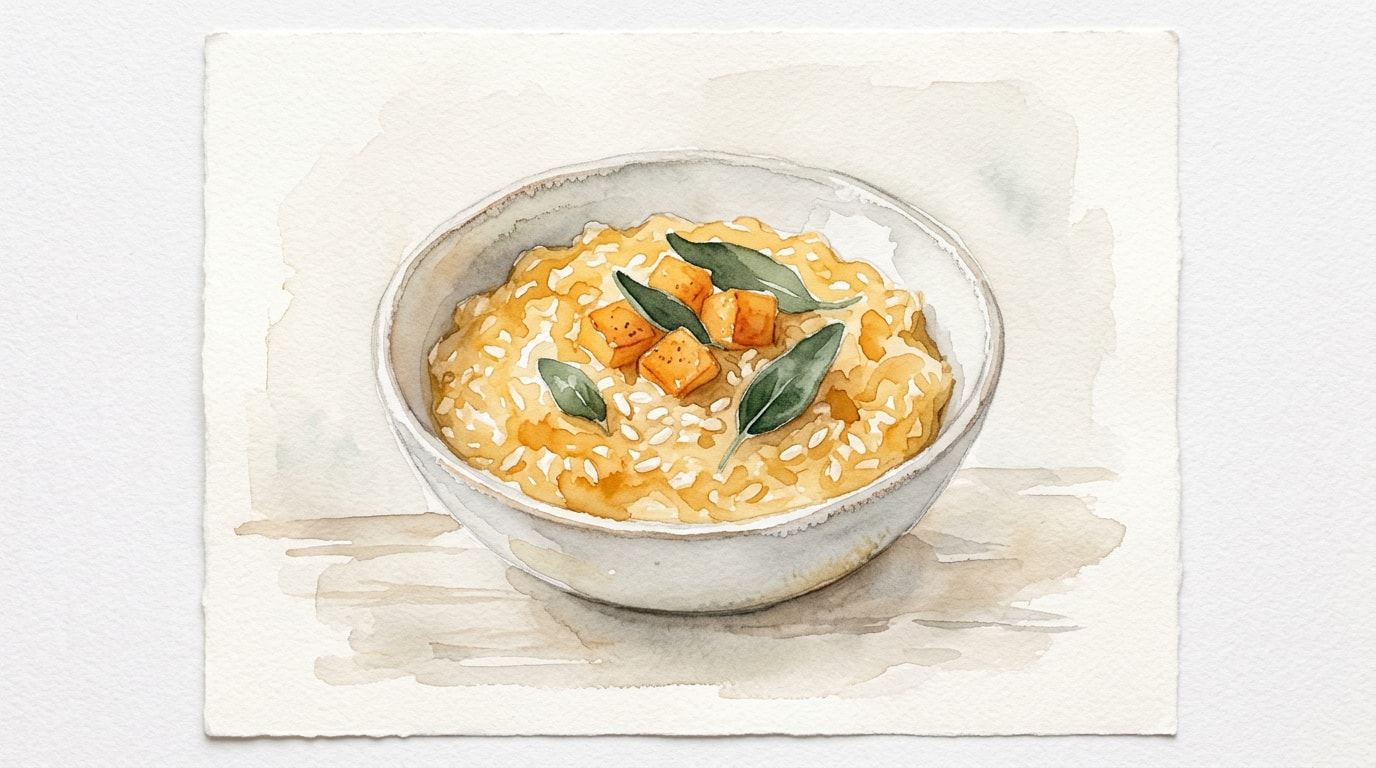
Spoon the risotto onto warm plates or wide bowls. Garnish each serving with the reserved roasted squash cubes, a few crispy sage leaves, and an extra dusting of Parmigiano-Reggiano. Serve immediately.
Chef's Notes
- Always use hot broth. Adding cold or room temperature liquid to hot rice shocks the grain, closing its pores and halting the release of starches needed for a creamy consistency.
- The 'mantecatura' (vigorous stirring off the heat with very cold butter and cheese) is the most critical step for achieving a proper emulsion without breaking the fats.
- Toast the rice thoroughly until it smells slightly nutty and the edges look translucent. This fortifies the starch structure, preventing the grains from turning to mush as they absorb liquid over the 20-minute cooking time.
Storage
Refrigerator: 3 days — Store in an airtight container. The risotto will thicken significantly as it cools.
Reheating: Reheat gently on the stovetop over low heat, adding a splash of water or broth while stirring continuously to restore the creamy emulsion.