Equipment
Ingredients
Pasta
- 250 g fresh linguine
- 15 g kosher salt
Goat Cheese Sauce
- 30 ml extra virgin olive oil
- 15 g unsalted butter
- 3 garlic, minced
- 100 g goat cheese, crumbled
- 120 ml pasta water
Herbs and Finishing
- 10 g fresh basil, roughly chopped
- 10 g fresh parsley, finely chopped
- 15 ml lemon juice, freshly squeezed
- 2 g black pepper, freshly cracked
Nutrition (per serving)
Method
Bring a large pot of water to a rolling boil at 100 degrees Celsius or 212 degrees Fahrenheit. Add the kosher salt.
In a large skillet, heat the extra virgin olive oil and unsalted butter over medium-low heat. Add the minced garlic and saute gently until fragrant and soft, ensuring it does not brown.
Add the fresh linguine to the boiling water and cook until al dente, stirring occasionally with tongs to prevent the strands from sticking together.
Carefully scoop out and reserve the starchy pasta water using a liquid measuring cup before draining the linguine.
Transfer the drained linguine directly to the skillet with the garlic. Add the crumbled goat cheese and half of the reserved pasta water. Toss vigorously with tongs until the cheese melts into a smooth, creamy sauce, adding more pasta water as needed to reach desired consistency.
Remove the skillet from the heat. Fold in the fresh basil, fresh parsley, lemon juice, and black pepper. Toss well to combine.
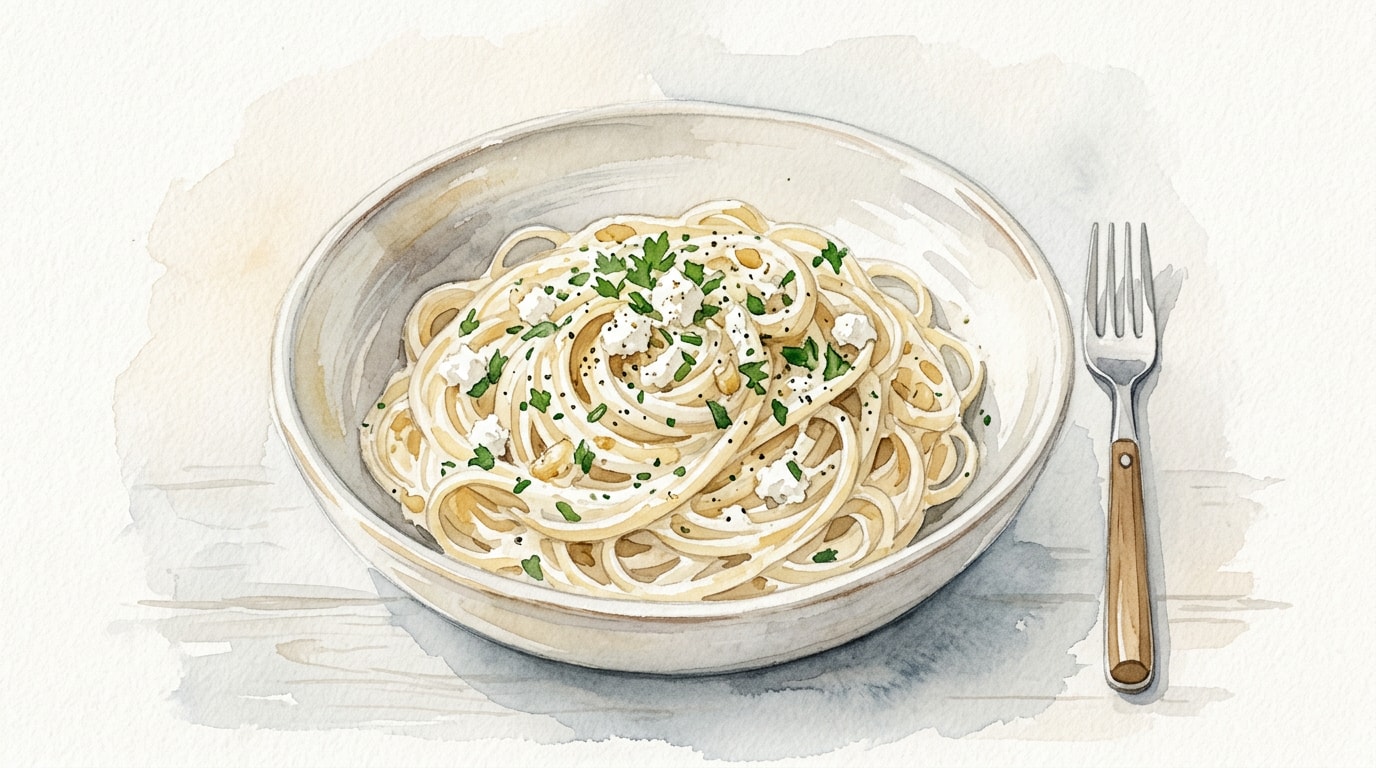
Divide the pasta between two warm shallow bowls. Garnish with additional black pepper if desired and serve immediately.
Chef's Notes
- Using fresh linguine rather than dried dramatically reduces cooking time and releases a specific type of surface starch into the water, which is crucial for binding the goat cheese into a silky sauce without using heavy cream.
- Do not let the garlic brown in the skillet. Browned garlic introduces an acrid, bitter flavor that will easily overpower the delicate tang of the goat cheese and the bright notes of the fresh herbs.
- The lemon juice is folded in at the very end off the heat. This preserves its bright, volatile aromatic compounds and prevents the acid from prematurely breaking the cheese emulsion.
- Warm your serving bowls by rinsing them with hot water and drying them quickly before plating. This prevents the delicate goat cheese sauce from seizing up when it hits cold ceramic.
Storage
Refrigerator: 3 days — Store in an airtight container. The sauce will tighten significantly as it cools.
Reheating: Reheat gently on the stovetop over low heat, adding a splash of water or milk to loosen the sauce and restore its creamy texture.