Equipment
Ingredients
Artichoke Preparation
- 1000 ml water, cold
- 1 lemon, juiced
- 10 baby artichokes, whole
Risotto Base
- 1000 ml vegetable broth
- 30 ml olive oil
- 1 shallot, finely diced
- 320 g arborio rice
- 120 ml dry white wine
Finishing
- 45 g unsalted butter, very cold and cubed
- 60 g parmigiano-reggiano cheese, freshly grated
- 10 g fresh parsley, finely chopped
- salt
- black pepper
Nutrition (per serving)
Method
Combine the cold water and the fresh lemon juice in a medium mixing bowl to create an acidulated bath to prevent the artichokes from oxidizing.
Using a chef's knife and cutting board, peel the tough dark green outer leaves from the baby artichokes until you expose the pale yellow-green core. Trim the tops, peel the fibrous outer layer of the stems, cut into quarters, and immediately drop them into the lemon water.
Pour the vegetable broth into a medium saucepan and bring it to a gentle simmer over low heat, maintaining a temperature around 90C/195F.
Drain the artichokes in a colander. Heat the olive oil in a wide heavy-bottomed pan over medium heat, add the artichokes, and saute for 5 minutes until they begin to soften and take on a light golden color.
Add the finely diced shallot to the pan with the artichokes. Continue to cook for another 2 minutes, stirring with a wooden spoon until the shallot softens.
Pour the Arborio rice into the pan and mix well to coat the grains in the oil. Cook for 3 minutes, stirring constantly to lightly toast the exterior of the rice.
Pour the dry white wine into the pan. Stir continuously and scrape up any browned bits from the bottom until the liquid has completely evaporated.
Begin adding the warm vegetable broth one ladle at a time. Stir the rice continuously, allowing the rice to absorb the liquid almost entirely before adding the next ladle. Repeat this process for about 18 minutes until the rice reaches the desired texture.
Remove the pan from the heat entirely. Add the cold cubed butter and the grated Parmigiano-Reggiano cheese, then vigorously stir and shake the pan to force the fat to combine with the rice starch into a creamy sauce.
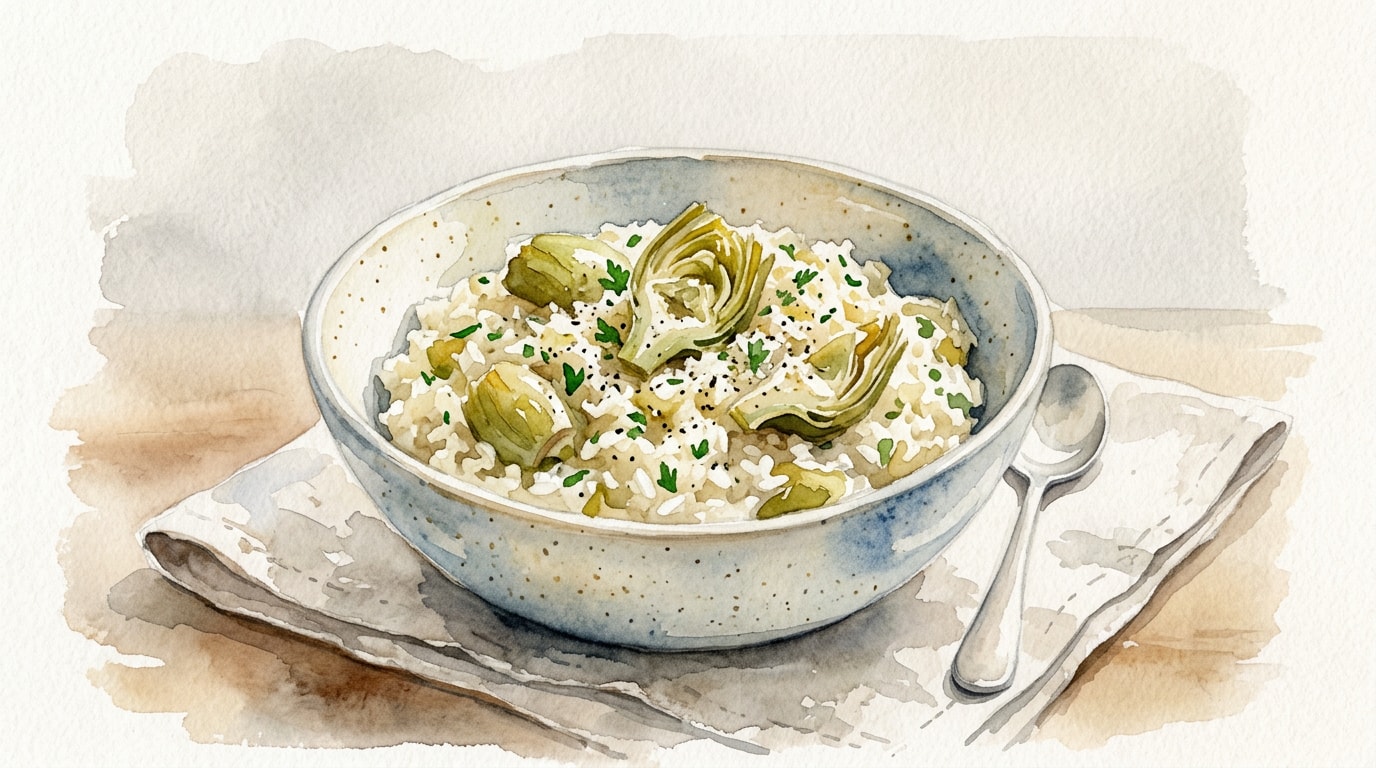
Stir in the finely chopped fresh parsley. Taste and adjust seasoning with salt and black pepper, let it rest for a minute to settle, then divide into warmed serving bowls.
Chef's Notes
- The secret to the perfect mantecatura (the final vigorous stirring) is using very cold butter. The temperature shock helps cleanly emulsify the dairy fat with the starches, creating a silkier texture than warm butter would provide.
- Do not rinse Arborio rice before cooking. The surface starch is entirely responsible for the creamy, binding sauce that defines a proper risotto.
- Using warmed serving bowls is a professional touch that prevents the rich starches and fats from prematurely congealing when the hot risotto hits the cold ceramic.
- Baby artichokes are fully edible once the dark, fibrous outer leaves are snapped away; unlike mature globe artichokes, they do not develop an inedible, fuzzy choke in the center.
Storage
Refrigerator: 3 days — Store in an airtight container. Reheat gently on the stove with a generous splash of fresh broth to loosen the texture.