Equipment
* optional
Ingredients
Fruit Soak
- 200 g dried cranberries
- 60 ml dark rum
Dough
- 150 ml whole milk, warmed to 38 degrees Celsius
- 10 g active dry yeast
- 500 g all-purpose flour
- 60 g granulated sugar
- 5 g salt
- 3 g ground cardamom
- 150 g unsalted butter, softened to room temperature
- 1 egg, room temperature
Mix-ins
- 100 g slivered almonds, toasted and cooled
Filling
- 200 g almond paste
Coating
- 60 g unsalted butter, melted
- 100 g powdered sugar, sifted
Nutrition (per serving)
Method
Combine the dried cranberries and dark rum in a small bowl. Stir well and let sit at room temperature for at least 30 minutes to plump the fruit.
Warm the whole milk to 38°C/100°F. Whisk in the active dry yeast and let sit for 5 to 10 minutes until the mixture becomes foamy on top.
In the bowl of a stand mixer, combine the all-purpose flour, granulated sugar, salt, and ground cardamom.
Add the yeast mixture, the room temperature egg, and the softened butter to the dry ingredients. Mix on low speed until a rough dough forms.
Knead the dough on medium-low speed for 5 to 7 minutes until it becomes smooth, elastic, and clears the sides of the bowl.
Drain any excess liquid from the soaked cranberries. Turn the dough out onto a lightly floured surface and gently fold in the cranberries and toasted slivered almonds by hand until evenly distributed.
Place the dough in a lightly greased bowl, cover with a damp towel or plastic wrap, and let rise in a warm spot for 1 hour, or until noticeably puffed.
Punch down the dough to deflate it, then divide it into two equal pieces. Roll each piece into an oval shape about 2 centimeters thick.
Divide the almond paste into two equal portions. Roll each portion into a log slightly shorter than the length of your dough ovals. Press an indentation down the center of each dough oval and lay the almond paste log inside.
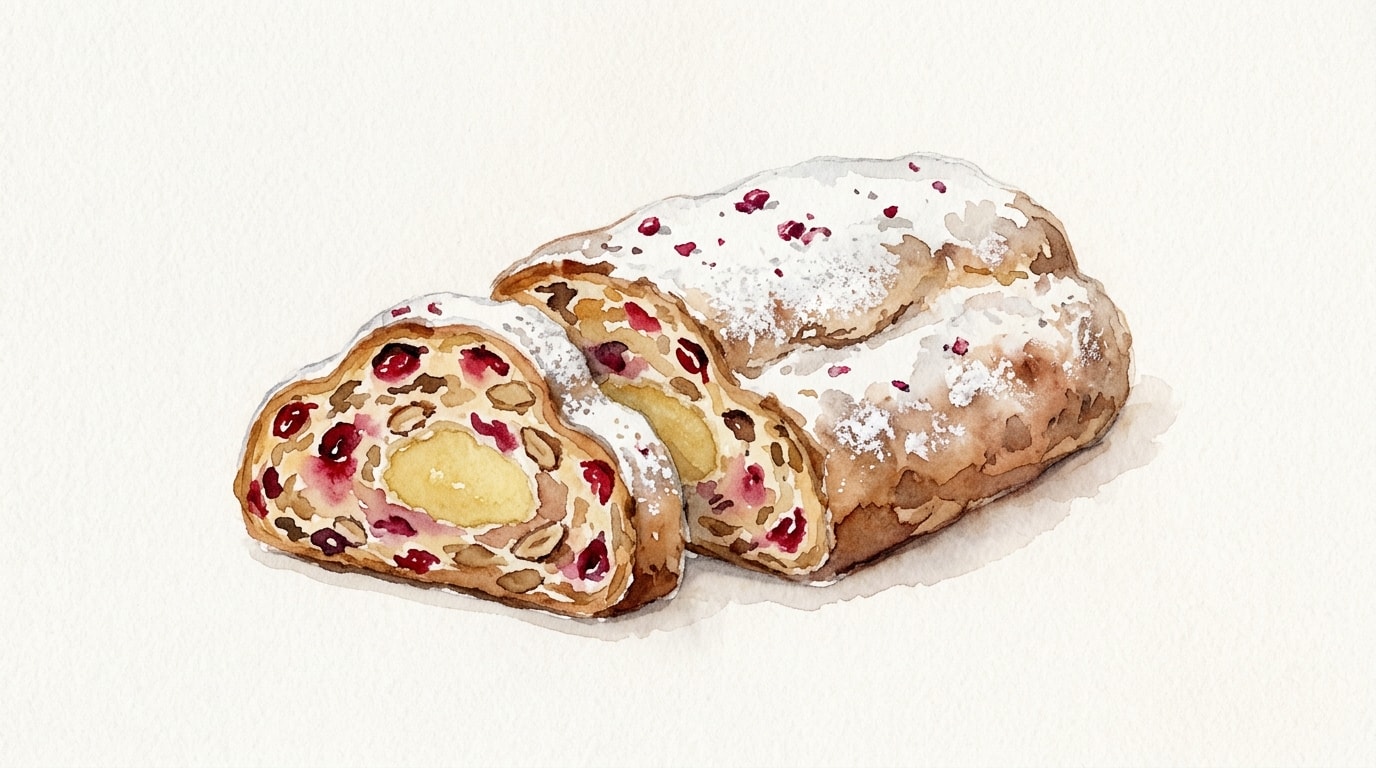
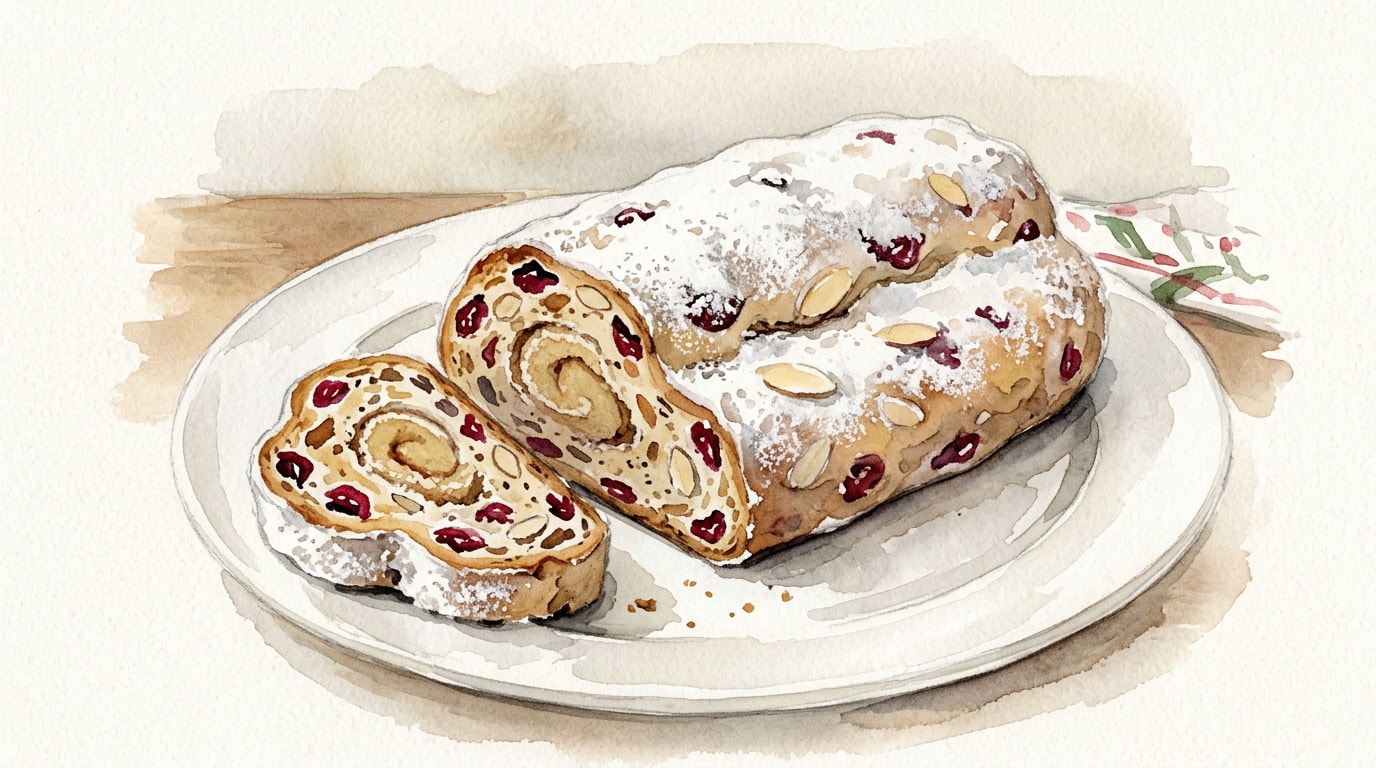
Fold one long side of the dough over the almond paste, stopping just short of the opposite edge. Press the seam down firmly with the heel of your hand to seal, creating the traditional stollen shape.
Transfer the shaped loaves to a parchment-lined baking sheet. Cover loosely and let rise for 45 minutes.
Preheat your oven to 180°C/350°F.
Bake the stollen for 35 to 40 minutes. The crust should be deeply golden brown, and a thermometer inserted into the bread (avoiding the almond paste) should read 88°C/190°F.
Remove the stollen from the oven. Immediately brush the hot loaves generously with the melted butter, ensuring all surfaces are thoroughly coated.
While the butter is still wet, generously dust the loaves with powdered sugar using a fine mesh sieve, creating a thick, snow-like coating.
Allow the stollen to cool completely on a wire rack before slicing or wrapping for storage.
Chef's Notes
- For the most authentic texture and developed flavor, do not eat the stollen immediately. Wrap the completely cooled loaves tightly in parchment paper and aluminum foil, then let them mature at room temperature for 1 to 2 weeks before slicing.
- Ensure your butter and eggs are truly at room temperature. Cold ingredients will shock the yeast and prevent the highly enriched dough from emulsifying properly, leading to poor rises.
- The thick coating of melted butter and powdered sugar acts as a natural preservative layer, which is why traditionally baked stollen can last for many weeks without spoiling.
- If your almond paste is very stiff, gently knead it in your hands for a few minutes before rolling it into logs. The warmth of your hands will make it pliable.
Storage
Refrigerator: 4 weeks — Wrap tightly in parchment paper, then foil, and seal in an airtight container or bag.
Freezer: 3 months — Freeze fully wrapped in foil and placed in a heavy-duty freezer bag. Thaw at room temperature.