Equipment
Ingredients
Duck
- 2 duck leg quarters
- 2 duck breasts
- 10 g ground coriander
- 10 g kosher salt
- 4 g black pepper, freshly ground
Sweet Potato Sauce
- 400 g sweet potatoes, peeled and diced
- 50 g shallot, finely chopped
- 250 ml chicken broth
- 30 ml orange juice, freshly squeezed
- 15 ml olive oil
Roasted Parsnips
- 400 g parsnips, peeled and cut into batons
- 30 g duck fat, melted
- 3 g fresh thyme, picked from stems
Nutrition (per serving)
Method
Preheat the oven to 160°C/320°F.
Score the skin of the duck breasts in a tight crosshatch pattern, taking extreme care not to pierce the red meat below the fat layer.
Season the duck breasts and duck leg quarters evenly on all sides with the ground coriander, kosher salt, and freshly ground black pepper.
Place the duck leg quarters on a wire rack set inside a baking sheet. Roast in the preheated oven for 60 minutes to slowly render the tough fat and begin tenderizing the meat.
Increase the oven temperature to 200°C/390°F. Toss the parsnip batons with melted duck fat and fresh thyme, spread them on a second baking sheet, and roast alongside the legs for 30 minutes until both are deeply golden. Use a meat thermometer to verify the leg quarters reach a minimum internal temperature of 74°C/165°F for safety, though they will naturally roast to a much higher internal temperature to become tender.
While the oven roasts the duck and parsnips, heat the olive oil in a saucepan over medium heat. Add the finely chopped shallot and saute for 3 to 4 minutes until translucent.
Add the diced sweet potatoes and chicken broth to the saucepan. Bring to a simmer, cover with a lid, and cook for 15 minutes until the sweet potatoes are completely soft and falling apart.
Transfer the hot sweet potato mixture to a blender, add the freshly squeezed orange juice, and blend continuously until a perfectly smooth, velvety sauce forms. Keep warm.
Place the seasoned duck breasts skin-side down in a cold cast iron skillet. Turn the heat to medium-low and cook undisturbed for 10 minutes to slowly render the subcutaneous fat. Flip and sear the flesh side for 3 to 4 minutes. Check with a meat thermometer to ensure the internal temperature reaches exactly 57°C/135°F for medium-rare.
Transfer the cooked duck breasts and the roasted leg quarters to a clean cutting board. Let the meat rest undisturbed for 10 minutes to allow the juices to redistribute and the muscle fibers to relax.
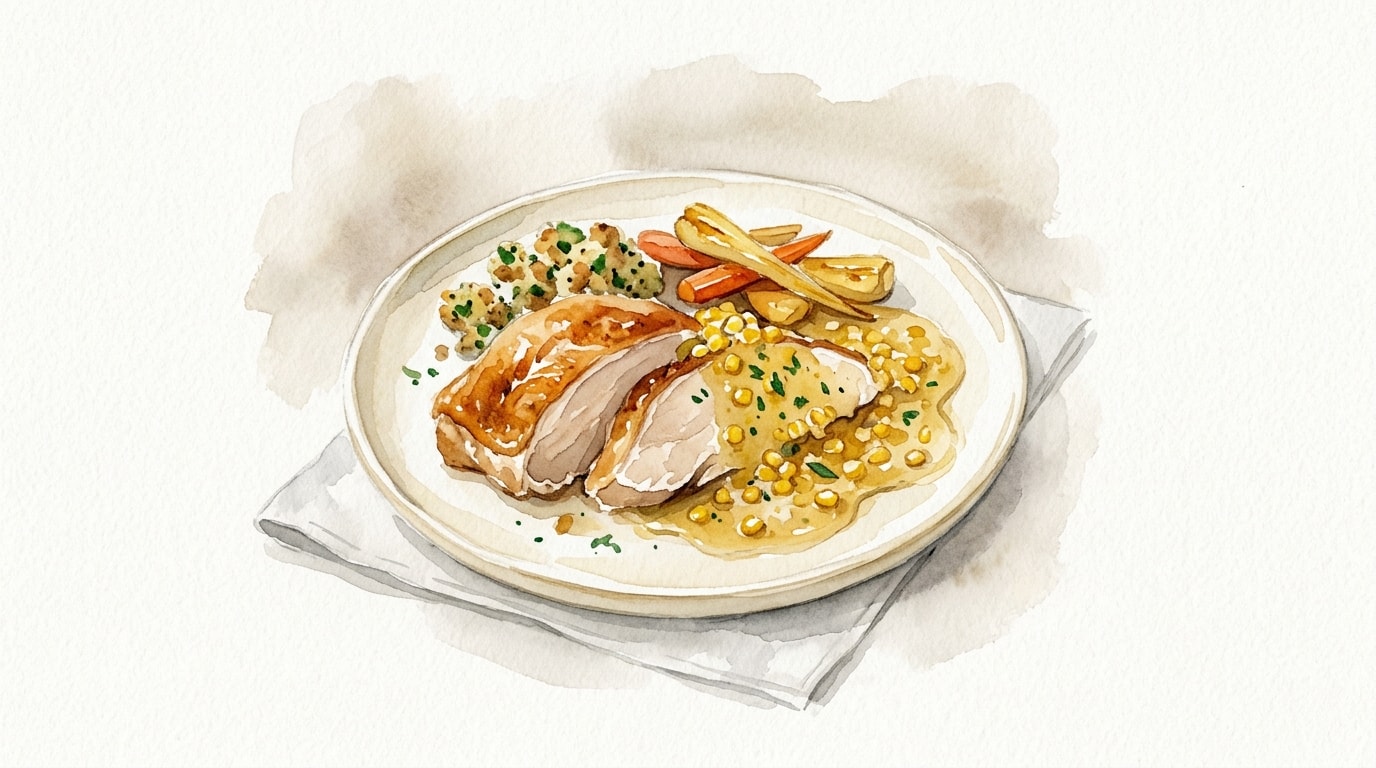
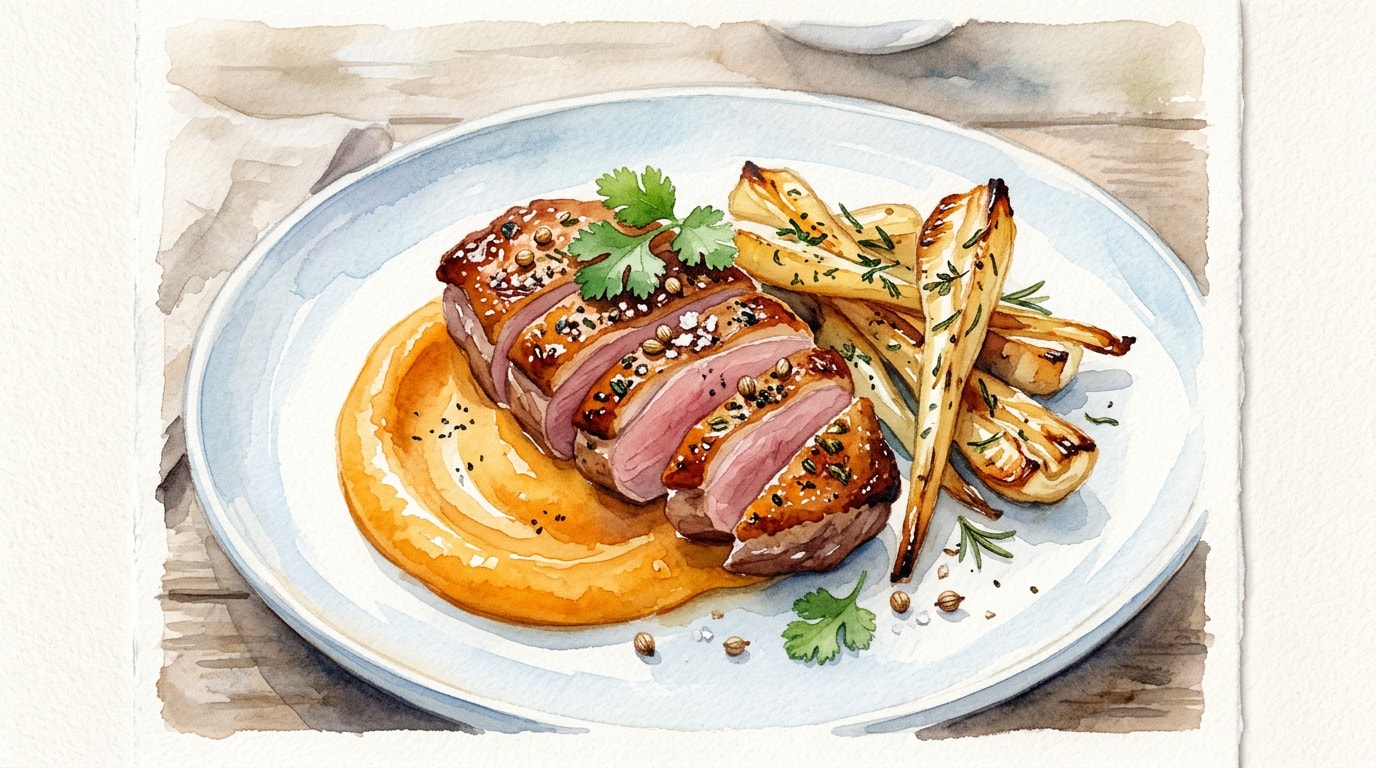
Slice the rested duck breasts into thick medallions. Spoon the warm sweet potato sauce onto the center of each plate, arrange the roasted parsnips gracefully alongside, and finish by placing a crispy leg quarter and the sliced breast meat carefully over the sauce.
Chef's Notes
- Starting duck breasts in a cold pan is absolutely non-negotiable for achieving perfectly crispy skin. It allows the thick layer of fat to render out slowly and baste the meat before the breast overcooks.
- Save all the rendered duck fat from the cast iron skillet. It is culinary liquid gold and can be strained, chilled, and stored in the refrigerator for roasting potatoes or vegetables in the future.
- Duck legs contain a significant amount of hard working connective tissue, which requires low, slow heat to break down into gelatin. Do not rush them; they are ready when the meat pulls away from the bone with practically no resistance.
- The bright acidity from the orange juice in the sweet potato puree is a vital component. It cuts right through the luxurious richness of the duck fat and the heavy earthiness of the parsnips to keep the palate engaged.
Storage
Refrigerator: 3 days — Store the duck parts and the sweet potato sauce in separate airtight containers.
Freezer: 1 month — The sweet potato sauce freezes exceptionally well. Freezing the roasted duck is not recommended as the skin will lose all crispness and the meat texture will degrade.
Reheating: Reheat duck in a 175°C/350°F oven until warmed through and the skin re-crisps. Warm the sweet potato sauce in a saucepan over low heat, adding a splash of water or broth to restore the velvety texture.