Equipment
Ingredients
Proteins & Produce
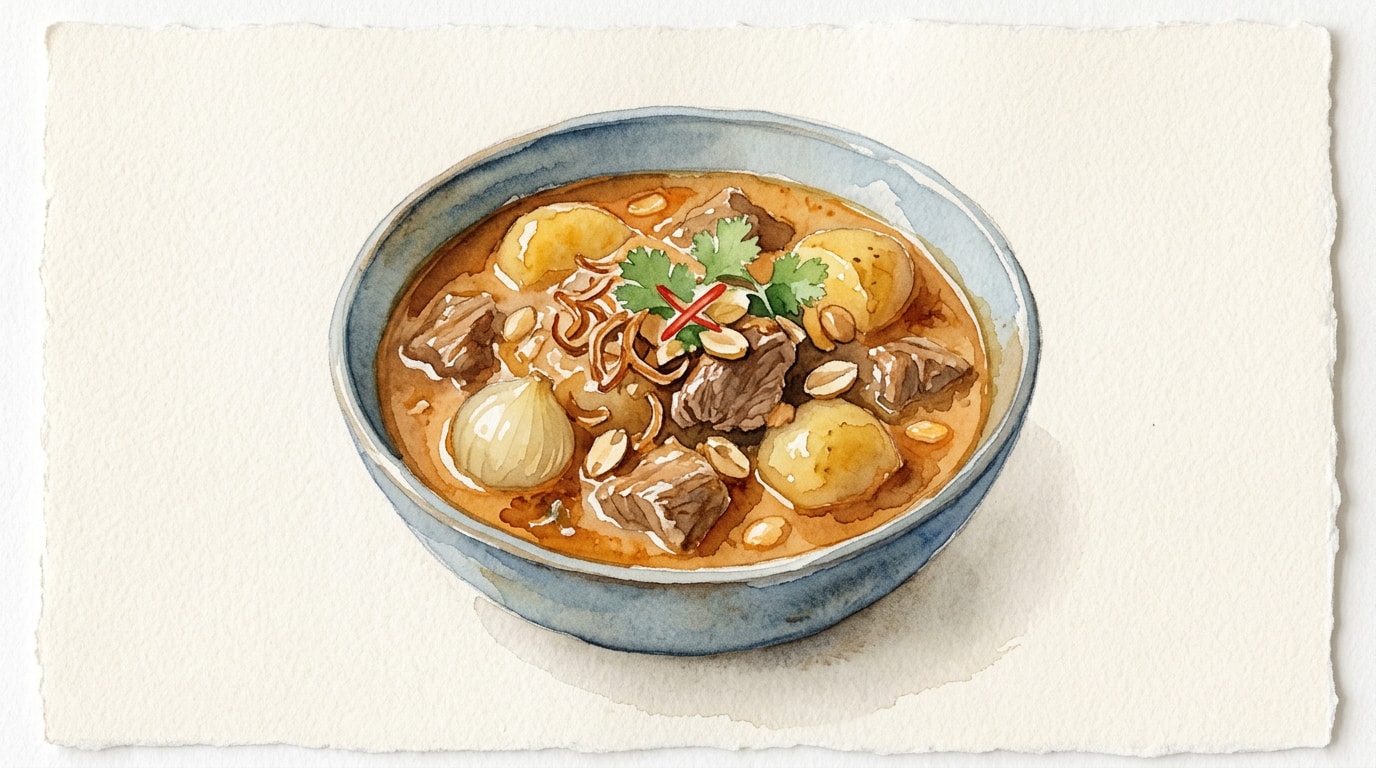
- 800 g beef chuck steak, cut into 4cm pieces
- 400 g waxy potatoes, peeled and cut into 3cm chunks
- 200 g brown onion, cut into thick wedges
Liquids & Paste
- 200 ml coconut cream
- 400 ml full-fat coconut milk
- 115 g massaman curry paste
- 250 ml water
Aromatics & Seasonings
- 60 g roasted unsalted peanuts
- 40 g palm sugar, finely chopped
- 45 ml fish sauce
- 30 ml tamarind concentrate
- 1 cinnamon stick
- 2 star anise
- 4 cardamom pods, lightly crushed
- 2 bay leaves, dried
Nutrition (per serving)
Method
Using a chef's knife and cutting board, portion the beef chuck into 4cm pieces, the peeled potatoes into 3cm chunks, and the brown onion into thick wedges. Measure out all wet and dry ingredients.
Place a Dutch oven over medium heat. Pour in the thick coconut cream and gently simmer. Stir occasionally until the coconut cream cracks, meaning the coconut oil visibly separates from the white solids. This usually takes 5 to 10 minutes.
Add the massaman curry paste, cinnamon stick, star anise, cardamom pods, and bay leaves to the cracked coconut cream. Fry the paste in the separated coconut oil until it is highly aromatic and darkens slightly in color.
Add the diced beef chuck steak to the pot. Stir thoroughly with a wooden spoon to coat the meat evenly in the fried curry paste. Cook briefly just until the exterior of the beef begins to lose its raw color.
Pour in the full-fat coconut milk and water. Stir to combine, scraping up any fond from the bottom of the pot. Bring the liquid to a gentle boil (around 100 degrees Celsius or 212 degrees Fahrenheit), then immediately reduce the heat to low. Cover the pot and simmer gently for 1 hour and 30 minutes.
Remove the lid and gently stir in the potatoes, onions, and roasted peanuts. Continue to simmer uncovered for another 30 minutes, or until the potatoes are cooked through and the beef is completely tender. If the sauce looks too thick, add a small splash of water.
Stir in the chopped palm sugar, fish sauce, and tamarind concentrate. Simmer for a final 5 minutes to allow the sugars to dissolve. Taste the sauce carefully; it should be perfectly balanced between rich, sweet, salty, and slightly sour. Adjust with more sugar, fish sauce, or tamarind if necessary.
Remove the pot from the heat. Allow the curry to rest for 10 to 15 minutes before serving. This resting period allows the fat to rise and the complex flavors to settle. Skim any excessive oil from the surface if desired.
Chef's Notes
- Cracking the coconut cream is a foundational technique in traditional Thai curries. It allows the curry paste to fry in pure coconut fat rather than boil, drawing out the fat-soluble essential oils from the spices and producing a richer, glossier sauce.
- The balance of flavors is critical in Massaman curry. Do not just add the exact measurements of sugar, fish sauce, and tamarind and assume it is finished. Palm sugars vary in sweetness, and tamarind concentrates vary wildly in sourness. Always taste and adjust.
- Waxy potatoes hold their shape perfectly during a long braise. Avoid starchy baking potatoes as they will disintegrate and turn the rich coconut sauce into a thick, muddy stew.
- Massaman is famously a next-day dish. While it is delicious immediately, the complex whole spices penetrate the beef and potatoes far more deeply if the curry is cooled and refrigerated overnight before reheating gently.
Storage
Refrigerator: 4 days — Store in an airtight container. Flavors will deepen and improve overnight.
Freezer: 3 months — Potatoes may change texture slightly upon freezing, becoming slightly softer.
Reheating: Reheat gently on the stovetop over low heat, adding a splash of water if the sauce has thickened too much in the fridge.