Equipment
Ingredients
Chicken
- 1000 g chicken whole legs, skinless, drumstick and thigh connected
First Marinade
- 30 ml lemon juice, freshly squeezed
- 5 g kashmiri red chili powder
- 10 g salt, fine
Second Marinade
- 150 g plain greek yogurt, full-fat
- 30 g ginger garlic paste
- 8 g garam masala
- 5 g ground coriander
- 5 g ground cumin
- 3 g turmeric powder
- 30 ml mustard oil
- 2 g dried fenugreek leaves, crushed
Nutrition (per serving)
Method
Using a chef's knife, score the chicken pieces with deep slashes down to the bone, making about 3 to 4 cuts per piece. This allows the marinade to penetrate deeply and helps the chicken cook evenly.
In a large mixing bowl, combine the lemon juice, Kashmiri red chili powder, and salt. Mix well to form a loose paste.
Rub the first marinade thoroughly all over the chicken pieces, ensuring the mixture is massaged deep into the scored cuts. Cover the bowl and let it marinate for 30 minutes at room temperature.
In a small mixing bowl, use a whisk to combine the plain Greek yogurt, ginger garlic paste, garam masala, ground coriander, ground cumin, turmeric powder, mustard oil, and crushed dried fenugreek leaves.
Pour the spiced yogurt mixture over the chicken. Massage the marinade into the meat until every piece is thickly and evenly coated. Cover tightly and refrigerate for at least 4 hours.
Preheat the oven to 220°C/430°F. Line a baking sheet with foil for easy cleanup and set a lightly oiled wire cooling rack on top.
Arrange the chicken pieces on the wire rack, shaking off any excessive clumps of marinade. Roast in the oven for 30 minutes, turning the pieces once halfway through. Use a meat thermometer to ensure the internal temperature at the thickest part reaches 74°C/165°F.
Switch the oven setting to broil. Broil the chicken for 5 minutes, watching closely, until the edges are nicely charred and bubbling, mimicking the effect of a traditional clay oven.
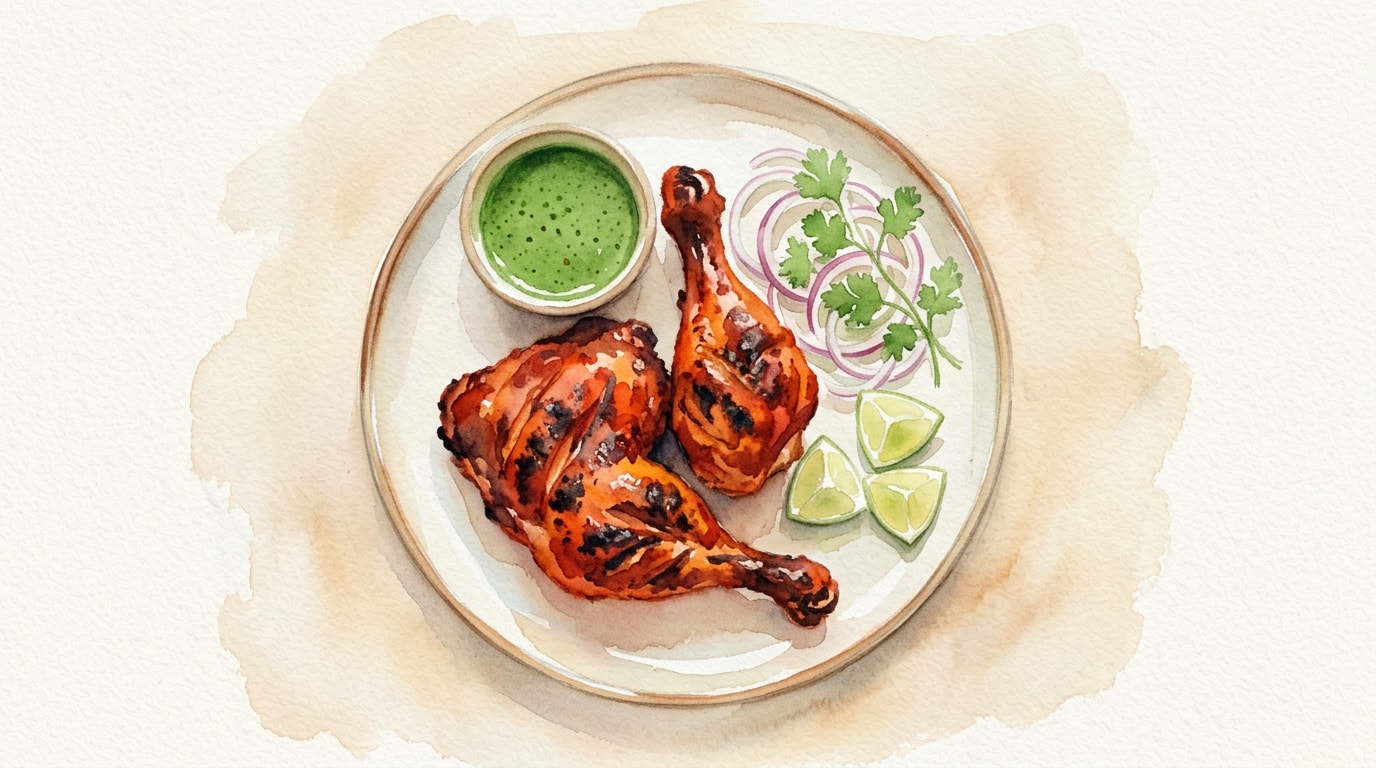
Remove the chicken from the oven and transfer to a serving platter. Let the meat rest for 10 minutes to allow the juices to redistribute before serving.
Chef's Notes
- To achieve a true restaurant-quality flavor profile, use mustard oil. It brings an unmistakable sharp, pungent note that standard cooking oils cannot replicate. Briefly heating the mustard oil until it smokes and letting it cool before mixing can mellow its raw edge.
- The double marination technique is crucial to authentic tandoori preparations. The initial acidic marinade of lemon and salt tenderizes the protein fibers, while the yogurt-based second marinade acts as a thick flavor carrier that clings to the meat during roasting.
- Kashmiri chili powder is essential here. It imparts the iconic, vibrant red color associated with tandoori chicken without making the dish overwhelmingly spicy. Avoid artificial red food coloring if possible.
- To mimic the intense smoky charcoal flavor of a traditional clay tandoor at home, employ the dhungar method. Place a smoldering piece of food-grade charcoal in a small metal bowl inside the dish containing your cooked chicken, pour a few drops of ghee on the coal, and seal with a lid for three to five minutes.
Storage
Refrigerator: 4 days — Store in an airtight container. The smoky flavor may intensify slightly over time.
Freezer: 1 month — Freeze cooked pieces in a tightly sealed freezer bag. Texture may become slightly dry upon reheating.
Reheating: Reheat in an oven at 180°C/350°F or in an air-fryer until warmed through to maintain the charred exterior.