Equipment
Ingredients
Aromatics & Base
- 15 ml sesame oil
- 15 ml neutral cooking oil
- 40 g scallions, thinly sliced, white and green parts separated
- 15 g garlic, minced
- 15 g gochugaru, Korean chili flakes
Stew Components
- 100 g pork belly, thinly sliced into bite-sized pieces
- 100 g ripe kimchi, chopped
- 400 ml anchovy-kelp stock
- 15 ml korean soup soy sauce
- 5 g sugar
- 350 g silken tofu, drained
Garnish
- 2 eggs, raw
Nutrition (per serving)
Method
Prepare all ingredients. Slice the scallions, mince the garlic, chop the kimchi, and slice the pork belly. Having everything ready is crucial as the chili oil base cooks quickly.
Heat the sesame oil and neutral cooking oil in the earthenware pot over medium-low heat. Add the sliced pork belly and the white parts of the scallions.
Sauté the pork and scallions until the pork is no longer pink and its fat begins to render, ensuring the internal temperature of the meat reaches at least 74C or 165F.
Reduce the heat to low. Add the minced garlic and gochugaru. Stir constantly for 1 minute to toast the chili flakes in the oil. Watch carefully so the gochugaru does not burn, which will make the soup bitter.
Add the chopped kimchi and sauté for another 2 minutes until the kimchi softens slightly and absorbs the chili oil.
Pour in the anchovy-kelp stock, Korean soup soy sauce, and sugar. Increase the heat to medium-high and bring the mixture to a rolling boil at 100C or 212F.
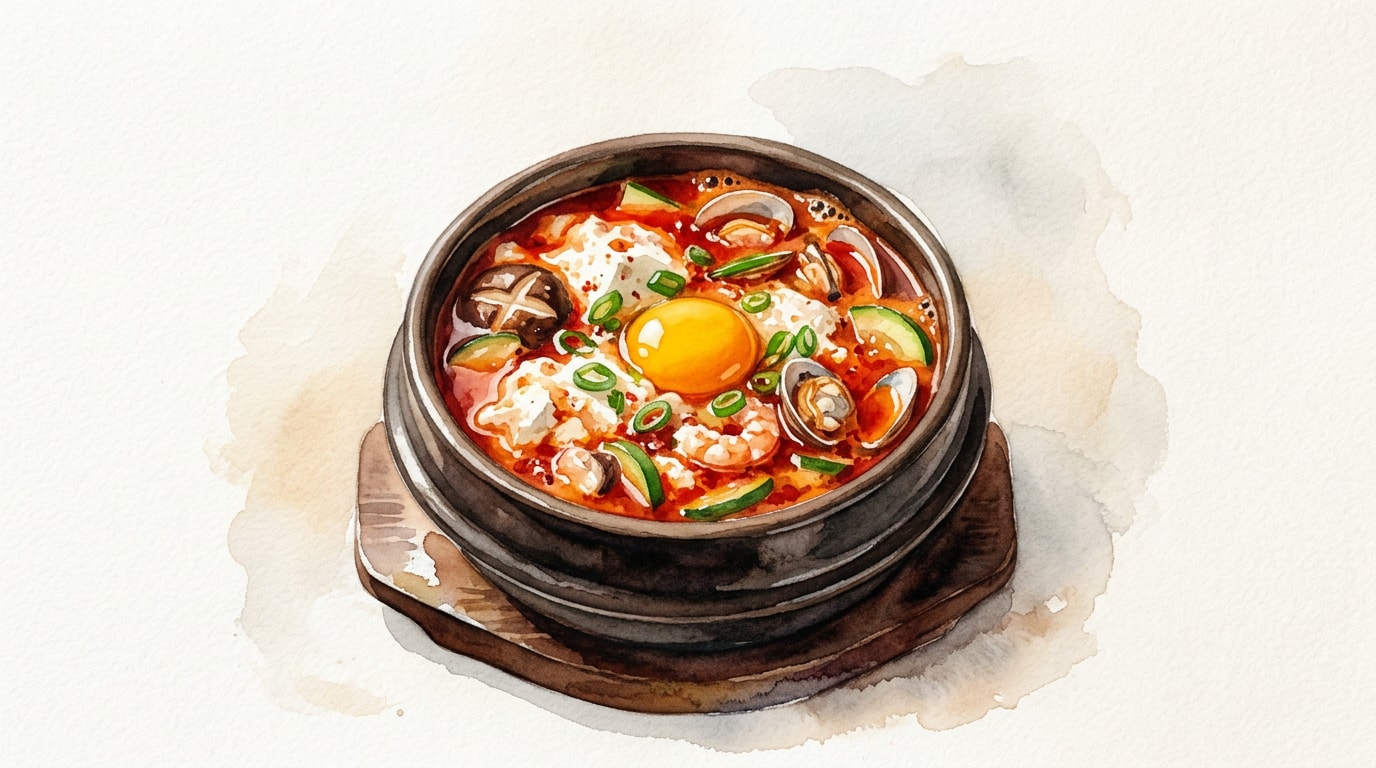
Carefully slide the silken tofu into the boiling broth. Use a spoon to gently break it into large, soft chunks. Simmer for 5 minutes so the tofu absorbs the flavors of the stew.
Remove the pot from the heat while it is still boiling vigorously. Immediately crack the raw eggs into the center of the stew and sprinkle with the reserved green scallions. Serve immediately with a bowl of steamed rice. Note: Ensure pasteurized eggs are used if serving vulnerable populations.
Chef's Notes
- The secret to a restaurant-quality sundubu jjigae is the chili oil base. Taking the time to slowly render the pork fat and toast the gochugaru creates the signature bright red, flavorful oil that floats on top.
- Korean soup soy sauce (guk-ganjang) is much lighter in color but saltier and more umami-rich than regular soy sauce. If you must substitute with regular soy sauce, add a splash of fish sauce to make up for the lost umami.
- Earthenware pots (ttukbaegi) retain heat incredibly well, allowing the stew to continue boiling violently even after it is removed from the stove. This ambient heat is what gently poaches the raw egg at the table.
Storage
Refrigerator: 3 days — Store without the raw egg garnish. Reheat thoroughly before consuming.
Freezer: 1 month — Tofu texture will change significantly if frozen, becoming porous and spongy rather than silken.
Reheating: Reheat on the stovetop over medium heat until rapidly bubbling.