Equipment
Ingredients
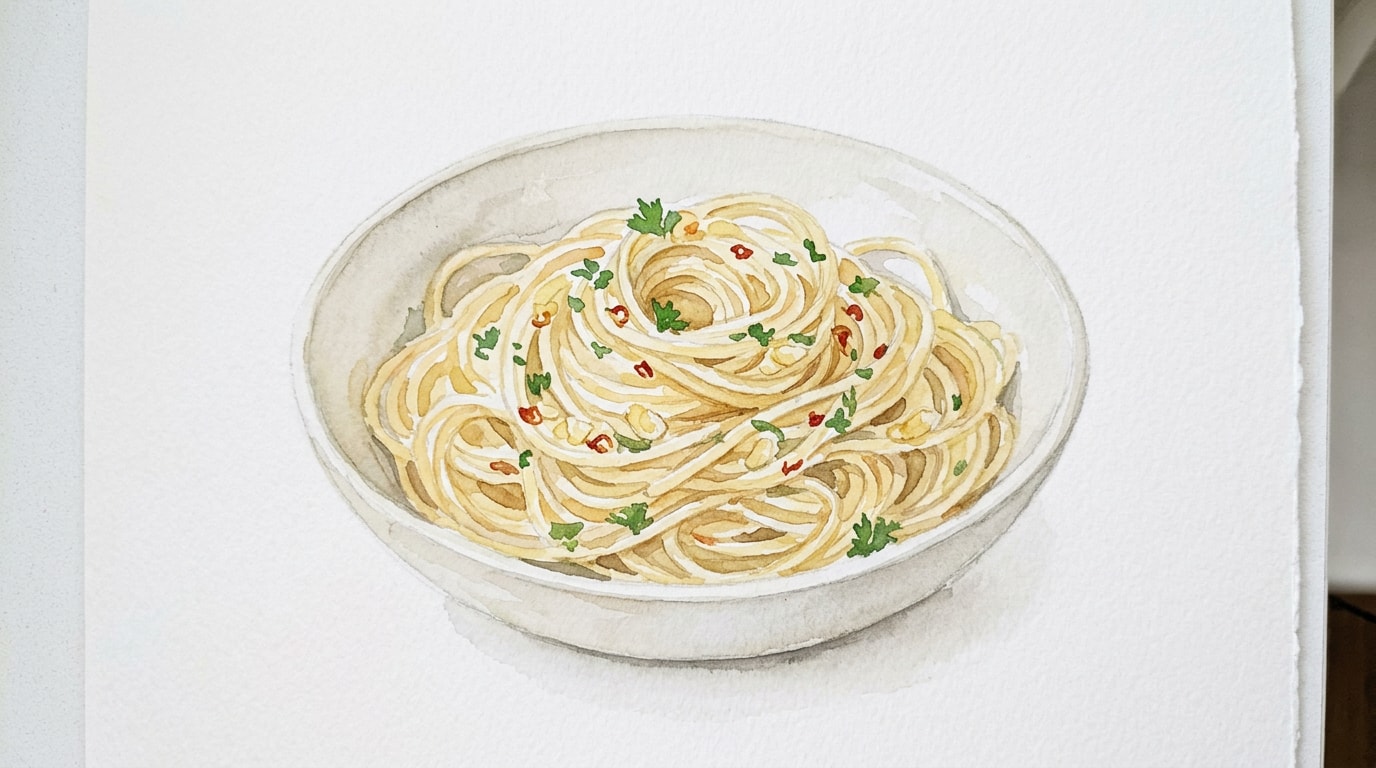
Pasta
- 200 g spaghetti, dried
- 2000 ml water
- 20 g kosher salt
Aglio e Olio Sauce
- 60 ml extra virgin olive oil
- 4 garlic, thinly sliced
- 2 g red chili flakes
- 15 g fresh parsley, finely chopped
Nutrition (per serving)
Method
Bring the water to a rapid boil at 100°C/212°F in a large pot. Add the kosher salt, stirring to dissolve, then add the spaghetti. Cook until 2 minutes shy of the package instructions for al dente, stirring occasionally.
While the pasta cooks, place the extra virgin olive oil and thinly sliced garlic in a cold, large skillet. Place over medium-low heat. Starting cold allows the garlic to gently infuse the oil.
Cook the garlic until it just begins to turn a very pale, light golden color along the edges. Immediately add the red chili flakes and cook for 30 seconds until fragrant, then remove the skillet from the heat to prevent burning.
Carefully reserve 120ml of starchy pasta water from the pot. Using tongs, transfer the slightly undercooked spaghetti directly from the boiling water into the skillet. Pour in 60ml of the reserved pasta water.
Return the skillet to medium heat. Vigorously toss and stir the pasta in the oil and water mixture. The starches will emulsify with the oil to create a creamy sauce. Cook for 1 to 2 minutes until the pasta is al dente and perfectly coated. Add more pasta water if the pan looks dry.
Remove from heat entirely. Add the finely chopped fresh parsley if using, and thoroughly toss to combine. Serve immediately while hot.
Chef's Notes
- Starting the garlic in cold oil is the absolute secret to a profound, sweet garlic flavor. It slowly draws out the essential oils without risking the harsh bitterness of scorched garlic.
- Do not rinse your pasta. The residual starch on the noodles and in the boiling water is the crucial binding agent that miraculously turns separated oil and water into a cohesive, creamy sauce.
- Use the highest quality extra virgin olive oil you can find. In a dish with so few elements, the oil functions as a primary flavor component rather than just a cooking medium.
- A traditional aglio e olio relies entirely on the technique of mantecatura, the vigorous tossing of the pasta with fat and starchy water off the heat to create a stable emulsion.
Storage
Refrigerator: 3 days — Emulsion will break and pasta will absorb moisture, becoming slightly dry.
Reheating: Reheat gently in a skillet over low heat, adding 15 to 30ml of water to re-emulsify the sauce.