Equipment
Ingredients
Noodles and Protein
- 150 g dried flat rice noodles, dry
- 200 g large shrimp, peeled and deveined
- 2 egg, room temperature
- 100 g extra firm tofu, cut into matchsticks
Pad Thai Sauce
- 60 ml tamarind concentrate
- 45 g palm sugar, finely chopped
- 45 ml fish sauce
Aromatics and Oil
- 45 ml neutral cooking oil
- 30 g shallot, finely minced
- 15 g garlic, finely minced
- 20 g sweet preserved daikon radish, finely chopped
- 15 g dried shrimp, roughly chopped
Vegetables and Garnish
- 100 g fresh bean sprouts, rinsed and drained well
- 30 g garlic chives, cut into 5cm lengths
- 30 g roasted unsalted peanuts, roughly crushed
- 1 lime, cut into wedges
- 2 g chili flakes
Nutrition (per serving)
Method
Place the dried rice noodles in a large bowl and submerge them completely in room temperature water. Let them soak until they are pliable and wrap easily around your finger, but still slightly firm and opaque in the center. Drain thoroughly and set aside.
In a small saucepan, combine the tamarind concentrate, palm sugar, and fish sauce over medium heat. Simmer gently, stirring frequently, until the palm sugar completely dissolves and the sauce reduces slightly into a syrupy consistency. Remove from heat.
Heat half of the neutral oil in the wok over high heat until it shimmers. Add the shrimp and sear quickly until they turn pink and curl, reaching an internal safe temperature of 74°C/165°F. Remove the shrimp from the wok with clean tongs to prevent cross-contamination, and set aside on a plate.
Add the remaining oil to the hot wok. Add the minced shallot, garlic, extra firm tofu, preserved radish, and dried shrimp. Sauté continuously until the aromatics are deeply fragrant and the tofu begins to take on a golden crust.
Push the tofu and aromatics to one side of the wok. Crack the eggs directly into the cleared space. Quickly scramble the eggs using your spatula, breaking up the yolks. Cook until the eggs are mostly set to 71°C/160°F for food safety, then fold them into the tofu mixture.
Add the drained, soaked rice noodles and the prepared tamarind sauce to the wok. Toss vigorously and continuously, ensuring the sauce coats the noodles evenly. Cook until the noodles absorb the liquid, become glossy, and are tender to the bite.
Return the cooked shrimp to the wok along with half of the fresh bean sprouts and all of the garlic chives. Toss everything together for a few seconds just to warm the shrimp through and slightly wilt the vegetables, maintaining their crisp texture.
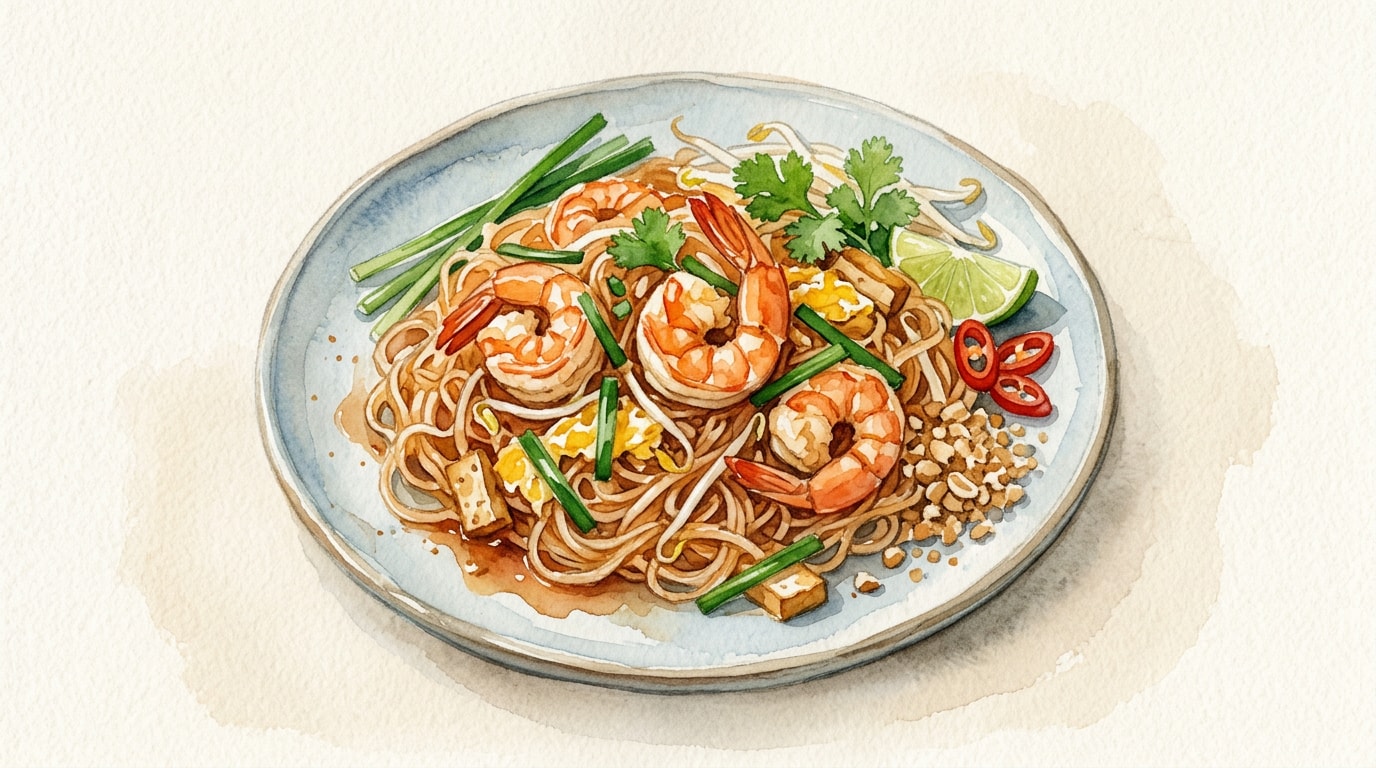
Divide the Pad Thai immediately between serving plates. Arrange the remaining raw bean sprouts alongside the noodles. Garnish generously with the crushed roasted peanuts, lime wedges, and a pinch of chili flakes on the side for diners to mix in to their preference.
Chef's Notes
- Mise en place is absolute culinary law for Pad Thai. The entire wok sequence takes fewer than 10 minutes, meaning every single ingredient must be chopped, measured, and placed within arm's reach before turning on the stove.
- Do not crowd the wok. If you need to make more than two servings, you must cook them in batches. Overloading the pan drops the temperature, turning a vigorous stir-fry into a boiling mush that destroys the noodle texture.
- Using authentic Thai palm sugar, which often comes in hard golden discs, provides a complex, smoky caramel note that is essential for balancing the assertive tartness of the tamarind.
- Wok hei, or the breath of the wok, is achieved by high heat and tossing the noodles through the hot air just above the pan. Use a carbon steel wok and do not be afraid of the high heat required.
Storage
Refrigerator: 3 days — Rice noodles will harden in the fridge. Reheat in a pan with a splash of water to revive texture.
Reheating: Pan-fry gently with 15ml of water until warmed through.