Equipment
Ingredients
Meat & Searing
- 800 g veal shoulder, cut into 3cm cubes
- 30 ml sunflower oil
- 10 g kosher salt
- 3 g black pepper, freshly ground
Aromatics & Vegetables
- 300 g yellow onion, diced
- 200 g carrots, peeled and sliced into thick rounds
- 15 g garlic, minced
- 400 g potatoes, peeled and cut into 3cm cubes
Braising Liquids
- 30 g tomato paste
- 400 g crushed tomatoes, canned
- 500 ml beef broth
- 2 bay leaf, whole
Finish
- 15 g fresh dill, finely chopped
Nutrition (per serving)
Method
Pat the veal cubes completely dry with paper towels. Season all sides generously with the measured kosher salt and black pepper.
Heat the sunflower oil in a Dutch oven over medium-high heat. Add the seasoned veal in a single layer, working in batches if necessary so you do not overcrowd the pan. Sear undisturbed for 3 to 4 minutes per side until deeply browned. Transfer the seared veal to a bowl and set aside.
Reduce the heat to medium. Add the diced yellow onions and sliced carrots to the rendered fat in the Dutch oven. Cook, stirring occasionally, until the onions become translucent and begin to soften, about 5 to 7 minutes.
Stir in the minced garlic and the tomato paste. Cook for 2 minutes, constantly stirring with a wooden spoon, until the tomato paste darkens to a deep brick red color and becomes highly aromatic.
Pour the beef broth into the pot. Firmly scrape the bottom of the pot with the wooden spoon to release any browned bits stuck to the surface. This fond will flavor the entire stew.
Return the seared veal and any accumulated resting juices to the pot. Stir in the crushed tomatoes and the whole bay leaves. Increase the heat to bring the mixture to a gentle, rolling boil.
Reduce the heat to low, cover the Dutch oven tightly with its lid, and let the stew simmer for 1 hour. The liquid should maintain a slow, gentle bubbling.
Remove the lid and gently stir in the cubed potatoes. Cover the pot again and continue to simmer for another 30 minutes. At this stage, both the veal and the potatoes should be completely fork-tender. Ensure the internal temperature of the thickest pieces of veal registers at least 74 degrees Celsius or 165 degrees Fahrenheit for safety.
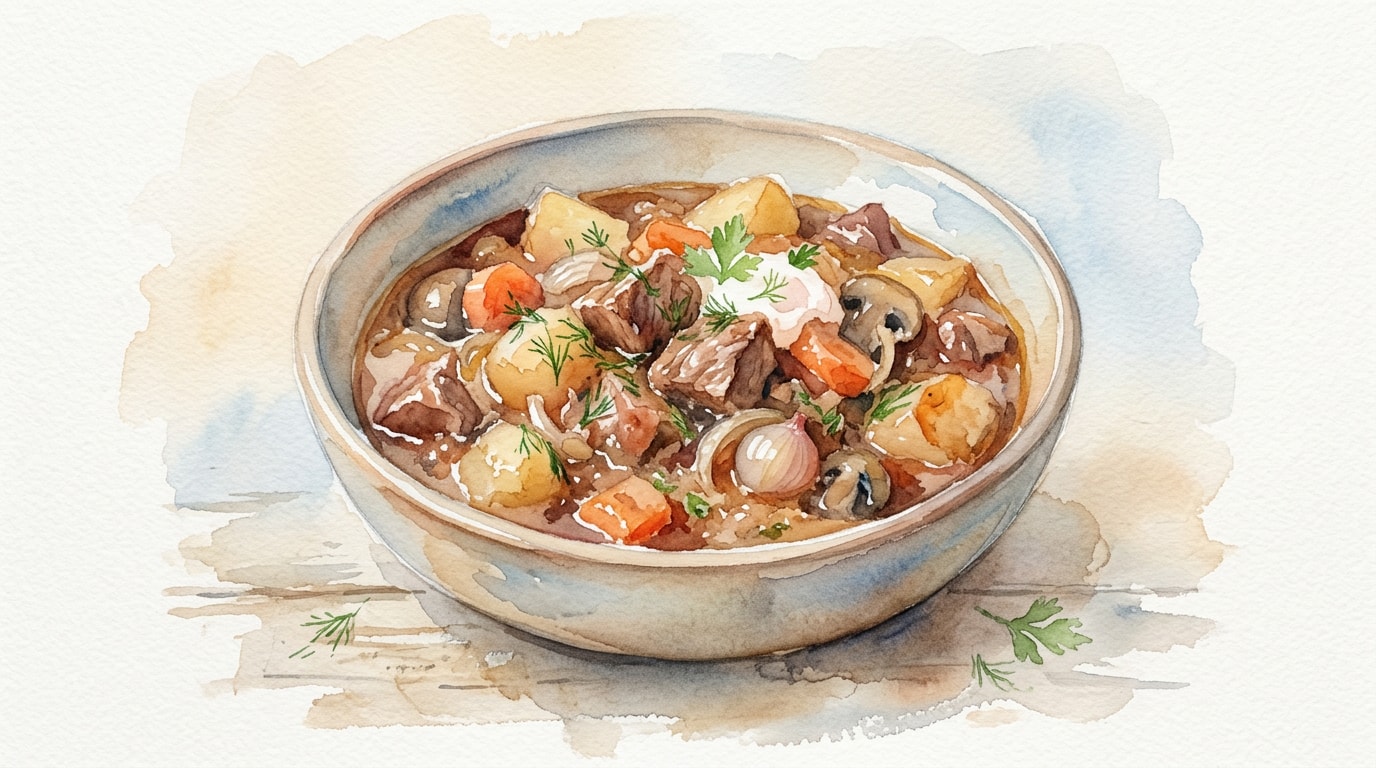
Remove the pot from the heat. Carefully fish out and discard the bay leaves. Stir in the chopped fresh dill, reserving a small pinch for garnishing individual bowls if desired. Let the stew rest for 10 minutes to allow the sauce to thicken slightly and the flavors to harmonize before serving.
Chef's Notes
- Moisture is the enemy of a good sear. Always thoroughly pat the veal dry before it touches the hot oil. A great crust builds the foundational flavor of the stew.
- Sunflower oil is traditional in Russian and Eastern European cooking due to its high smoke point and neutral flavor profile. If unavailable, use an oil with similar heat tolerance.
- Tomato paste can have a raw, metallic taste right out of the can or tube. Caramelizing it directly in the hot fat before adding liquids transforms it into a deep, savory umami base.
- Never add the fresh dill during the long braising phase. Extended heat destroys its delicate essential oils and vibrant green color. Always stir it in off the heat just before serving.
Storage
Refrigerator: 4 days — Flavors meld and improve significantly on the second day.
Freezer: 3 months — Potatoes may change texture slightly upon freezing. For best results, freeze without fresh dill and add it after reheating.
Reheating: Reheat gently on the stovetop over low heat, adding a splash of water or broth if needed, until the meat reaches 74 degrees Celsius or 165 degrees Fahrenheit internally.