Equipment
Ingredients
Pork Roast
- 1500 g boneless pork loin roast, fat cap intact
Herb Paste
- 4 garlic, minced
- 3 fresh rosemary, leaves stripped and finely chopped
- 30 ml olive oil
- 15 g dijon mustard
- 15 g kosher salt
- 5 g black pepper, freshly ground
Nutrition (per serving)
Method
Preheat the oven to 200 degrees Celsius or 400 degrees Fahrenheit.
In a small mixing bowl, combine the minced garlic, chopped rosemary, kosher salt, black pepper, optional Dijon mustard, and 15ml of the olive oil. Mix thoroughly to form a thick, aromatic paste.
Pat the pork loin completely dry with paper towels to ensure a proper sear. Wash your hands immediately after handling raw pork to prevent cross-contamination.
Using a sharp knife, gently score the fat cap of the pork loin in a crosshatch pattern, cutting just through the fat but avoiding the meat beneath. This helps the fat render and allows the seasoning to penetrate deeper.
Rub the garlic and rosemary paste evenly over the entire surface of the pork loin, pressing it firmly into the scored fat. Wash hands and any contaminated surfaces thoroughly.
Heat the remaining 15ml of olive oil in a cast-iron skillet over medium-high heat. Carefully place the pork loin in the hot pan, fat side down first, and sear until a deep golden-brown crust forms. Rotate to sear all sides, taking about 2 minutes per side.
Transfer the skillet with the seared pork directly into the preheated oven. Roast until a meat thermometer inserted into the thickest part of the meat reads 60 degrees Celsius or 140 degrees Fahrenheit. This should take approximately 45 minutes depending on the exact thickness of your roast.
Remove the pork from the oven and carefully transfer it to a clean cutting board. Tent loosely with aluminum foil and let the meat rest undisturbed for 15 minutes. The internal temperature will rise through carryover cooking to a safe final temperature of 63 degrees Celsius or 145 degrees Fahrenheit.
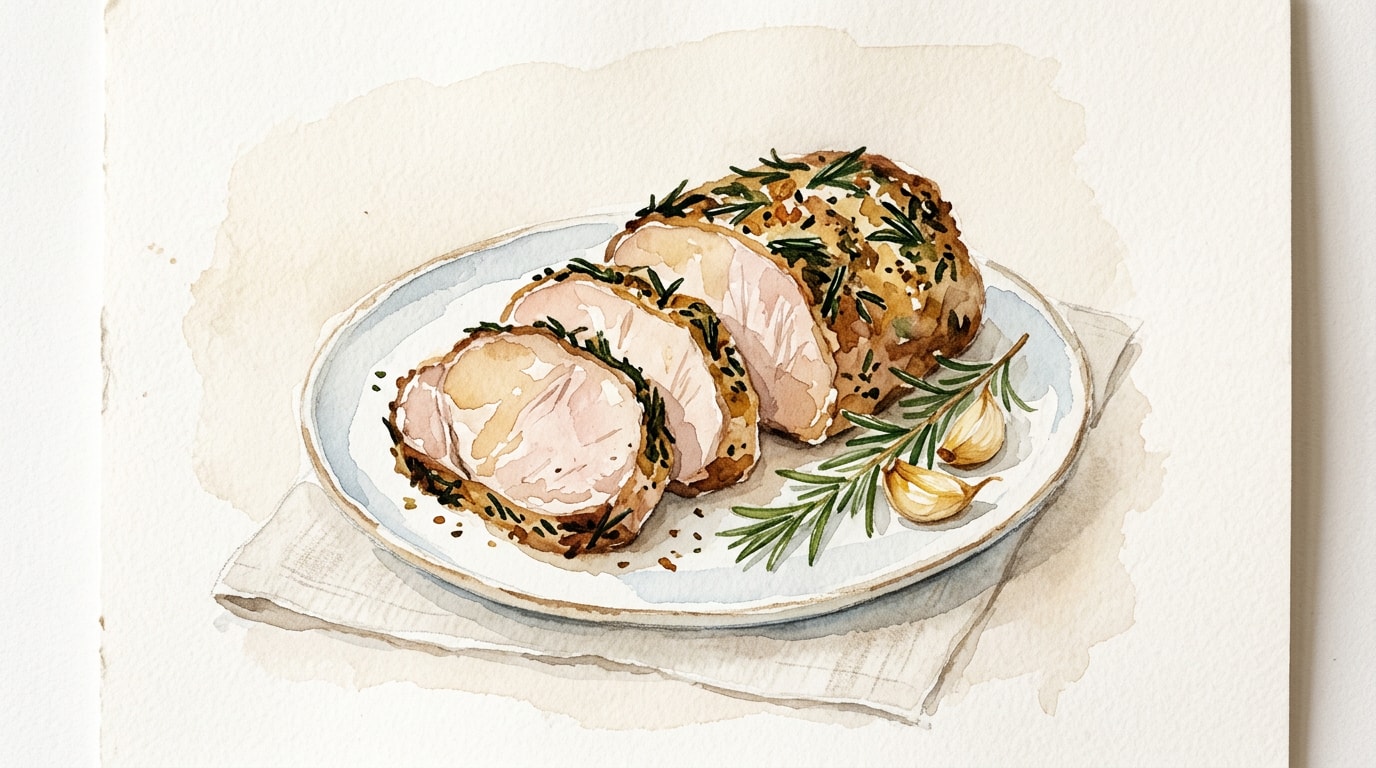
Slice the rested pork loin against the grain into medallions about 1.5 centimeters thick. Serve immediately, drizzling any accumulated juices from the cutting board over the sliced meat.
Chef's Notes
- Pork loin is notably different from pork tenderloin. Loin is larger, thicker, and has a fat cap, making it perfect for roasting. Do not substitute tenderloin without drastically reducing your cooking times.
- Carryover cooking is critical for lean proteins. By pulling the roast from the oven 3 to 4 degrees below your target temperature, the residual heat perfectly finishes the meat without drying it out.
- For even more flavor, season the pork with salt 24 hours in advance and leave it uncovered in the refrigerator. This dry-brining process seasons the meat deeply and dries out the exterior for a vastly superior sear.
- Allowing the meat to rest is non-negotiable. Slicing immediately after removing it from the oven will cause all the juices to bleed out, resulting in a dry roast despite perfect cooking temperatures.
Storage
Refrigerator: 4 days — Store in an airtight container or wrapped tightly.
Freezer: 2 months — Slice before freezing for easier, more even reheating.
Reheating: Reheat gently in a 150C/300F oven, wrapped in aluminum foil with a splash of chicken broth or water to prevent drying out.