Equipment
Ingredients
The Pork and Trivet
- 2000 g pork shoulder joint, skin-on, boneless, tied
- 15 g flaky sea salt, crushed slightly
- 15 ml olive oil
- 2 yellow onion, roughly chopped
- 2 carrots, roughly chopped
- 2 celery, roughly chopped
- 1 garlic, halved crosswise
Homemade Apple Sauce
- 4 bramley or granny smith apples, peeled, cored, and chopped
- 20 g unsalted butter
- 25 g caster sugar
- 15 ml lemon juice, freshly squeezed
- 30 ml water
Mashed Potatoes
- 1200 g floury potatoes, peeled and cut into even chunks
- 100 g unsalted butter, cubed
- 150 ml whole milk, warmed
- fine sea salt
Spring Greens
- 400 g spring greens or savoy cabbage, tough stalks removed, leaves shredded
- 30 g unsalted butter
- black pepper
Rich Pan Gravy
- 25 g all-purpose flour
- 500 ml chicken or pork stock, hot
- 10 ml apple cider vinegar
Nutrition (per serving)
Method
Using a sharp utility knife or scalpel, score the skin of the pork shoulder in parallel lines about 1 centimeter apart, cutting completely through the fat layer but stopping just before the red meat.
Pat the pork skin completely dry with paper towels. Rub the skin generously with the flaky sea salt, pressing it into the score marks. Place the pork uncovered in the refrigerator for at least 12 hours to dry out the skin. Wash hands and surfaces thoroughly after handling the raw pork to prevent cross-contamination.
Preheat the oven to 240°C (465°F). Arrange the roughly chopped onions, carrots, celery, and halved garlic head in the base of a roasting pan to create a trivet.
Rub the dried pork skin evenly with the olive oil. Place the pork on a wire rack set directly over the vegetables in the roasting pan. Roast in the hot oven for 30 minutes until the skin begins to bubble, shatter, and blister into crackling.
Reduce the oven temperature to 160°C (320°F). Continue to roast for 3 hours. The meat is ready when it reaches an internal temperature of at least 74°C/165°F and yields easily when pierced.
While the pork roasts, place the peeled, cored, and chopped apples into a medium saucepan with 20g butter, caster sugar, lemon juice, and water. Simmer over low heat for 15 minutes, stirring occasionally, until broken down into a chunky sauce. Remove from heat and set aside.
Place the potato chunks in a large saucepan, cover entirely with cold water, and add a generous pinch of fine sea salt. Bring to a boil over high heat, then reduce the heat and simmer for 20 minutes until fork-tender.
Drain the potatoes thoroughly and return them to the warm, empty saucepan. Let them steam dry for 2 minutes over residual heat. Mash thoroughly with a potato masher until perfectly smooth, then vigorously fold in the warm milk and 100g cubed butter. Season to taste with fine sea salt.
Carefully remove the pork from the oven. Transfer it to a cutting board and leave it completely uncovered to rest for 30 minutes. Do not wrap it in foil, or the steam will soften the crackling.
To make the gravy, carefully tilt the roasting pan and spoon away all but 2 tablespoons of the clear rendered fat, leaving the dark meat juices and vegetables. Place the pan on the stovetop over medium heat, stir in the flour, and cook for 2 minutes to form a paste.
Gradually whisk the hot stock and apple cider vinegar into the roasting pan, scraping up all the caramelized browned bits from the bottom. Simmer briskly for 10 minutes until lightly thickened. Strain through a fine sieve into a warm jug, pressing the soft vegetables to extract all the flavor.
Melt the remaining 30g of butter in a large frying pan over medium heat. Add the shredded spring greens along with a small splash of water. Sauté for 5 minutes, tossing frequently, until just wilted but still vibrant green. Season with black pepper and a pinch of salt.
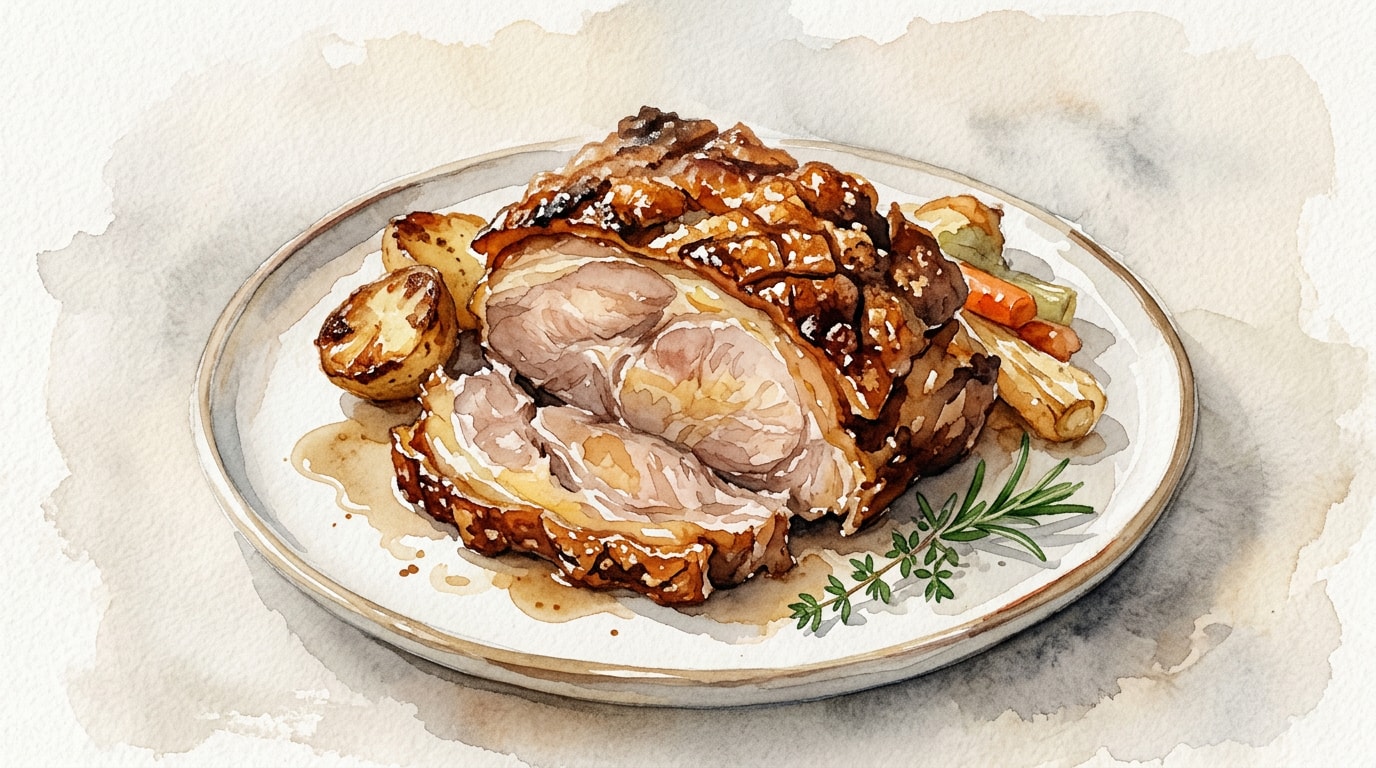
Use a heavy carving knife to crack through the crispy skin, then slice the rested pork shoulder. Serve immediately with the creamy mashed potatoes, buttery spring greens, tart apple sauce, and hot pan gravy.
Chef's Notes
- Pouring a kettle of boiling water slowly over the raw pork skin before the overnight dry helps to contract and tighten it, pulling the score marks open to allow more fat to render out.
- Never cover your roasted pork with foil while it rests. The trapped heat creates steam, which will immediately soften and ruin your perfectly crafted crackling.
- If your finished gravy is too pale for your liking, a tiny drop of dark soy sauce or gravy browning can add a rich mahogany color without overpowering the deep, roasted flavor.
- The trivet of vegetables not only flavors the gravy but physically elevates the pork, allowing air to circulate fully around the joint for even cooking.
Storage
Refrigerator: 4 days — Store the crackling separately in an airtight container at room temperature to maintain crispness.
Freezer: 3 months — Freeze the pork and gravy; potatoes and greens are best made fresh. Do not freeze the crackling.
Reheating: Reheat slices of pork gently in gravy to prevent drying out. Re-crisp crackling in a hot oven for a few minutes.