Equipment
Ingredients
Meat & Seasoning
- 1500 g bone-in beef short ribs, cut into 5cm pieces
- 15 g kosher salt
- 5 g black pepper, freshly cracked
Aromatics
- 30 ml olive oil
- 200 g yellow onion, diced
- 150 g carrots, diced
- 100 g celery, diced
- 4 garlic, smashed
- 30 g tomato paste
Liquids & Herbs
- 500 ml dry red wine
- 500 ml beef broth, low-sodium
- 5 g fresh thyme, whole sprigs
- 3 g fresh rosemary, whole sprig
- 2 bay leaves, dried
Nutrition (per serving)
Method
Preheat the oven to 160C/325F. Ensure the oven rack is in the lower-middle position to accommodate the Dutch oven.
Pat the short ribs completely dry with paper towels. Season generously on all sides with kosher salt and black pepper.
Heat olive oil in a Dutch oven over medium-high heat until shimmering. Sear the short ribs in batches using tongs, browning deeply on all sides for about 8 minutes per batch. Transfer the browned ribs to a plate.
Drain all but 2 tablespoons of beef fat from the pot. Add the diced onion, carrots, and celery, sautéing over medium heat until softened and lightly browned.
Stir the smashed garlic and tomato paste into the vegetable mixture. Cook, stirring constantly, until the tomato paste darkens to a rusty brick color.
Pour in the dry red wine to deglaze the pot, using a wooden spoon to scrape up all the flavorful browned bits stuck to the bottom.
Simmer the wine aggressively over medium-high heat until the liquid is reduced by half.
Pour in the beef broth. Add the fresh thyme, rosemary, bay leaves, and return the seared short ribs along with any accumulated resting juices to the pot.
Bring the liquid to a gentle simmer on the stove, cover the Dutch oven tightly with a lid, and transfer to the preheated oven. Braise until the meat is exceedingly tender.
Carefully remove the Dutch oven from the oven. Using tongs, transfer the delicate short ribs to a platter and cover with foil to keep warm. Internal temperature of the meat should be well past 74C/165F, easily reaching 95C/203F for proper collagen breakdown.
Pour the remaining braising liquid through a fine mesh strainer into a saucepan, pressing gently on the solids to extract flavor before discarding them. Skim the excess fat from the surface of the strained liquid.
Simmer the strained liquid over medium-high heat until it reduces into a glossy, lightly thickened sauce that coats the back of a spoon.
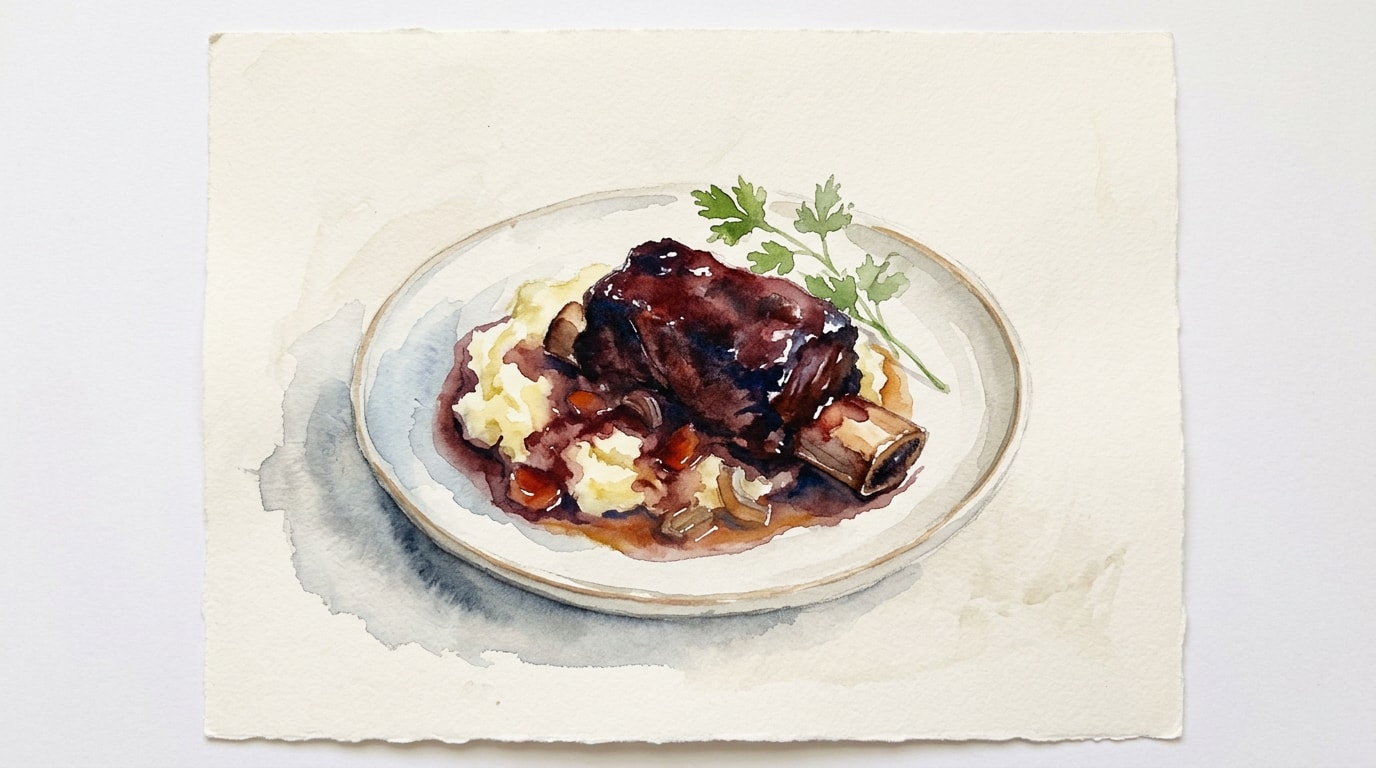
Serve the short ribs immediately, ladling the reduced red wine sauce generously over the top of the meat.
Chef's Notes
- Braises always taste significantly better the next day. Consider cooking this dish a day ahead, chilling it overnight in the refrigerator, and easily lifting off the solidified fat cap the next morning before gently reheating.
- Do not rush the tomato paste caramelization in step 5. Taking it from bright red to a rusty brick color builds an essential foundation of umami depth.
- If your Dutch oven lid is not perfectly tight, place a piece of parchment paper or aluminum foil over the pot before securing the lid to prevent the braising liquid from evaporating too quickly.
- For the deepest flavor, ensure the ribs are bone dry before searing. Surface moisture creates steam and prevents the Maillard reaction from creating a dark, flavorful crust.
Storage
Refrigerator: 4 days — Store ribs completely submerged in the braising liquid.
Freezer: 3 months — Freeze in an airtight container with sauce covering the meat.
Reheating: Gently reheat in a covered Dutch oven or saucepan over low heat until the meat reaches an internal temperature of 74C/165F.