Equipment
Ingredients
Rabbit and Coating
- 1200 g rabbit, jointed into 6 or 8 pieces
- 30 g plain flour
- 5 g salt
- 2 g black pepper, freshly ground
Base and Aromatics
- 150 g smoked bacon, cut into thick lardons
- 15 ml olive oil
- 200 g pearl onions, peeled
- 250 g carrots, peeled and sliced into 2cm chunks
- 15 g garlic, crushed
- 5 g fresh thyme, whole sprigs
- 2 bay leaves
Liquids
- 330 ml dry apple cider
- 500 ml chicken stock, warm
- 15 g dijon mustard
Finishing
- 150 g green peas, fresh or frozen
- 10 g fresh parsley, finely chopped
Nutrition (per serving)
Method
Combine the plain flour, salt, and black pepper in a large shallow bowl. Dredge the rabbit pieces thoroughly in the seasoned flour, shaking off any excess.
Heat the olive oil in a Dutch oven over medium heat. Add the smoked bacon lardons and fry until crisp and the fat has rendered. Use a slotted spoon to transfer the bacon to a large plate, leaving the fat in the pot.
Increase the heat to medium-high. Working in batches to avoid crowding, add the dredged rabbit pieces to the Dutch oven. Sear until deeply golden brown on all sides. Transfer the rabbit to the plate with the bacon.
Reduce the heat to medium. Add the pearl onions and chopped carrots to the pot. Saute until they begin to soften and lightly brown around the edges. Add the crushed garlic and cook for one additional minute until highly fragrant.
Pour the dry apple cider into the pot to deglaze. Use a wooden spoon to vigorously scrape up all the browned bits from the bottom of the pot. Allow the cider to boil and reduce by half.
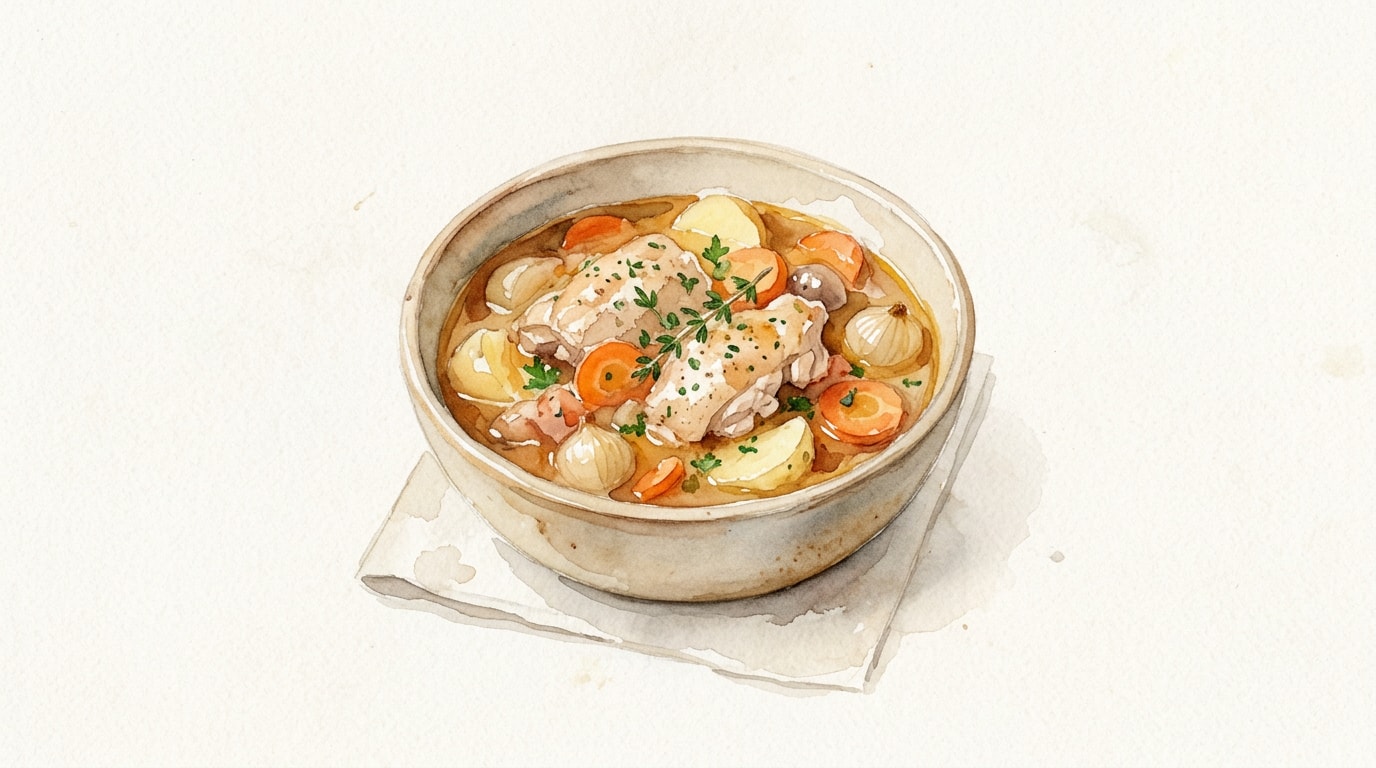
Return the rabbit pieces and bacon to the pot. Pour in the chicken stock and add the fresh thyme sprigs and bay leaves. Bring the liquid to a gentle simmer, cover the pot tightly with the lid, reduce the heat to low, and braise until the rabbit meat is extremely tender and registers 74C/165F internally.
Remove the bay leaves and thyme stems from the pot and discard. Stir in the green peas and Dijon mustard. Simmer uncovered for 5 minutes until the peas are heated through and the sauce thickens slightly.
Remove the pot from the heat and let the stew rest for 10 minutes to allow the flavors to meld. Garnish generously with chopped fresh parsley before serving.
Chef's Notes
- Rabbit is a very lean protein and can dry out easily. Maintaining a very gentle simmer rather than a rolling boil is crucial for tender, moist meat.
- To easily peel fresh pearl onions, blanch them whole in boiling water for 60 seconds, then transfer immediately to an ice bath. Squeeze gently at the root end and the skins will slip right off.
- Choosing a dry, traditional hard cider provides the necessary acidity to balance the richness of the bacon and stock. Sweet commercial ciders will make the stew cloying.
- If you prefer an even richer sauce, you can whisk a tablespoon of heavy cream or creme fraiche into the stew at the very end when you add the Dijon mustard.
Storage
Refrigerator: 4 days — Store in an airtight container. The flavors will deepen and improve overnight.
Freezer: 3 months — Freeze without the peas. Add fresh or frozen peas when reheating to prevent them from becoming mushy.
Reheating: Thaw overnight in the refrigerator if frozen. Reheat gently in a covered pot over medium-low heat until bubbling and the meat reaches an internal temperature of 74C/165F.