Equipment
Ingredients
Yakisoba Sauce
- 60 ml worcestershire sauce
- 30 ml oyster sauce
- 30 ml ketchup
- 15 ml soy sauce
- 10 g sugar
Stir-fry Components
- 600 g steamed yakisoba noodles, pre-cooked, loosened
- 200 g pork belly or thin-sliced pork shoulder, sliced into bite-sized pieces
- 250 g cabbage, chopped into 3cm squares
- 150 g yellow onion, sliced thinly
- 100 g carrot, julienned
- 15 ml neutral cooking oil
- 30 ml water
Garnishes
- 2 g aonori (dried green seaweed powder)
- 20 g beni shoga (pickled red ginger)
- 5 g katsuobushi (bonito flakes)
Nutrition (per serving)
Method
In a small mixing bowl, combine the Worcestershire sauce, oyster sauce, ketchup, soy sauce, and sugar. Whisk until the sugar is fully dissolved.
Heat a wok or large frying pan over medium-high heat. Add the neutral oil. Once the oil is shimmering, add the sliced pork. Cook until the pork is browned and cooked through to a safe internal temperature of 63 C or 145 F, which will take about 3 minutes.
Add the sliced onion and julienned carrots to the pan with the pork. Stir-fry continuously for about 2 minutes until the onions begin to soften and become translucent.
Add the chopped cabbage to the wok. Toss everything together and cook for another 2 minutes until the cabbage wilts slightly but still retains a crunch.
Place the yakisoba noodles on top of the vegetables. Pour the water over the noodles to create steam. Let sit undisturbed for 1 minute to soften the noodles, then use tongs to gently untangle and mix them into the vegetables.
Pour the prepared sauce over the noodle and vegetable mixture. Toss vigorously with tongs to ensure every noodle is evenly coated. Continue to stir-fry for 2 minutes until the sauce has slightly caramelized and liquid has evaporated.
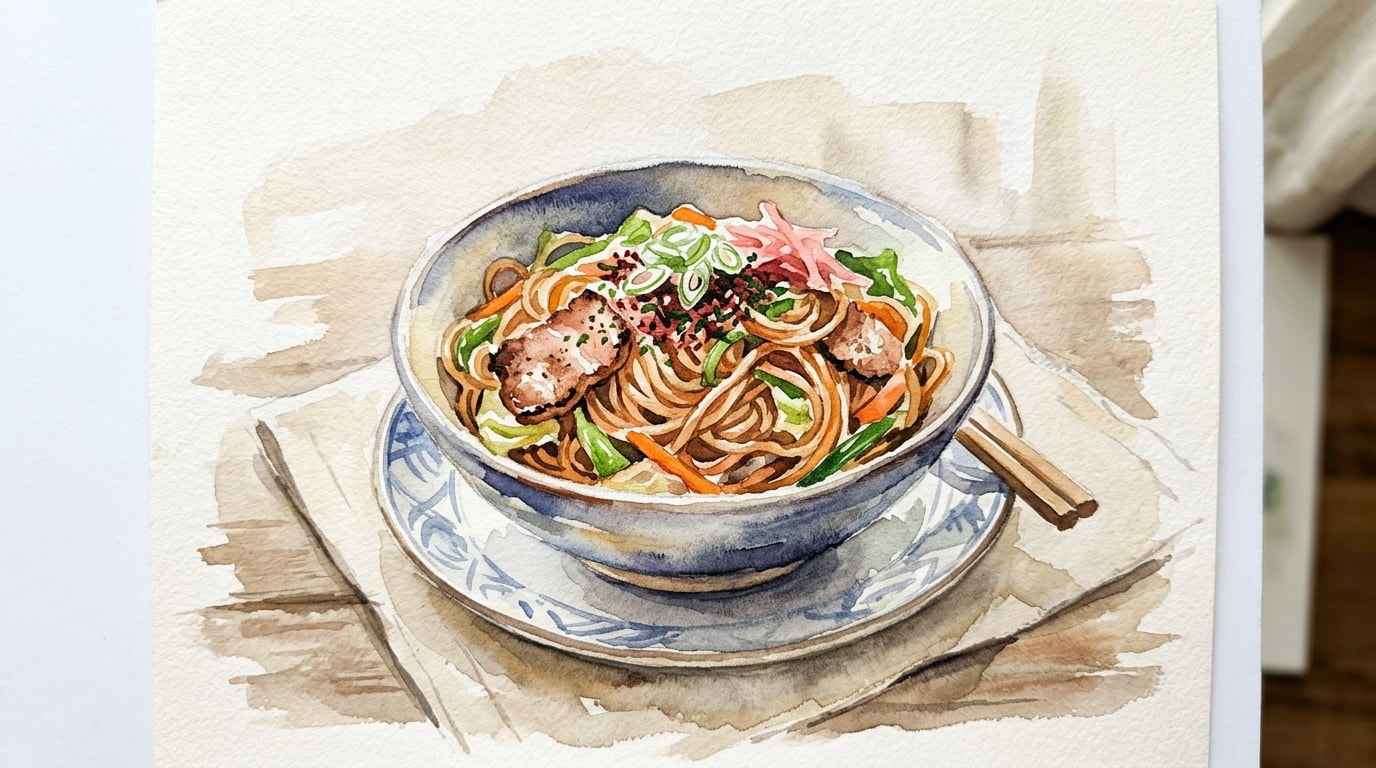
Divide the hot yakisoba evenly among serving plates. Top each portion with a sprinkle of aonori, a pinch of bonito flakes, and a small mound of beni shoga.
Chef's Notes
- To emulate the authentic taste of street stall yakisoba, try cooking this on a large flat cast iron griddle (teppan) to maximize surface area and caramelization.
- If your fresh noodles come tightly vacuum-sealed, you can poke a small hole in the bag and microwave them for 30 seconds before adding to the pan to help them separate more easily.
- Pork belly is the traditional choice because its rendered fat flavors the entire dish, but if using leaner cuts, you may need an extra splash of neutral oil.
- Beni shoga (pickled red ginger) provides crucial acidity to cut through the rich, sweet and savory sauce. Do not skip it if you want the authentic flavor profile.
Storage
Refrigerator: 3 days — Store in an airtight container. Noodles may absorb sauce and soften slightly over time.
Reheating: Microwave on high for 1 to 2 minutes, or quickly stir-fry in a hot pan with a splash of water to revive the noodles.