Equipment
Ingredients
Chicken and Aromatics
- 1500 g whole chicken, giblets removed
- 1 yellow onion, halved
- 150 g carrots, cut into large chunks
- 100 g celery stalks, cut into large chunks
- 3 garlic, smashed
Seasonings and Liquid
- 2500 ml water, cold
- 15 g kosher salt
- 3 g black peppercorns, whole
- 2 bay leaves, dried
- 3 g fresh thyme, whole sprigs
Nutrition (per serving)
Method
Wash your hands and equipment thoroughly before and after handling raw poultry to prevent cross-contamination. Prepare all vegetables by cutting them into large, uniform chunks.
Place the whole chicken breast-side down in a large heavy-bottomed pot or Dutch oven. Arrange the onion, carrots, celery, garlic, peppercorns, bay leaves, thyme, and salt around the chicken.
Pour the cold water over the chicken and vegetables. The water should cover the chicken by at least 2 centimeters. Add more cold water if necessary.
Place the pot over medium-high heat and slowly bring the liquid to a gentle bubble, reaching about 90C/195F. Do not let it come to a rolling boil.
As the water heats up, use a slotted spoon or skimmer to carefully remove any grey foam or scum that floats to the top of the liquid. Discard the foam.
Reduce the heat to low to maintain a bare simmer, around 80C/175F. Cook gently until the thickest part of the chicken thigh registers an internal temperature of 74C/165F on a digital thermometer.
Carefully remove the chicken from the pot using tongs or two large spoons. Transfer it to a cutting board with a rim to catch juices. Let it rest for 15 minutes before carving or shredding.
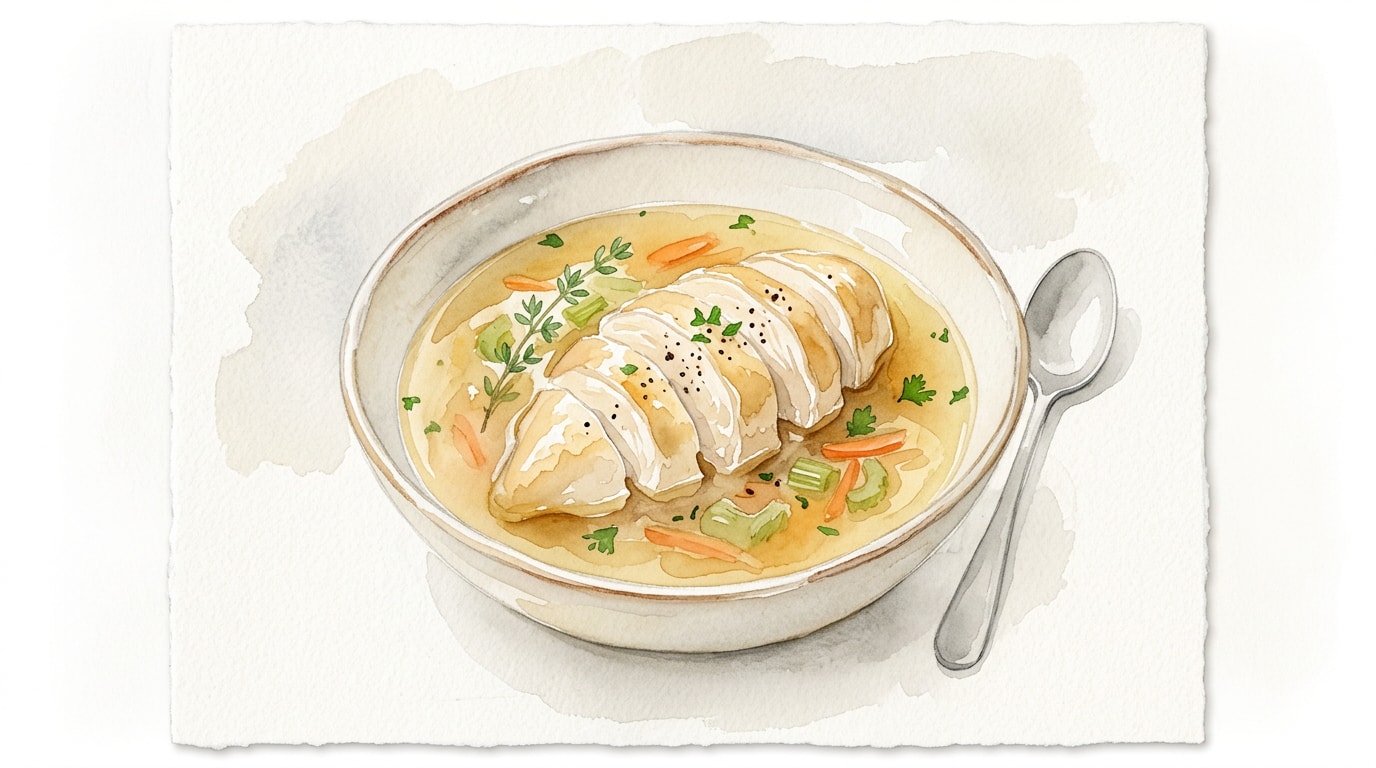
Place a fine mesh strainer over a large, heat-proof bowl. Carefully pour the broth through the strainer to remove the vegetables and aromatics. Discard the solids and reserve the golden broth for serving or storage.
Chef's Notes
- Always start poached meats in cold water. Starting cold draws out the water-soluble proteins and flavors from the chicken into the liquid, resulting in a much more flavorful and rich broth.
- Do not peel the yellow onion before halving it. The dry, papery outer skin of the onion contributes a beautiful golden hue to the finished broth.
- For the silkiest texture, monitor the internal temperature with a digital thermometer. Breasts will dry out faster than thighs, so position the breast meat away from the hottest part of the burner if possible.
- Do not discard the solidified fat cap that forms on the chilled broth. This chicken fat, or schmaltz, is culinary gold and can be used to roast potatoes or sweat vegetables for soups.
Storage
Refrigerator: 4 days — Store chicken meat and broth separately for best texture.
Freezer: 3 months — Freeze broth in airtight containers leaving head space for expansion. Meat can be frozen but may lose some texture.