Equipment
Ingredients
The Chicken
- 2000 g whole roasting chicken, giblets removed
- 15 g kosher salt
- 5 g black pepper, freshly ground
Aromatics & Stuffing
- 1 lemon, halved
- 1 garlic, cut in half crosswise
- 15 g fresh thyme, whole sprigs
Coating & Base
- 30 g unsalted butter, melted
- 2 yellow onions, thickly sliced
- 30 ml olive oil
Nutrition (per serving)
Method
Preheat your oven to 220°C/425°F.
Remove any giblets from the cavity. Pat the outside of the chicken completely dry with paper towels. Wash your hands thoroughly and sanitize all surfaces that come into contact with the raw poultry to prevent cross-contamination.
Generously season the inside of the chicken cavity with about one-third of the kosher salt and black pepper.
Stuff the seasoned cavity with the halved lemon, the halved head of garlic, and the fresh thyme sprigs.
Tie the chicken legs tightly together with kitchen twine and tuck the wing tips under the body of the chicken to prevent them from burning.
Using a pastry brush, coat the entire outside of the chicken with the melted unsalted butter. Sprinkle the remaining kosher salt and black pepper evenly over the skin.
Place the thickly sliced yellow onions in the bottom of a roasting pan. Toss them with the olive oil to coat and spread them out into an even layer.
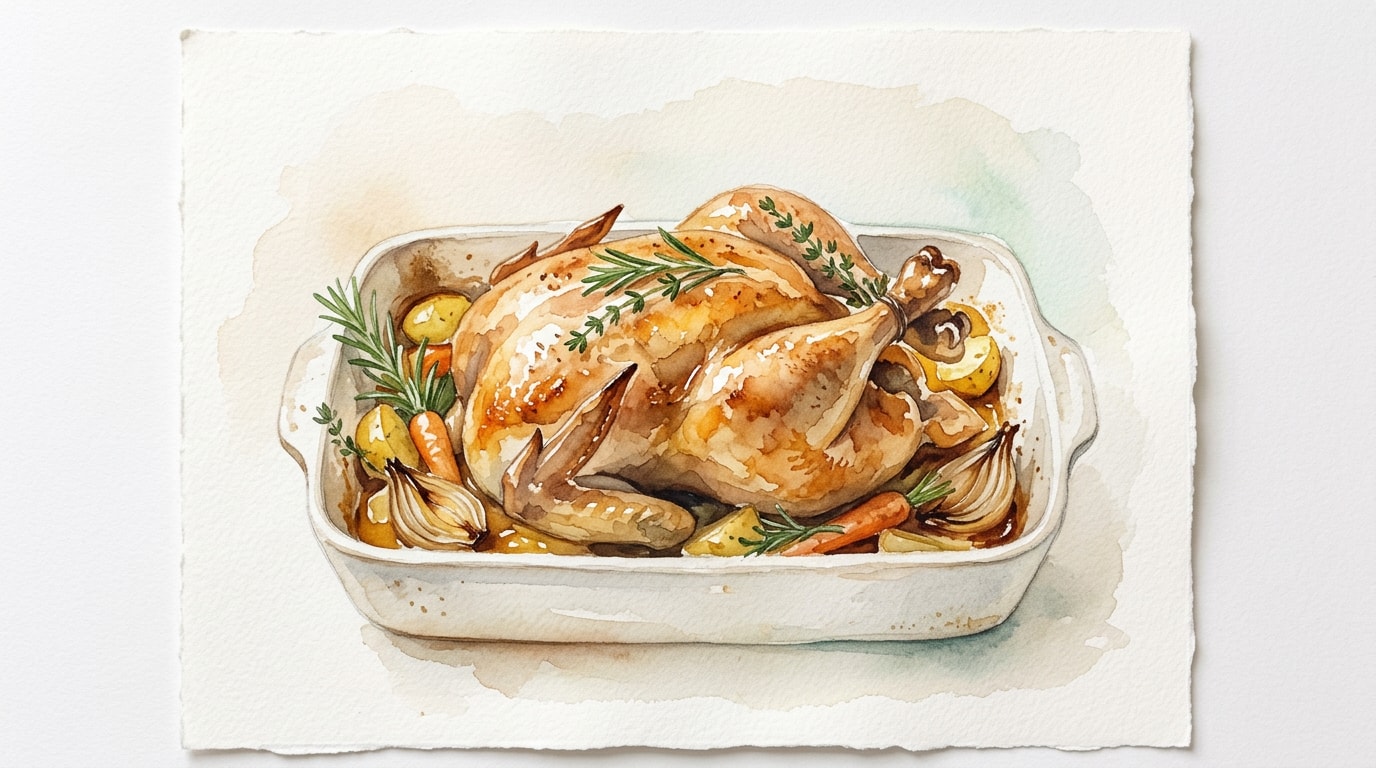
Place the chicken breast-side up on top of the onions. Roast in the oven for about 1 hour and 30 minutes, or until a meat thermometer inserted into the thickest part of the thigh reads 74°C/165°F.
Carefully remove the chicken from the oven and transfer it to a cutting board. Cover it tightly with aluminum foil and let it rest undisturbed for 20 minutes.
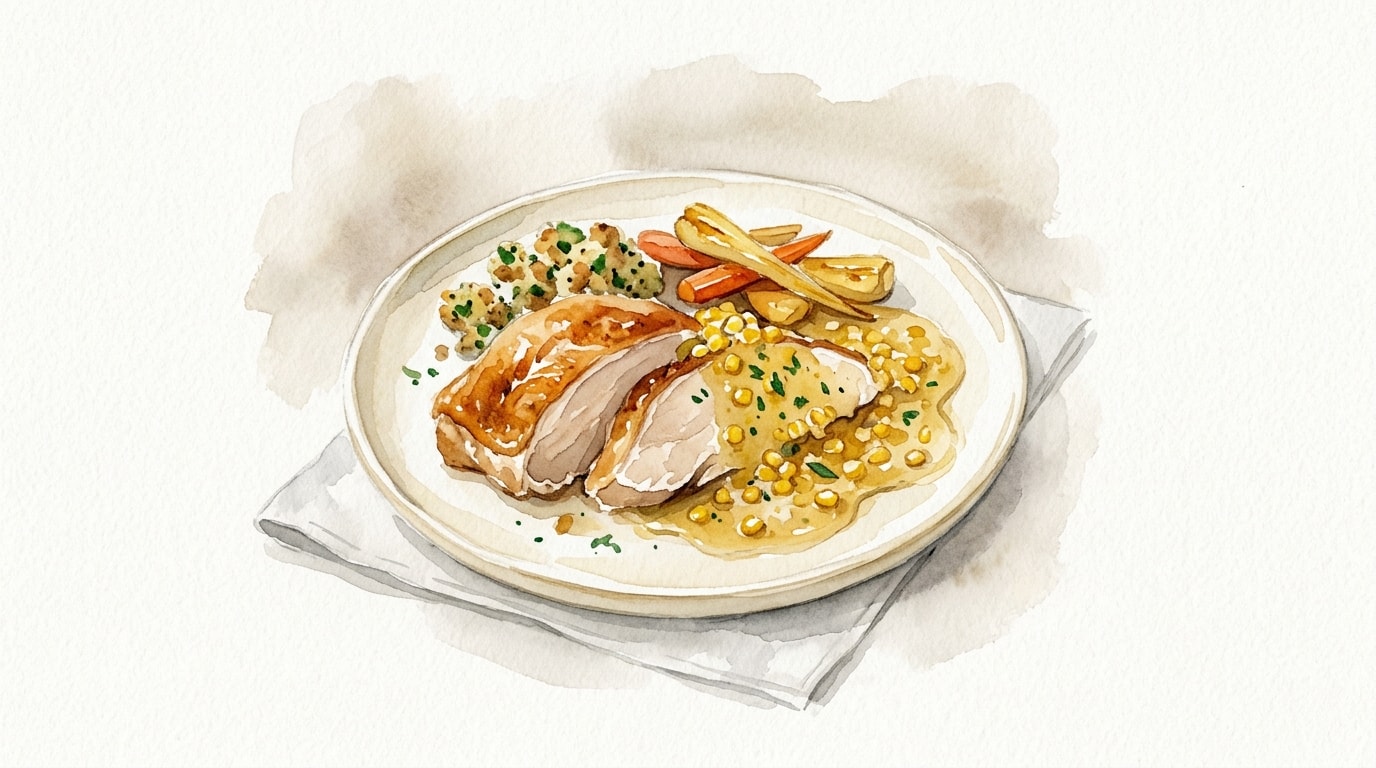
Carve the rested chicken into portions and serve immediately alongside the sweet, caramelized pan onions.
Chef's Notes
- Always pat your chicken thoroughly dry. Any surface moisture will create steam in the oven, which is the enemy of perfectly crispy skin.
- Resting the meat is not optional. Cutting into a piping hot bird immediately forces the juices out onto the cutting board instead of remaining in the meat.
- If your chicken is browning too quickly during the roasting process, you can tent it loosely with a piece of aluminum foil to protect the breast.
- Save the carcass, along with the squeezed lemon halves and roasted garlic, to make a phenomenal, flavor-packed homemade chicken stock the next day.
Storage
Refrigerator: 4 days — Store carved meat and the carcass in separate airtight containers.
Freezer: 3 months — Freeze cooked meat only, ideally submerged in a little broth to prevent freezer burn.
Reheating: Reheat gently in a 175 C oven covered with foil until warmed through to prevent drying out.