Equipment
Ingredients
Base
- 320 g carnaroli or arborio rice
- 1200 ml chicken broth, hot
- 120 ml dry white wine, room temperature
- 100 g yellow onion, very finely diced
- 60 g unsalted butter, divided, cold
- 15 ml extra virgin olive oil
- 80 g parmigiano-reggiano cheese, freshly grated
- fine sea salt
- black pepper
Nutrition (per serving)
Method
Pour the chicken broth into a medium saucepan and bring it to a gentle simmer around 90C/195F. Keep it warm over very low heat for the duration of the cooking process.
In a wide heavy-bottomed pan, heat the extra virgin olive oil and 20g of the unsalted butter over medium heat. Add the finely diced yellow onion and sweat with a wooden spoon until soft and translucent, about 5 minutes, ensuring it does not take on any brown color.
Add the rice to the pan with the onions. Stir continuously to toast the rice until the edges turn translucent and the center remains opaque, about 3 minutes.
Pour the dry white wine into the pan to deglaze it. Stir constantly until the wine has completely evaporated and the harsh smell of alcohol has cooked off.
Add the hot chicken broth to the rice using a ladle, adding about 150ml per addition. Stir continuously, allowing the rice to absorb most of the liquid before adding the next ladle. Continue this process until the rice is al dente, taking about 15 to 18 minutes.
Remove the wide heavy-bottomed pan from the heat completely. Let the risotto rest untouched for 1 minute to cool slightly, which helps prevent the dairy fats from separating in the next step.
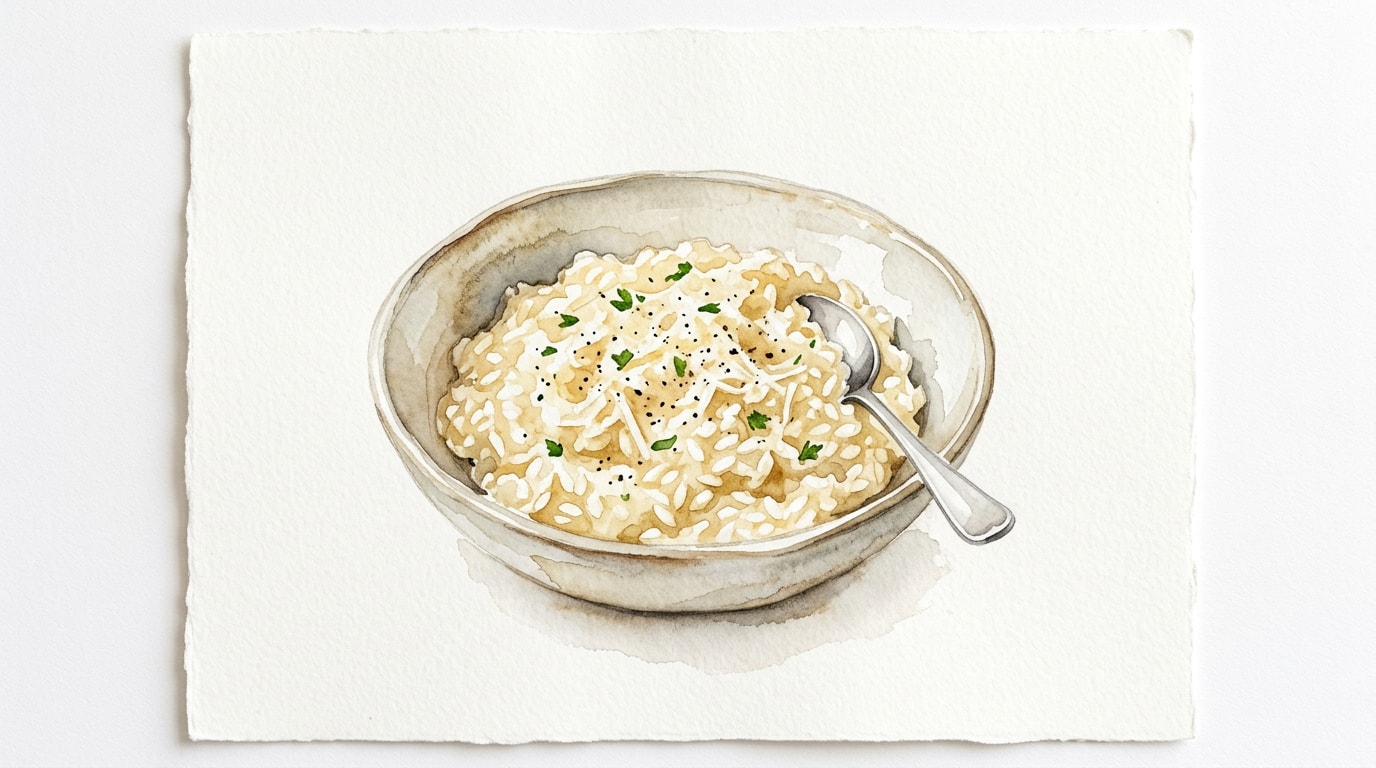
Vigorously beat in the remaining 40g of cold unsalted butter and the freshly grated Parmigiano-Reggiano cheese. Season with fine sea salt and freshly cracked black pepper to taste. Serve immediately.
Chef's Notes
- The technique of mantecatura, vigorously whipping fat into the starch off the heat, is what creates risotto's signature creamy texture without ever needing heavy cream.
- Choose Carnaroli rice over Arborio if available. Carnaroli has a higher starch content and a firmer structure, making it harder to overcook and yielding a creamier final dish.
- Never use cold broth. Adding cold liquid to the hot rice drops the cooking temperature and damages the outer starch layer of the grain, resulting in a sticky, gummy texture.
- The perfect consistency is called all'onda, meaning wavy. When you tilt the serving bowl, the risotto should slowly ripple and spread out smoothly, rather than holding a stiff, molded shape.
Storage
Refrigerator: 3 days — Best eaten fresh, but can be stored in an airtight container.
Reheating: Reheat gently on the stove over low heat with an extra splash of broth or water, stirring until warmed through.