Equipment
Ingredients
Proteins
- 400 g bone-in chicken thighs, chopped into 5cm pieces
- 400 g bone-in rabbit pieces, chopped into 5cm pieces
Vegetables
- 200 g flat green beans, ends trimmed, cut into 4cm pieces
- 100 g large white lima beans, cooked
- 150 g tomato, grated, skin discarded
Aromatics and Base
- 80 ml extra virgin olive oil
- 5 g sweet smoked paprika
- 1 g saffron threads
- 1 fresh rosemary, whole sprig
- 1400 ml water
- 15 g salt
Rice
- 400 g bomba rice, dry, unrinsed
Nutrition (per serving)
Method
Prepare all vegetables and proteins. Handle raw poultry and rabbit on separate cutting boards from ready-to-eat ingredients to prevent cross-contamination.
Place the paella pan over medium heat and add the extra virgin olive oil. Ensure the pan is level so the oil gathers in the center.
Add the chicken and rabbit pieces to the pan. Sear slowly and thoroughly on all sides until deep golden brown. This builds the fundamental flavor base. Note: Poultry and rabbit must eventually reach an internal temperature of 74C/165F during the simmering phase.
Push the browned meat to the cooler outer edges of the pan. Add the flat green beans and lima beans to the center. Saute until they begin to blister and soften.
Push the vegetables to the edges. Add the grated tomato to the center of the pan. Fry until the tomato loses its water and darkens, then add the sweet smoked paprika. Stir quickly for 30 seconds to toast the paprika without burning it.
Pour in the water. Add the saffron threads, the rosemary sprig, and salt. Bring the liquid to a rolling boil over high heat, then let it boil to create a rich broth. Remove and discard the rosemary sprig before it overpowers the broth.
Sprinkle the rice evenly across the pan in a cross pattern, then use a slotted spoon to distribute it gently into an even layer so all grains are submerged. From this moment on, do not stir the rice.
Boil vigorously for the first 8 minutes. As the liquid level drops below the surface of the rice, reduce the heat to a gentle simmer. Continue to cook until the liquid is fully absorbed. Listen carefully for a crackling, frying sound at the end, which indicates the formation of the socarrat (the caramelized crust on the bottom).
Remove the paella pan from the heat. Cover the entire pan with a clean kitchen towel or newspaper and let it rest for 5 minutes. This final resting phase allows the starches to settle and any residual surface moisture to steam the top layer of rice evenly.
Chef's Notes
- The socarrat is the true benchmark of a master paella. It is the caramelized, highly savory crust of rice at the bottom of the pan. Achieving it requires trusting your ears; you must listen for a gentle frying crackle during the last minutes of cooking. If it smells like burning carbon, remove the pan from the heat immediately.
- Bomba rice absorbs roughly three times its volume in liquid, unlike standard short-grain rice which absorbs only twice its volume. This high absorption rate makes it ideal for soaking up the rich, saffron-laced meat broth without bursting.
- Never, under any circumstances, stir the rice once it has been leveled in the broth. Stirring agitates the grains, releasing starches into the liquid, which yields a creamy, sticky texture inappropriate for an authentic dry-grained paella.
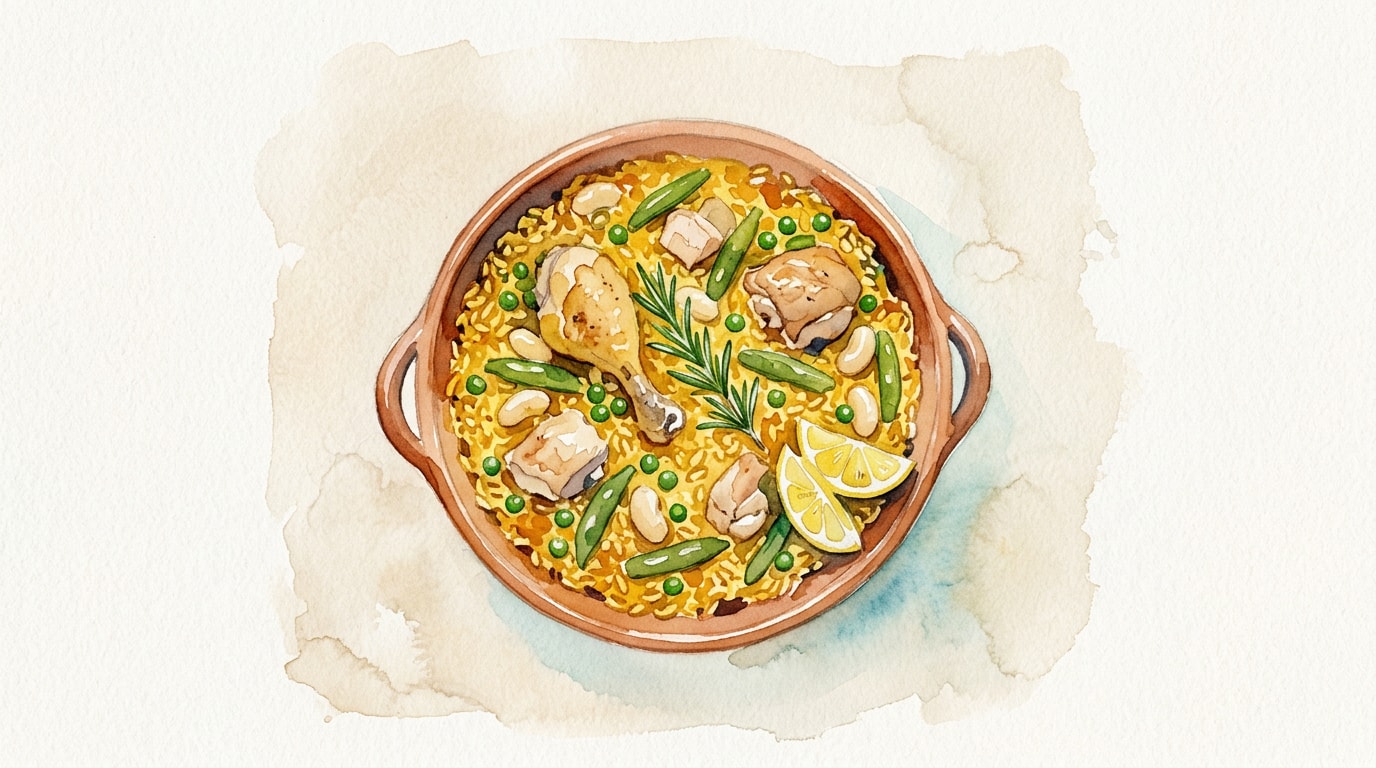
- A true Paella Valenciana does not contain seafood or chorizo. While mixed paellas are popular globally, the authentic Valencian preparation reflects its inland, agricultural origins utilizing rabbit, chicken, local snails, and field beans.
- Do not wash or rinse the Bomba rice before cooking. You want the exterior starches intact to help thicken the broth just enough to coat the grains before the liquid evaporates.
Storage
Refrigerator: 3 days — Store in an airtight container. The prized socarrat texture will soften when refrigerated.
Freezer: 1 month — Freezing is not recommended as the rice texture degrades and becomes mushy when thawed.
Reheating: Reheat in a wide skillet over medium heat with a splash of water until warmed through and the moisture has evaporated.