Equipment
Ingredients
Seafood
- 500 g shucked oysters with liquor
Base and Dairy
- 60 g unsalted butter
- 50 g shallot, finely minced
- 40 g celery, finely minced
- 475 ml whole milk
- 240 ml heavy cream
Seasonings and Garnish
- 3 g kosher salt
- 1 g black pepper, freshly ground
- ½ g cayenne pepper
- 5 g fresh parsley, finely chopped
- 1 g paprika
Nutrition (per serving)
Method
Place a fine mesh strainer over a small bowl. Pour the oysters and their liquor through the strainer to separate them, catching any grit or broken shell fragments. Reserve the cleaned oysters and the strained liquor separately.
Melt the unsalted butter in a heavy-bottomed pot over medium-low heat. Add the minced shallot and celery, and gently sweat the vegetables until they are completely softened and translucent, about 5 to 7 minutes. Do not allow them to brown or caramelize.
Pour the whole milk, heavy cream, and the reserved strained oyster liquor into the pot with the vegetables. Heat the mixture slowly, stirring frequently, until it registers 70 degrees Celsius (160 degrees Fahrenheit) on an instant-read thermometer. The surface should be steaming, but the liquid must never reach a boil.
Gently slip the reserved oysters into the steaming dairy mixture. Poach them gently for 3 to 4 minutes. Watch closely: they are ready when their edges begin to curl, the bodies plump up, and they reach a safe internal temperature of 74 degrees Celsius (165 degrees Fahrenheit).
Immediately remove the pot from the heat to stop the cooking process. Stir in the kosher salt, black pepper, and cayenne pepper. Taste the broth carefully and adjust the salt if necessary, as the oyster liquor contributes natural salinity.
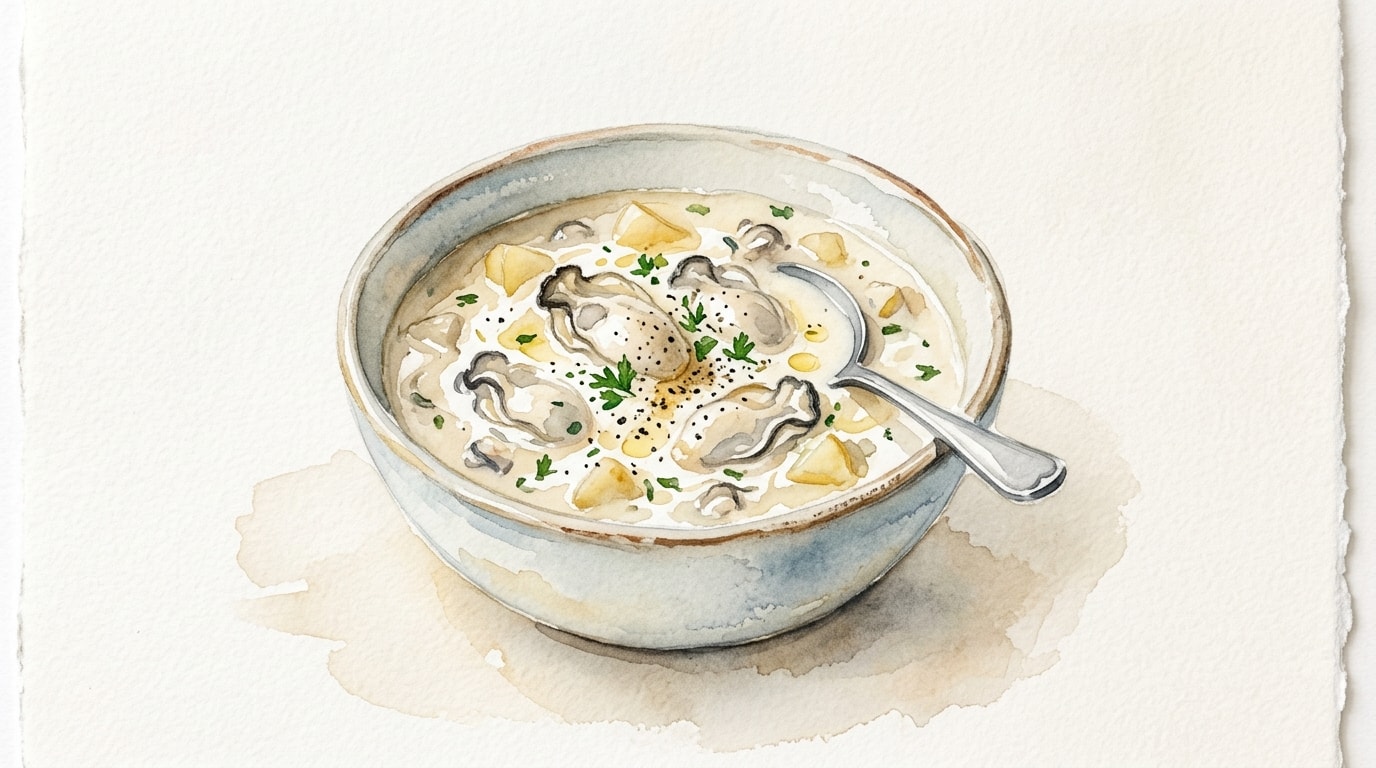
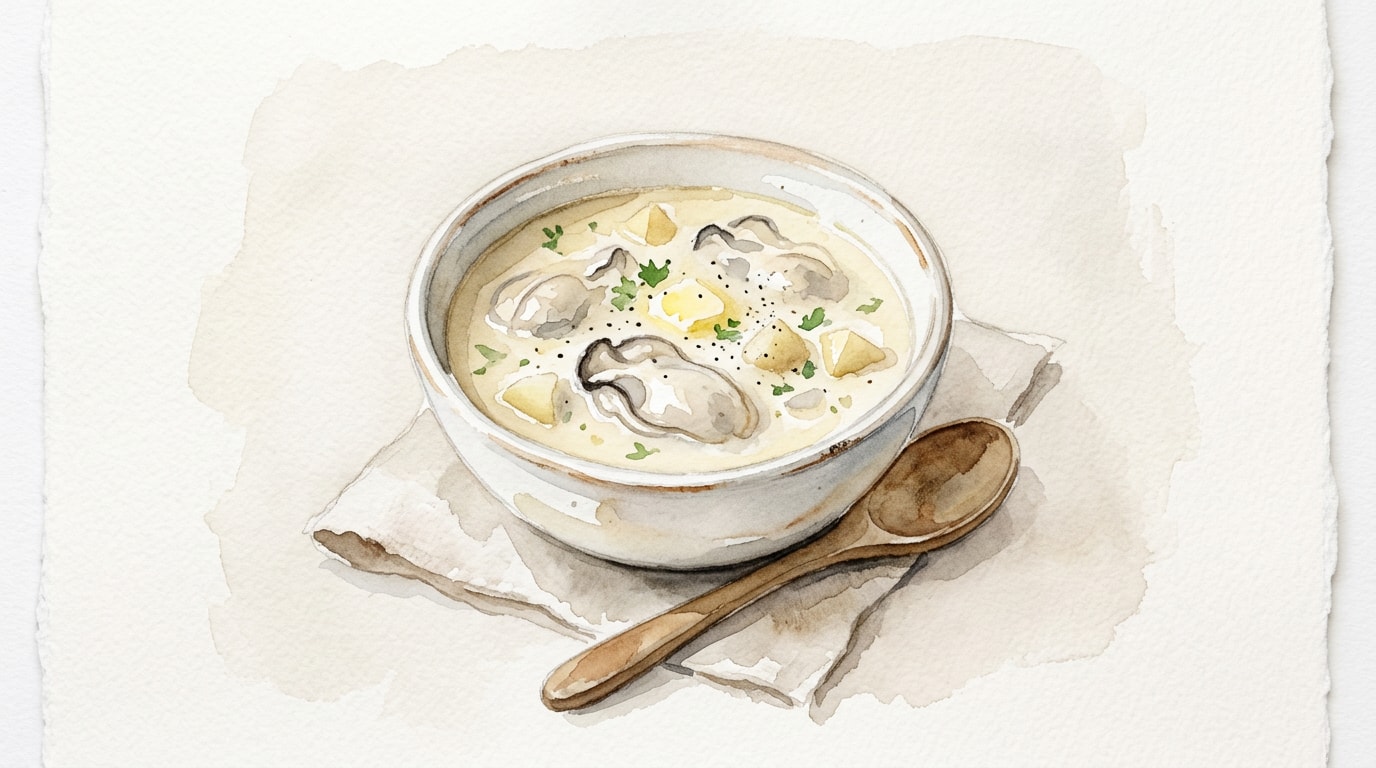
Ladle the hot stew evenly into four warmed soup bowls. Garnish each portion with a sprinkle of freshly chopped parsley and a light dusting of paprika. Serve immediately while piping hot.
Chef's Notes
- Always strain your oyster liquor through a fine mesh strainer; even expertly shucked oysters can leave behind tiny fragments of shell or grit that will ruin the delicate mouthfeel of the stew.
- The key to a perfect oyster stew is gentle, patient heat. Boiling will not only curdle the delicate milk and cream but will also instantly turn the prized oysters tough and rubbery.
- For the best flavor, seek out freshly shucked oysters from a reputable fishmonger. While jarred oysters can be used in a pinch, their texture and flavor profile will be significantly compromised compared to fresh.
- Warming your serving bowls with hot water beforehand ensures the stew remains at the ideal temperature longer. Dairy-based soups tend to lose their heat rapidly once ladled into room-temperature ceramic.
Storage
Refrigerator: 2 days — Best consumed immediately. Reheat very gently over low heat to avoid overcooking oysters or curdling dairy.