Equipment
Ingredients
Seasoning Paste (Yangnyeom)
- 30 g gochujang
- 15 g gochugaru
- 15 ml soy sauce
- 15 ml mirin
- 15 g garlic, minced
Stew Components
- 1000 ml anchovy-kelp stock
- 150 g aged fermented kimchi, chopped into bite-sized pieces
- 200 g spam, sliced into rectangles
- 150 g hot dogs, sliced diagonally
- 100 g ground pork, raw
- 200 g firm tofu, sliced into rectangles
- 150 g yellow onion, sliced
- 50 g scallions, cut into 2-inch lengths
- 50 g canned baked beans
Carbohydrates and Finishing
- 110 g instant ramen noodles
- 100 g korean rice cakes, soaked in water if frozen
- 1 american cheese
Nutrition (per serving)
Method
In a small mixing bowl, combine the gochujang, gochugaru, soy sauce, mirin, and minced garlic. Stir vigorously until a cohesive paste forms, then set it aside.
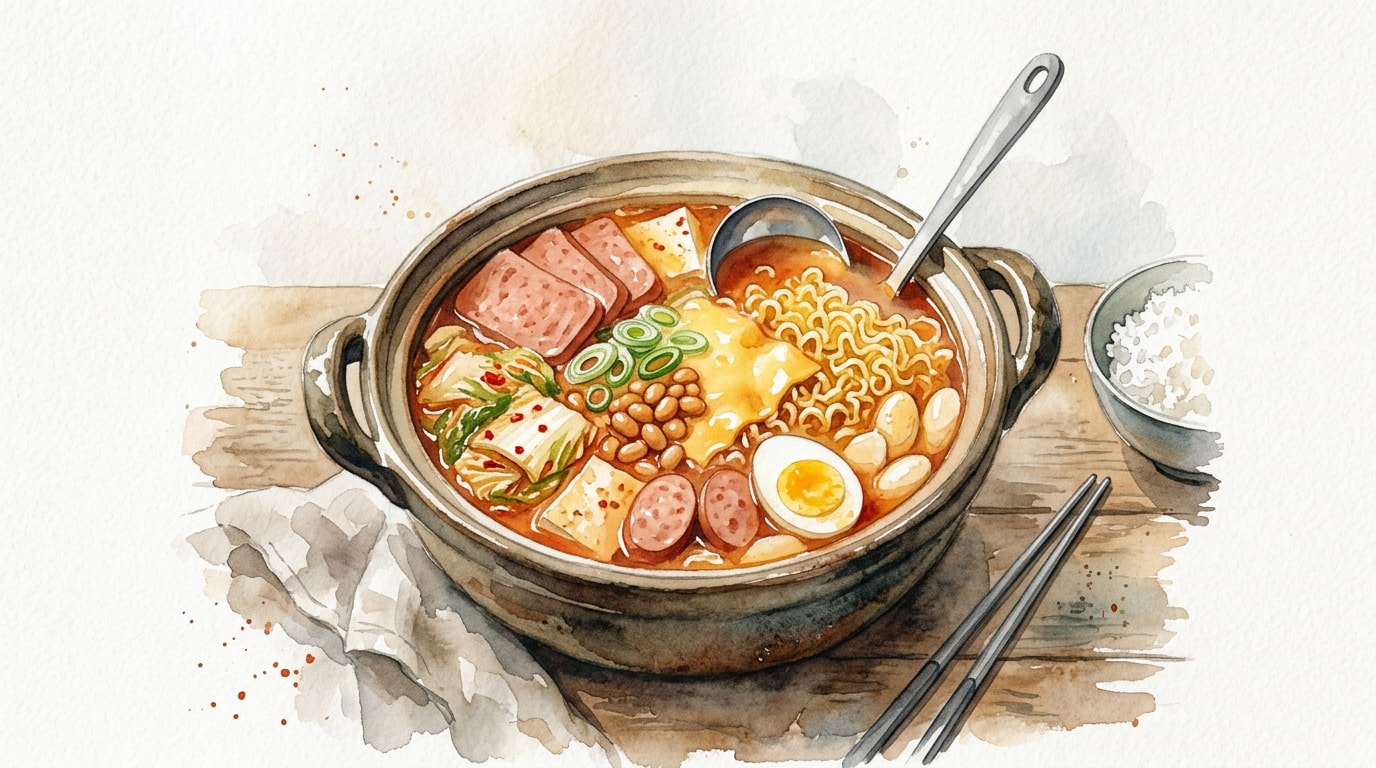
In a shallow wide pot or braiser, arrange the chopped kimchi, sliced spam, hot dogs, ground pork, firm tofu, yellow onion, scallions, and baked beans in separate neat clusters around the edge. Place the mixed seasoning paste in the center of the pot. Ensure you handle the raw ground pork with separate utensils and wash your hands to prevent cross-contamination.
Gently pour the anchovy-kelp stock over the arranged ingredients. Bring the stew to a boil over medium-high heat, which is approximately 100°C/212°F. As it begins to boil, gently stir the seasoning paste in the center into the broth until fully dissolved, taking care not to mix up all the arranged ingredients.
Once the stew is boiling rapidly, add the instant ramen noodles and soaked rice cakes to the center of the pot. Place the slice of American cheese directly on top of the noodles. Let everything simmer undisturbed for 4 to 5 minutes until the noodles are chewy and the raw ground pork is fully cooked, reaching a safe internal temperature of 74°C/165°F.
Remove the pot from the heat. Traditionally, the entire pot is placed in the center of the dining table for sharing. Serve immediately, prioritizing the ramen noodles before they soak up too much broth.
Chef's Notes
- Always use highly fermented, aged kimchi for budae jjigae. Fresh kimchi lacks the required lactic acid development and will result in a flat, uninteresting broth.
- If you want a thicker, richer broth, allow the American cheese to fully dissolve into the liquid rather than just melting it on top of the noodles.
- Rinsing the canned baked beans before adding them is generally discouraged; the starchy tomato sauce clinging to them actually adds a subtle sweetness that balances the sharp kimchi.
- For the best texture, soak your rice cakes in warm water for ten minutes before adding them to the stew to prevent them from splitting or remaining hard in the center.
Storage
Refrigerator: 3 days — Remove leftover ramen noodles before storing, as they will absorb the broth and become mushy over time.
Reheating: Reheat gently on the stove over medium heat. Add half a cup of water or plain stock to compensate for moisture loss, and add a fresh pack of ramen noodles if desired.