Equipment
Ingredients
Simmering Broth (Warishita)
- 120 ml dashi
- 30 ml soy sauce
- 30 ml mirin
- 15 ml sake
- 10 g granulated sugar
Chicken and Eggs
- 1 yellow onion, thinly sliced
- 200 g boneless skinless chicken thigh, cut into 2cm bite-sized pieces
- 3 large eggs, lightly beaten
Serving
- 400 g cooked short-grain white rice, steaming hot
- 10 g scallion, thinly sliced
Nutrition (per serving)
Method
In a mixing bowl or measuring cup, combine the dashi, soy sauce, mirin, sake, and sugar. Stir until the sugar is fully dissolved.
Pour the broth mixture into a small frying pan and bring to a gentle simmer over medium heat. Add the sliced yellow onion, distributing it evenly, and simmer for 2 minutes until slightly softened.
Add the bite-sized chicken pieces to the pan in a single layer. Simmer for 3 to 4 minutes, turning once, until the chicken is cooked through and reaches a safe internal temperature of 74°C/165°F.
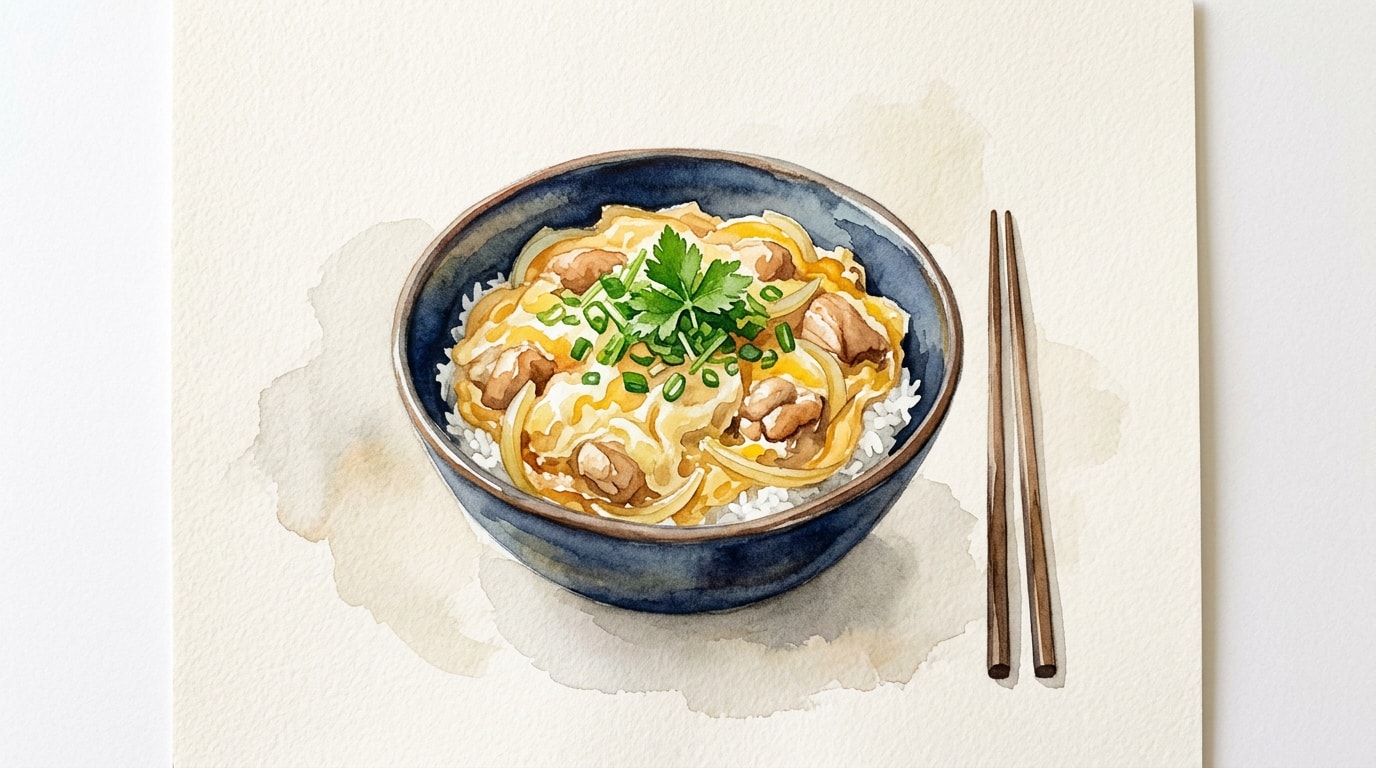
Using chopsticks, lightly beat the eggs in a small bowl, leaving distinct streaks of yolk and white. Drizzle approximately two-thirds of the egg mixture evenly over the simmering chicken and onions.
Cover the pan with a lid and cook for 1 minute. Remove the lid, drizzle the remaining egg mixture over the top, and cover again. Turn off the heat entirely and let it steam using residual heat for 30 to 60 seconds until the eggs reach your preferred doneness.
Divide the hot cooked rice between two deep serving bowls. Carefully tilt the frying pan and slide the chicken, egg, and warm broth in one piece directly over the rice. Garnish with sliced scallions and serve immediately.
Chef's Notes
- Do not over-mix the eggs. A hallmark of an authentic oyakodon is the marbled appearance of distinct yellow and white curds.
- Using a smaller frying pan (about 15-20cm) is crucial. A large pan will cause the broth to spread too thinly, preventing the chicken from poaching properly and the eggs from forming a cohesive blanket.
- For the best flavor, use boneless skinless chicken thighs rather than breasts. Thigh meat remains tender and juicy when simmered, whereas breast meat can easily dry out.
- If you want to pasteurize raw eggs for safety at home without cooking them fully, you can use a sous vide bath at 57C (135F) for 75 minutes before cracking them for the recipe.
Storage
Refrigerator: 1 day — Best eaten immediately. If storing leftovers, ensure eggs are fully cooked.
Reheating: Microwave on medium power until warm, adding a splash of water to prevent the rice from drying out.