Equipment
Ingredients
Chicken
- 600 g boneless skin-on chicken thighs, cut into 4cm chunks
Marinade
- 30 ml soy sauce
- 15 ml sake
- 15 ml mirin
- 10 g fresh ginger, finely grated
- 10 g garlic, finely grated
- 5 g granulated sugar
Coating & Frying
- 120 g potato starch (katakuriko)
- 1000 ml neutral cooking oil
Serving
- 1 lemon, cut into wedges
- 60 g kewpie mayonnaise
Nutrition (per serving)
Method
Cut the chicken thighs into uniform 4cm pieces, keeping a piece of skin attached to each chunk. Use a dedicated cutting board to prevent cross-contamination with raw poultry.
In a medium mixing bowl, whisk together the soy sauce, sake, mirin, grated ginger, grated garlic, and sugar. Add the chicken pieces and massage the marinade into the meat. Cover and let marinate at room temperature for 30 minutes.
Place the potato starch in a shallow dish. Drain any excess liquid from the chicken bowl. Dredge each piece of chicken thoroughly in the potato starch, shaking off any excess. The pieces should be completely dry on the outside.
Pour the neutral oil into a heavy-bottomed pot to a depth of at least 5cm. Heat the oil over medium heat until it reaches 160°C/320°F. Carefully drop the chicken pieces into the oil, frying in batches to avoid dropping the temperature. Fry for 3 minutes, then remove with a spider strainer to a wire rack.
Let the chicken rest on the wire rack for 4 minutes. This allows the residual heat to cook the chicken through while drawing moisture away from the crust.
Increase the heat and bring the oil temperature up to 180°C/350°F. Return the chicken to the oil and fry for a second time for 1 to 2 minutes, until deeply golden brown. Ensure the internal temperature of the thickest piece reaches 74°C/165°F.
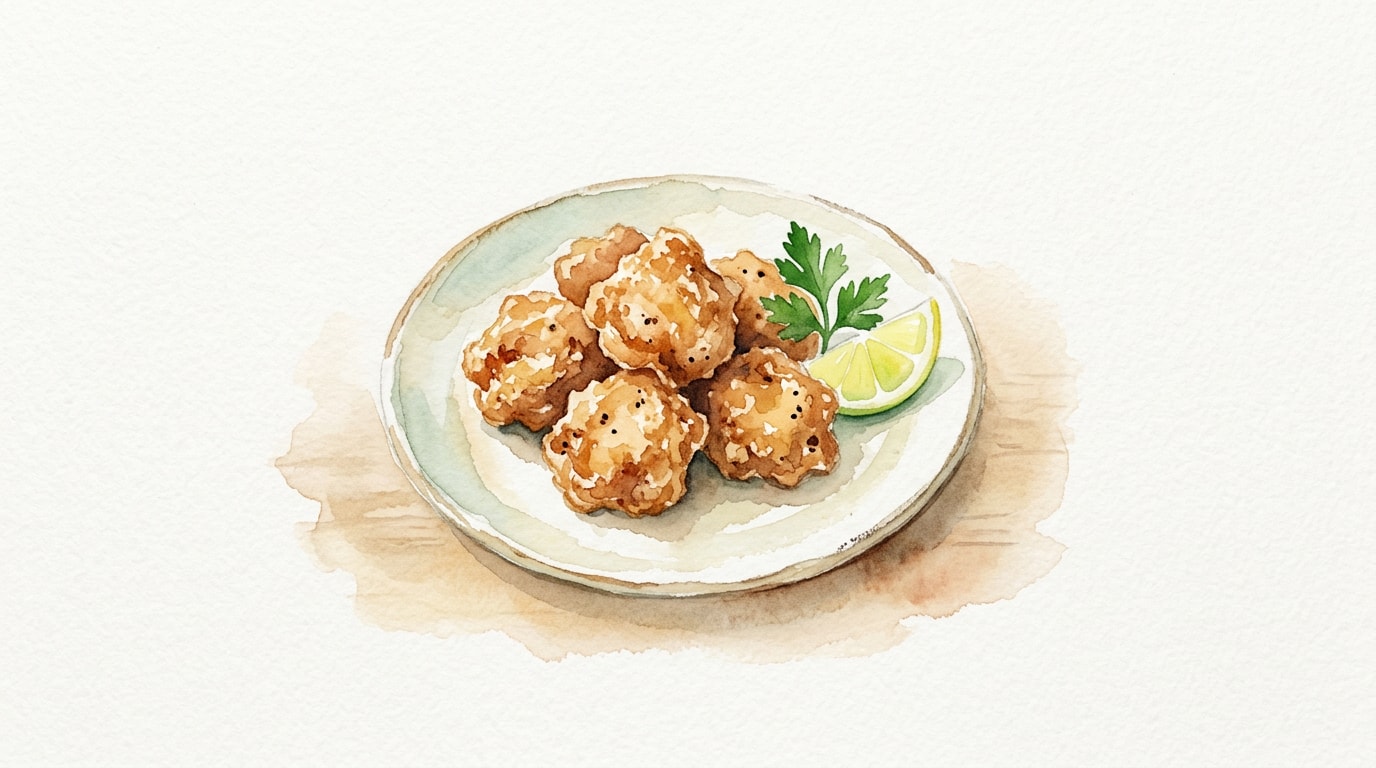
Transfer the chicken to a clean wire rack to drain off any excess oil. Serve immediately alongside fresh lemon wedges and Kewpie mayonnaise for dipping.
Chef's Notes
- The secret to shatteringly crisp karaage is the double-fry technique. The first fry cooks the meat gently, the resting period draws internal moisture to the surface, and the hotter second fry blasts that moisture away.
- Using potato starch (katakuriko) instead of flour or cornstarch is the traditional Japanese method. It creates a distinctly light, powdery, and enduring crunch.
- Do not remove the skin from the chicken thighs. It renders down during frying, insulating the meat to keep it juicy while crisping up beautifully on the exterior.
Storage
Refrigerator: 3 days — Chicken will lose its crispiness in the fridge.
Freezer: 1 month — Freeze after frying and cooling completely.
Reheating: Reheat in an air fryer at 190°C/375°F for 5-7 minutes, or in an oven at 200°C/400°F for 10 minutes to restore crispiness. Do not microwave.