Equipment
Ingredients
Whole Spices
- 10 g dried kashmiri red chilies, stems removed
- 10 g coriander seeds
- 5 g cumin seeds
- 3 g black mustard seeds
- 2 g black peppercorns
- 1 g whole cloves
- 3 g cinnamon stick
- 1 g green cardamom pods
Vindaloo Paste
- 30 g garlic, peeled
- 20 g fresh ginger, peeled and roughly chopped
- 60 ml malt vinegar
- 15 g tamarind paste
- 3 g ground turmeric
Curry Base
- 800 g lamb shoulder, diced into 4cm pieces
- 45 ml vegetable oil
- 450 g onions, finely chopped
- 400 ml water
- 10 g kosher salt
- 15 g jaggery, grated
Nutrition (per serving)
Method
Place the dried kashmiri chilies, coriander seeds, cumin seeds, mustard seeds, peppercorns, cloves, cinnamon, and cardamom in a dry frying pan. Toast over medium heat until highly fragrant. Transfer to a spice grinder and process to a fine powder.
Transfer the ground spice mix to a blender. Add the garlic, ginger, vinegar, tamarind paste, and turmeric. Blend into a smooth paste. Add up to 15ml of water if needed to keep the blades moving.
Place the diced lamb shoulder in a mixing bowl and pour the vindaloo paste over the meat. Toss thoroughly to coat every piece. Cover the bowl tightly and refrigerate for 12 hours.
Heat the vegetable oil in a Dutch oven over medium heat. Add the finely chopped onions and saute slowly. Stir occasionally until the onions melt down and transform into a dark, caramelized brown paste. This forms the foundation of the curry.
Increase the heat to medium-high. Add the marinated lamb and any residual paste from the bowl into the Dutch oven. Sear the meat, stirring continuously to prevent the spices from burning, until the exterior of the lamb is browned.
Pour the water into the pot. Add the kosher salt and jaggery, then stir vigorously, scraping the bottom of the pot to release any flavorful browned bits. Bring the liquid to a rolling boil at 100 degrees Celsius (212 degrees Fahrenheit).
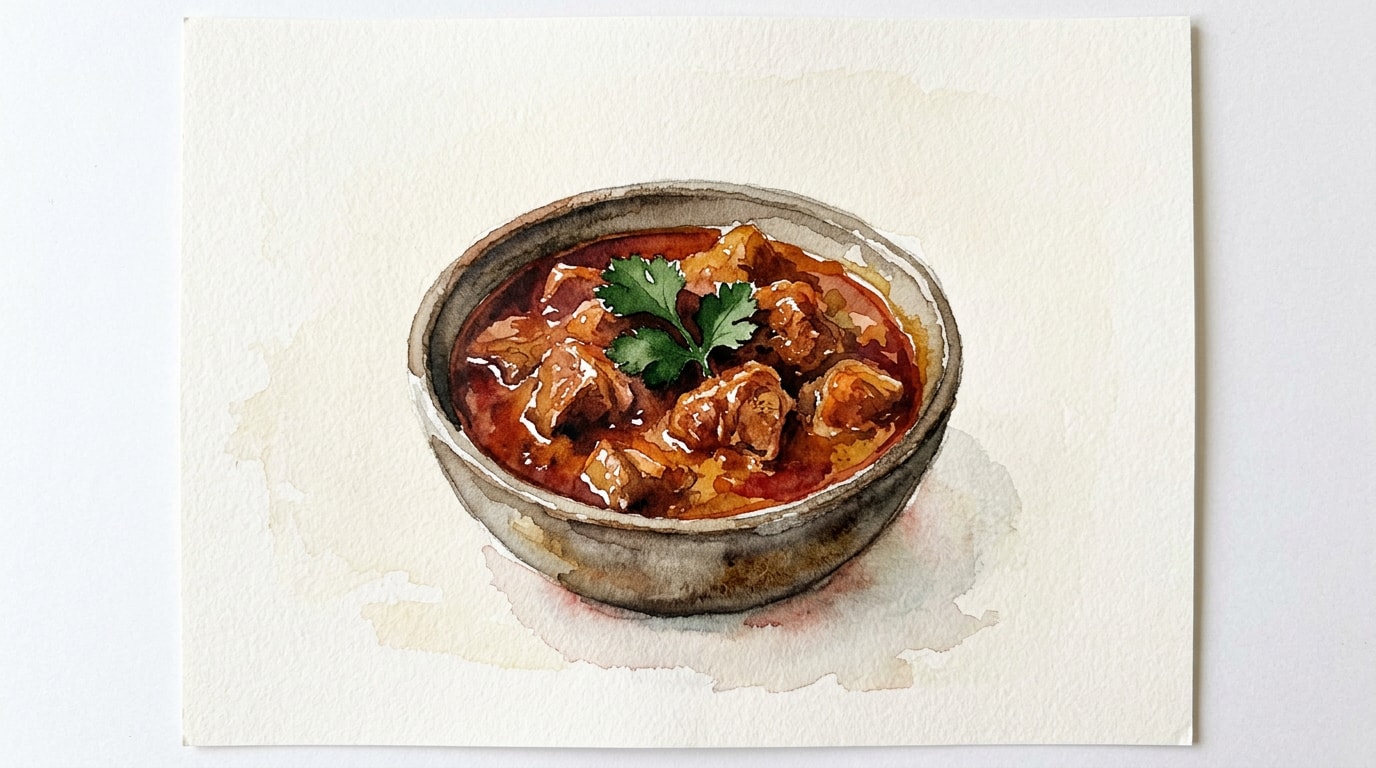
Reduce the heat to low, cover the Dutch oven tightly, and let the curry simmer gently. Cook until the lamb is highly tender, reaching an internal temperature of at least 90 degrees Celsius (195 degrees Fahrenheit). The sauce should be thick and dark.
Remove the pot from the heat. Taste the curry and adjust the seasoning with extra salt or a pinch more jaggery if necessary to balance the tangy acidity. Let the dish rest undisturbed before serving.
Chef's Notes
- The secret to an authentic vindaloo is a dark, almost mahogany base. Take your time caramelizing the onions; this slow process provides a crucial sweetness to balance the heavy spices and acidic vinegar.
- Kashmiri chilies are non-negotiable. They provide the iconic bright red color and earthy flavor without overwhelming heat. If substituting with standard dried red chilies, reduce the quantity by 70 percent to avoid an inedibly spicy dish.
- Vindaloo always tastes remarkably better the next day. The overnight resting time allows the acetic acid in the vinegar to mellow out and the complex spice blend to permeate the lamb completely.
- Palm vinegar, also known as toddy vinegar, is traditional in Goa. If you can source it from an Indian grocer, use it for the most authentic flavor profile. Malt vinegar or cider vinegar makes an excellent, accessible substitute.
Storage
Refrigerator: 5 days — Flavors deepen and improve significantly after 1-2 days in the fridge.
Freezer: 3 months — Freeze in airtight containers; thaw overnight in the refrigerator before reheating.
Reheating: Warm gently in a saucepan over medium-low heat until bubbling and heated through.