Equipment
Ingredients
Steak
- 500 g beef strip steak
- 6 g kosher salt
- 4 g black pepper, coarsely crushed
- 15 ml grapeseed oil
Pan Sauce
- 2 shallot, finely diced
- 30 ml cognac
- 120 ml dry red wine
- 120 ml beef broth
Finishing
- 30 g unsalted butter, cold and cubed
- 10 g chives, finely chopped
Nutrition (per serving)
Method
Remove steaks from the refrigerator 30 minutes prior to cooking. Pat them entirely dry with paper towels and season generously on all sides with kosher salt and coarsely crushed black pepper. Wash your hands and sanitize any surfaces that come into contact with the raw meat.
Heat a cast iron skillet over medium-high heat. Add the grapeseed oil. Once the oil is shimmering and just beginning to smoke, add the steaks. Sear without moving for 3 to 4 minutes per side until a dark crust forms. Target an internal temperature of 54°C/130°F for medium-rare.
Transfer the steaks to a cutting board. Tent them loosely with aluminum foil to keep warm and let them rest while you prepare the sauce.
Lower the skillet heat to medium. Discard all but about one tablespoon of the rendered beef fat. Add the finely diced shallots and cook, stirring frequently, until softened and translucent, about 2 minutes.
Temporarily remove the skillet from the heat source to ensure safety. Pour in the cognac. Carefully tilt the pan toward the flame of a gas burner or use a long lighter to ignite the alcohol. Let the flames burn out naturally, gently shaking the pan.
Return the skillet to medium-high heat. Add the red wine and beef broth. Vigorously scrape the bottom of the pan with a wooden spoon or spatula to release any browned bits into the liquid. Boil until the mixture reduces by more than half.
Remove the skillet entirely from the heat. Add the cold cubed butter and whisk constantly until it is fully incorporated into the sauce, creating a glossy, rich emulsion. Stir in the chopped chives and any accumulated resting juices from the steaks.
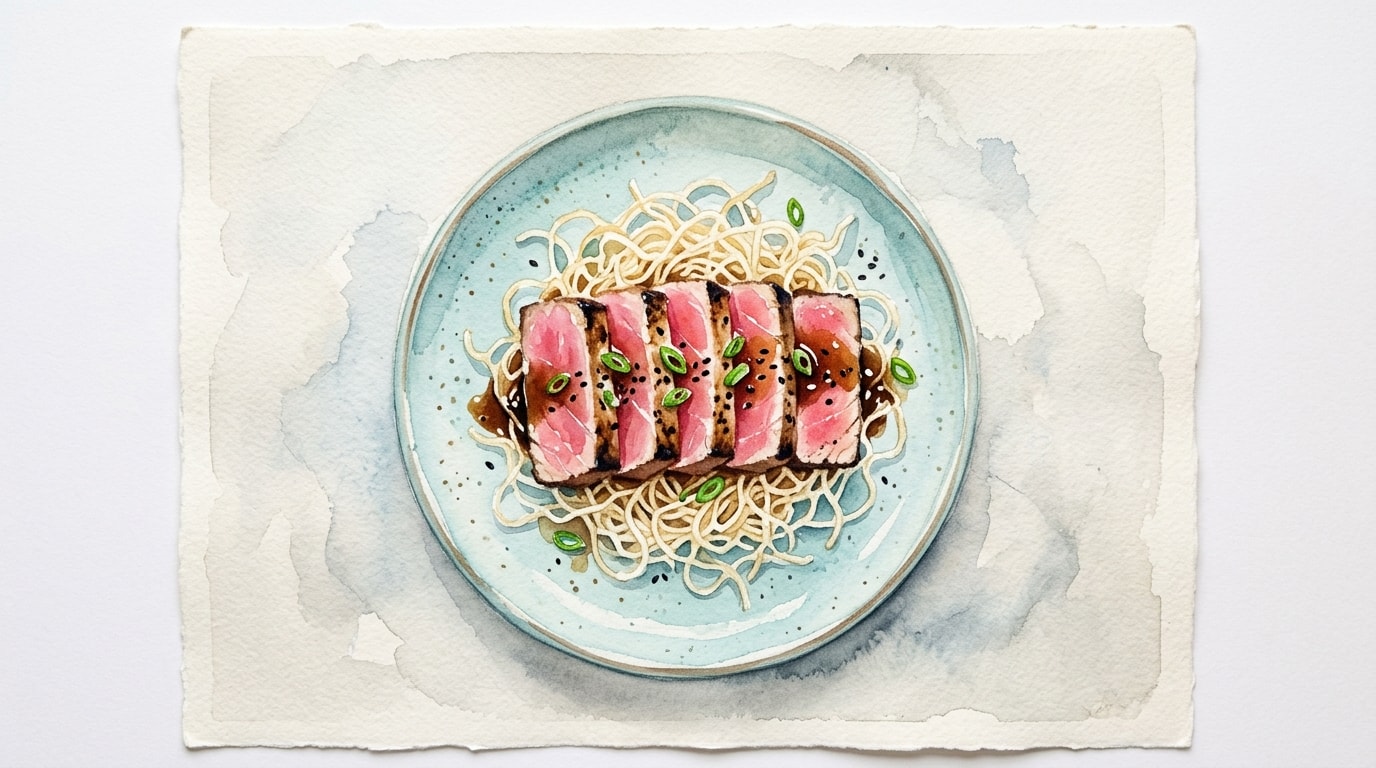
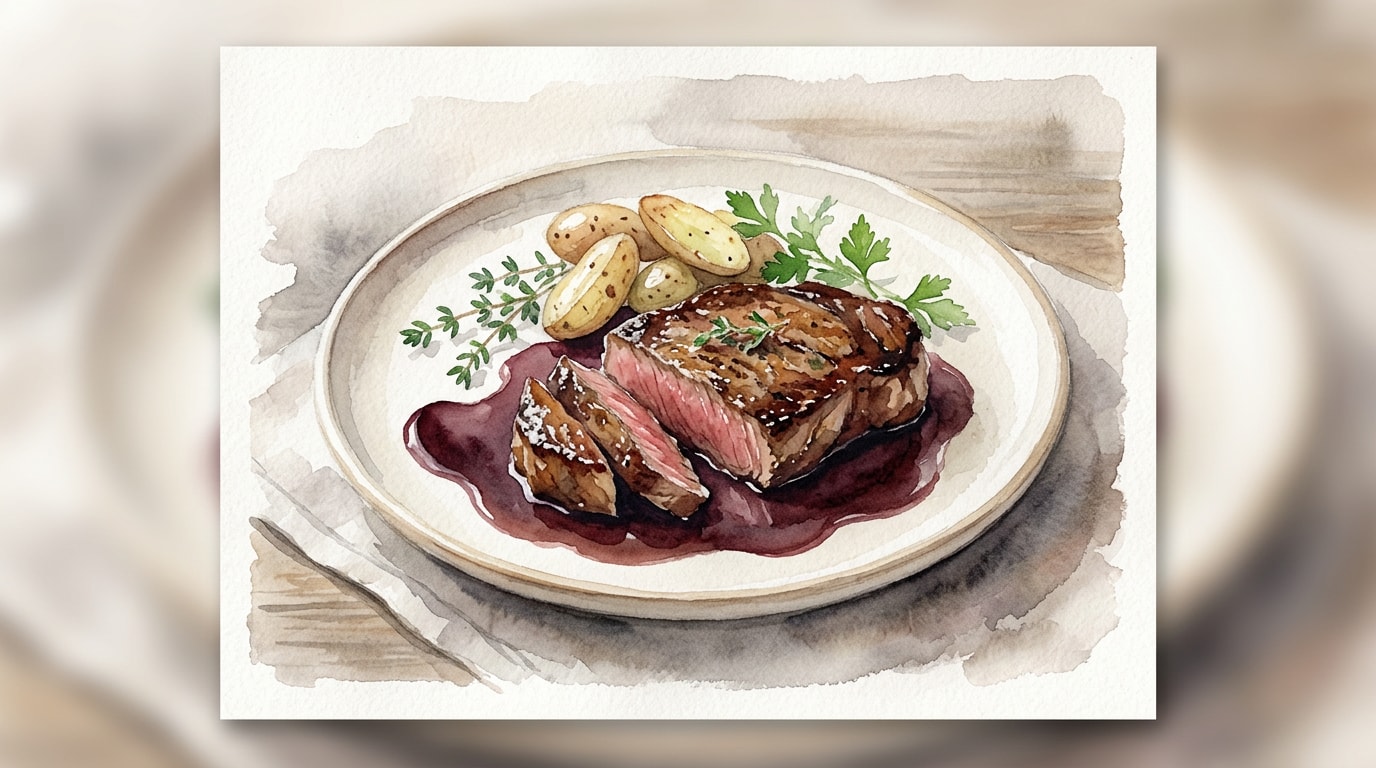
Slice the rested steaks against the grain. Transfer to warm dinner plates and immediately spoon the finished red wine and cognac pan sauce generously over the top.
Chef's Notes
- Patting the steak completely dry is non-negotiable. Surface moisture turns to steam in the pan, actively preventing the high-temperature Maillard reaction needed for a perfect crust.
- For the highest quality pan sauce, avoid using non-stick skillets. A traditional stainless steel or well-seasoned cast iron pan is necessary to build up the flavorful browned fond on the bottom.
- Safety first when flambeing: Never pour alcohol straight from the bottle into a hot pan, as the flame can travel up the stream. Always measure it into a small cup first, and remove the pan from the burner before adding the alcohol.
Storage
Refrigerator: 3 days — Store steak and sauce separately. The butter in the sauce will harden when chilled.
Reheating: Gently reheat the steak in a pan over low heat until just warmed through. Reheat sauce separately over very low heat, whisking constantly to prevent breaking.