Equipment
Ingredients
Duck and Cure
- 4 duck legs, skin on
- 4 duck wings, skin on
- 40 g coarse sea salt
- 5 g black peppercorns, crushed
- 4 garlic, smashed
- 5 g fresh thyme, sprigs
- 3 bay leaves, crumbled
Cooking Liquid
- 1000 g rendered duck fat, melted
Nutrition (per serving)
Method
Combine the coarse sea salt, crushed peppercorns, smashed garlic cloves, thyme sprigs, and crumbled bay leaves in a mixing bowl.
Rub the salt mixture evenly over the duck legs and wings. Wash your hands and all surfaces thoroughly after handling the raw poultry. Place the duck in a shallow dish, cover tightly, and refrigerate for exactly 24 hours to cure.
Remove the duck from the refrigerator. Rinse each piece thoroughly under cold running water to remove all the salt and herbs. Pat the duck perfectly dry with paper towels.
Preheat the oven to 110°C/225°F. Place the rendered duck fat into a heavy Dutch oven and melt it over low heat on the stovetop.
Submerge the dried duck pieces completely in the melted fat. Bring to a gentle, bare simmer, then cover the Dutch oven and transfer it to the preheated oven. Ensure the internal meat temperature reaches at least 74°C/165°F during cooking. Cook for 2.5 to 3 hours.
Remove the pot from the oven. Let the duck cool completely while submerged in the fat at room temperature. For optimal flavor and texture preservation, refrigerate the duck in its fat for at least 24 hours before serving.
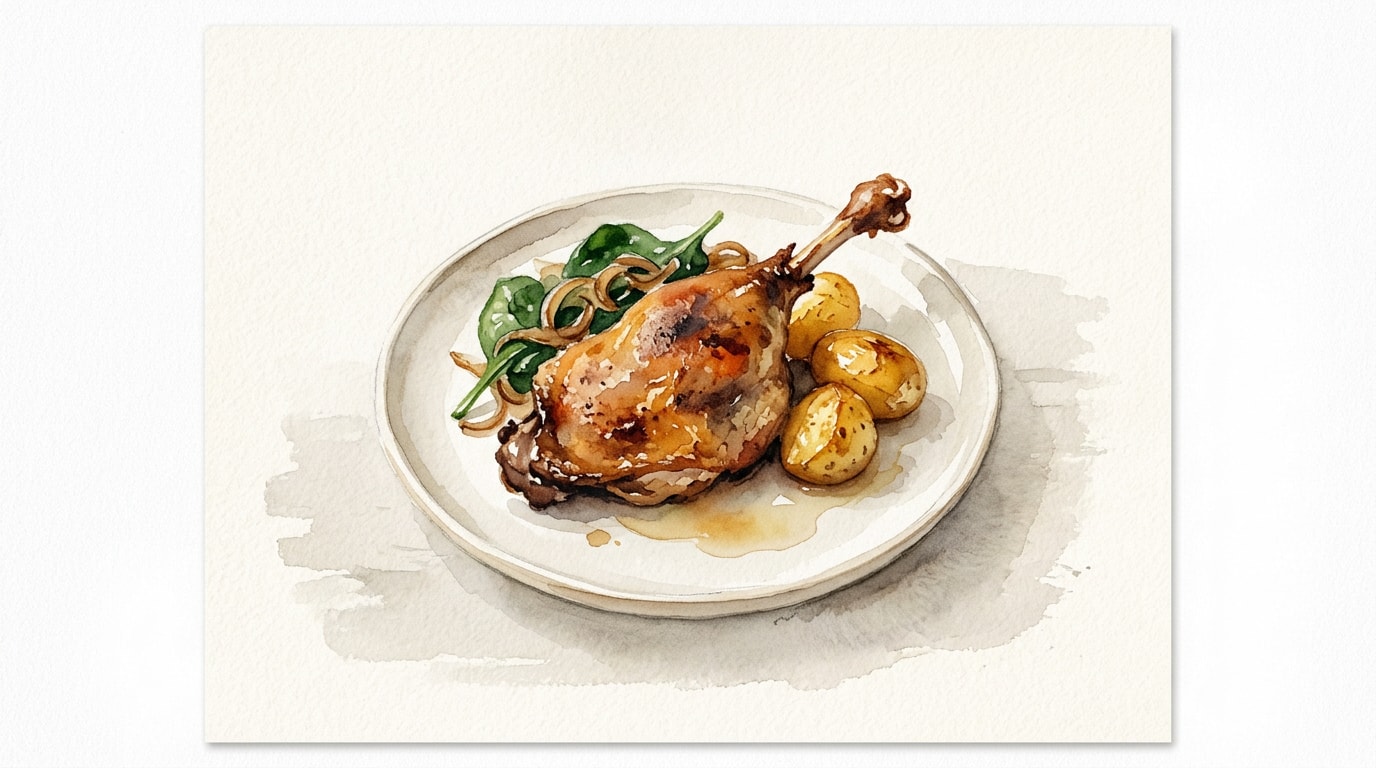
When ready to serve, carefully extract the duck pieces from the solidified fat. Heat a skillet over medium-high heat with a spoonful of the fat. Sear the duck, skin-side down, for 5 to 8 minutes until deeply crispy. Flip and heat the meat through.
Chef's Notes
- Properly curing the duck draws out moisture, which concentrates flavor and acts as a crucial preservative step.
- Always ensure the duck is completely submerged in fat during cooking and storage. Any exposed meat will dry out and invite bacterial growth.
- Save the leftover duck fat. It takes on incredible savory notes from the duck juices and garlic, making it the ultimate cooking fat for roasting potatoes or searing root vegetables.
- The dark jelly that settles at the bottom of the fat after cooking is pure duck glace. Carefully separate it from the fat to dramatically enrich your sauces and soups.
Storage
Refrigerator: 1 month — Must be completely submerged in solidified duck fat to prevent spoilage.
Freezer: 6 months — Freeze directly in the solidified duck fat.
Reheating: Reheat by searing in a skillet or roasting in a 200C oven until skin is crisp.