Equipment
Ingredients
Duck and Cure
- 1000 g duck legs, whole, skin on
- 30 g coarse sea salt
- 4 garlic, peeled and smashed
- 10 g fresh thyme, whole sprigs
- 5 g black peppercorns, lightly crushed
- 2 bay leaves, crumbled
Cooking Medium
- 900 g rendered duck fat
Nutrition (per serving)
Method
Place the duck legs in a glass baking dish. Evenly massage the coarse sea salt, smashed garlic, crushed peppercorns, fresh thyme, and crumbled bay leaves all over the meat and skin.
Cover the dish tightly and place it in the refrigerator to cure for exactly 24 hours to draw out moisture and penetrate the meat with flavor.
Remove the duck legs from the refrigerator. Rinse them thoroughly under cold running water to wash away all the salt and spices.
Use paper towels to aggressively pat the duck legs completely dry. Any remaining water will cause the hot fat to splatter and boil rather than confit smoothly.
Preheat your oven to 120C or 250F.
Place the rendered duck fat in a dutch oven over low heat until completely melted and clear.
Carefully submerge the dried duck legs in the melted fat. They must be entirely covered by the fat.
Transfer the dutch oven to the preheated oven. Cook uncovered for 3 hours until the meat is exceedingly tender and yields immediately when pierced with a skewer.
Carefully remove the duck legs from the hot fat using tongs, letting the excess fat drip back into the pot. Let them rest for a few minutes on a wire rack.
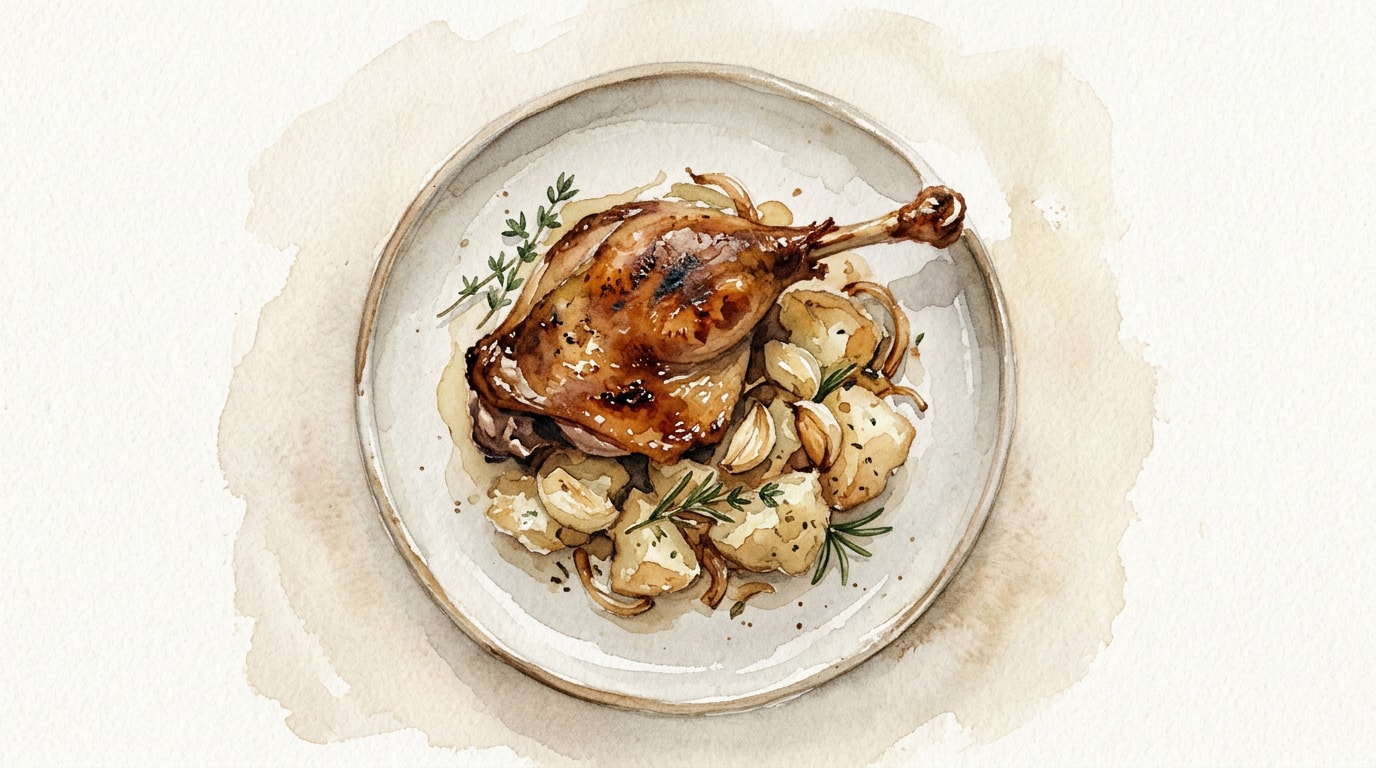
Heat a skillet over medium high heat. Place the duck legs skin-side down and sear until the skin becomes uniformly golden and shatters when tapped. Ensure the internal temperature reaches at least 74C or 165F before serving.
Chef's Notes
- Retain the precious duck fat after cooking. Let it cool, strain it through a fine sieve or cheesecloth, and keep it in the refrigerator. You can reuse it for future batches of confit or for roasting the greatest potatoes of your life.
- If you wish to store the confit rather than eat it immediately, transfer the cooked legs to a sterile container and pour the strained, clear fat over them until entirely submerged. As long as no meat is exposed to air, it will keep for weeks.
- The 24 hour curing step is absolute non-negotiable magic. It seasons the meat deeply to the bone while modifying the protein structure slightly, resulting in that iconic dense, flaking texture.
- Always exercise caution regarding cross-contamination when handling raw duck, washing your hands thoroughly and ensuring the final serving temperature reaches safe poultry limits.
Storage
Refrigerator: 1 month — Must be completely submerged in solidified duck fat to safely keep for 1 month.
Freezer: 6 months — Remove from fat and vacuum seal before freezing.
Reheating: Reheat by searing skin-side down in a skillet over medium heat until crisp and warmed through, ensuring an internal temperature of 74C/165F.