Equipment
Ingredients
Dish Preparation
- 15 g unsalted butter, softened to room temperature
- 15 g parmesan cheese, finely grated
Soufflé Base
- 45 g unsalted butter
- 45 g all-purpose flour
- 300 ml whole milk, cold
- 5 g dijon mustard
- 3 g kosher salt
- 1 g ground nutmeg, freshly grated preferred
- 1 g cayenne pepper
- 150 g gruyère cheese, coarsely grated
- 4 egg yolks, room temperature
Meringue
- 5 egg whites, room temperature
- 1 g cream of tartar
Nutrition (per serving)
Method
Preheat oven to 200 degrees Celsius (400 degrees Fahrenheit). Position the baking rack in the lower third of the oven.
Using a pastry brush, generously coat the inside of the soufflé dish with softened butter, brushing in upward strokes. Add the grated parmesan and rotate the dish to coat the bottom and sides evenly. Tip out any excess.
Melt 45g of butter in a medium saucepan over medium heat. Add the flour and whisk constantly for 2 minutes to cook out the raw flour taste without browning.
Gradually pour in the cold milk while whisking vigorously to prevent lumps. Continue to cook and whisk until the mixture comes to a boil and thickens significantly, about 3 minutes.
Remove the saucepan from the heat. Whisk in the Dijon mustard, salt, nutmeg, and cayenne pepper. Stir in the grated Gruyère cheese until fully melted and incorporated.
Allow the cheese base to cool for 2 minutes. Briskly whisk in the egg yolks one at a time until completely smooth. Transfer this base to a large mixing bowl.
In a meticulously clean stand mixer bowl, whip the egg whites and cream of tartar on medium speed until frothy, then increase speed to high. Whip until medium-stiff, glossy peaks form.
Vigorously stir one-third of the whipped egg whites into the warm cheese base to lighten it. Using a silicone spatula, gently fold in the remaining egg whites in two additions, taking care not to deflate the mixture.
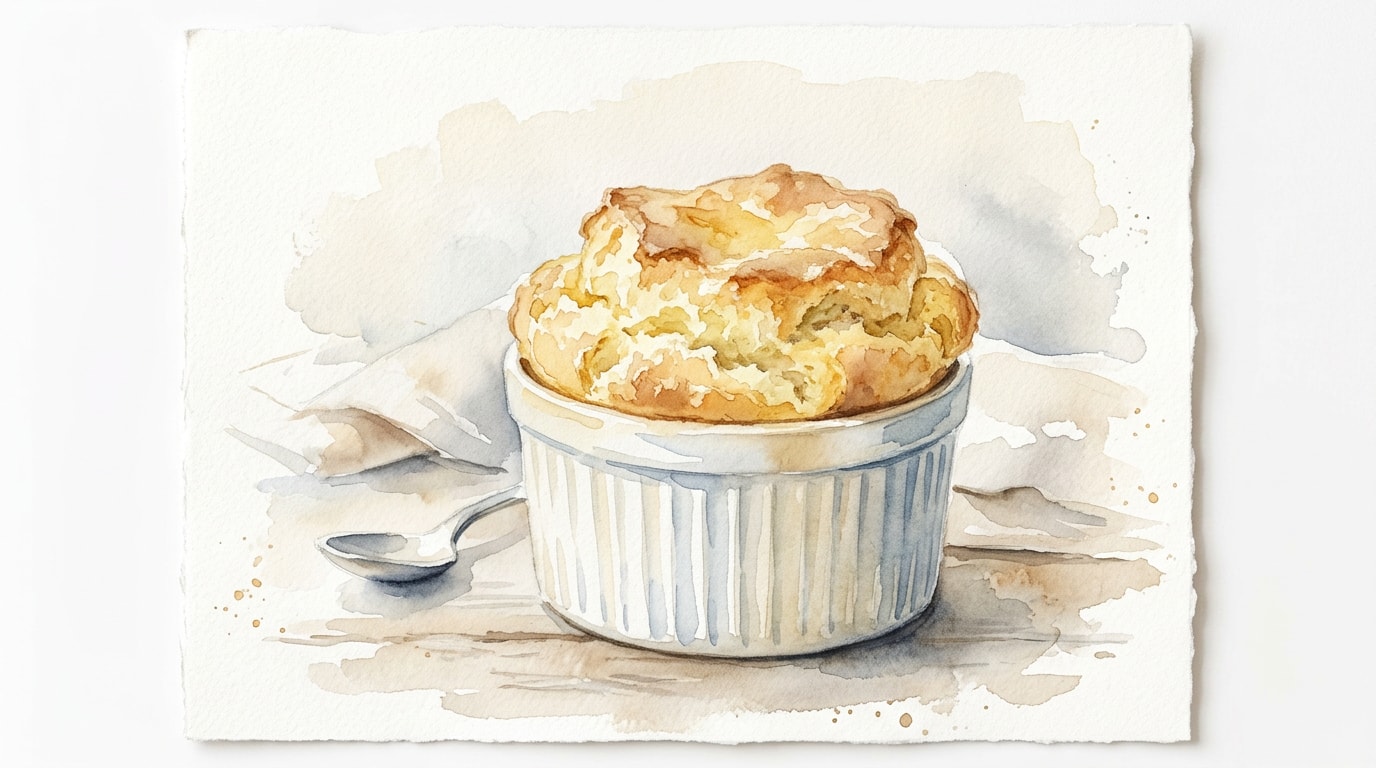
Gently pour the folded mixture into the prepared soufflé dish. Run your thumb roughly 2 centimeters deep around the inside rim of the dish to create a top hat effect. Bake for 25 to 30 minutes. Do not open the oven door during baking. The internal temperature must reach at least 71 degrees Celsius (160 degrees Fahrenheit) for food safety.
Remove the soufflé from the oven and serve immediately at the table before it begins to deflate.
Chef's Notes
- Room temperature eggs separate more easily when cold, but the whites whip to a much greater volume when allowed to sit at room temperature for 30 minutes prior to whipping.
- A heavy-bottomed saucepan is essential for the béchamel to prevent scorching the roux, which would give the soufflé an acrid, bitter undertone.
- The initial sacrifice of one-third of the egg whites is crucial. This tempers the density of the cheese base, ensuring the remaining delicate whites can be incorporated without being crushed.
- Your oven's bottom heat drives the rise of the soufflé. Positioning the rack in the lower third maximizes this heat transfer directly to the base of the dish.