Equipment
Ingredients
Beans and Preparation Liquids
- 500 g dried tarbais beans
- 2000 ml cold water
Meats
- 4 duck confit legs
- 400 g toulouse sausages, pricked lightly with a fork
- 250 g unsmoked pork belly, cut into 5cm chunks
- 150 g pork skin
Aromatics and Cooking Liquids
- 30 g duck fat, melted
- 2 yellow onion, diced
- 2 carrot, diced
- 6 garlic clove, peeled and smashed
- 1 bouquet garni
- 1000 ml low-sodium chicken broth, warm
Nutrition (per serving)
Method
Place the dried tarbais beans in a large mixing bowl and cover with the cold water. Allow them to soak at room temperature for at least 12 hours.
In a large pot, blanch the pork skin in boiling water for 15 minutes to soften it and remove impurities. Drain, rinse under cold water, and set aside.
Melt the duck fat in a large skillet over medium heat. Sear the Toulouse sausages and pork belly chunks until deeply golden brown on all sides. Use a slotted spoon to transfer the meats to a plate. Briefly warm the duck confit legs in the same skillet to render their exterior fat, then remove them.
In the remaining fat in the large skillet, saute the diced onions, carrots, and smashed garlic cloves over medium-low heat until softened and lightly caramelized.
Drain the soaked beans and transfer them to the large pot. Add the blanched pork skin, bouquet garni, and the sauteed vegetables. Pour in the warm chicken broth. Bring to a gentle simmer, cover, and cook for 1 hour.
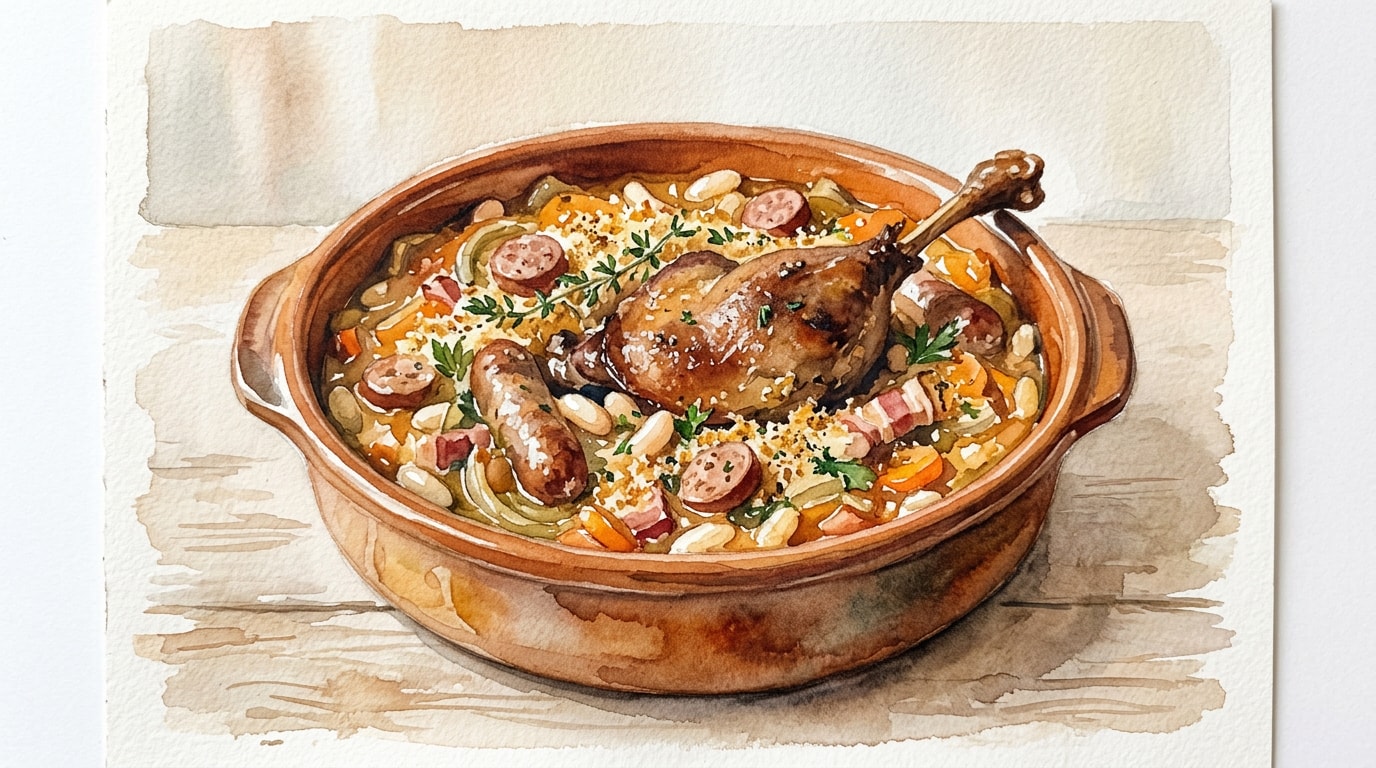
Preheat the oven to 160 C (320 F). In a Dutch oven, arrange the pork skin flat on the bottom. Add half of the simmering beans and vegetables with a slotted spoon. Nestle the sausages, pork belly, and duck confit tightly into the center. Cover with the remaining beans. Gently pour the simmering broth over the top until the beans are just submerged.
Bake uncovered at 160 C (320 F) for 3 hours. A dark crust will form on the surface. Every hour, use the back of a spoon to gently press the crust down into the liquid, allowing a new crust to form. Verify the raw pork sausages reach an internal temperature of at least 74 C (165 F). If the cassoulet appears too dry, add a splash of reserved broth or warm water.
Remove the Dutch oven from the heat and let the cassoulet rest uncovered for 20 minutes before serving. The liquid will continue to thicken and absorb into the beans as it cools.
Chef's Notes
- The true secret to a magnificent cassoulet crust lies in the natural gelatin extracted from the pork skin. Never skip the rind, as it provides the crucial body that distinguishes a cassoulet from a standard bean stew.
- Breaking the crust is a time-honored tradition. Folklore suggests breaking it seven times, but three times over a three-hour bake perfectly mixes the rendered duck and pork fats back into the beans without turning them to mush.
- Tarbais beans are the absolute gold standard for this dish because of their remarkably thin skin and creamy interior that absorbs massive amounts of fat without disintegrating.
- Handle raw pork with extreme care to avoid cross-contamination. Always wash hands, utensils, and surfaces immediately after coming into contact with the raw sausages and pork belly.
Storage
Refrigerator: 5 days — Flavors deepen and improve significantly after 1 to 2 days of cold storage.
Freezer: 3 months — Freeze without the crust. Thaw overnight in the refrigerator before reheating.
Reheating: Reheat gently in an oven at 150 C / 300 F until bubbling and a minimum internal temperature of 74 C / 165 F is reached.