Equipment
Ingredients
Meat
- 1000 g beef chuck roast, trimmed and cut into 4cm cubes
- 150 g thick-cut bacon, cut into lardons
Aromatics & Fat
- 30 g unsalted butter
- 600 g yellow onions, thinly sliced
- 3 garlic cloves, minced
Liquids & Braising
- 330 ml belgian dark ale, room temperature
- 250 ml beef broth, low-sodium
- 15 ml apple cider vinegar
Thickeners & Flavorings
- 15 g dark brown sugar
- 4 fresh thyme sprigs
- 2 bay leaves
- 1 crusty rustic bread
- 30 g dijon mustard
- kosher salt
- black pepper, freshly ground
Nutrition (per serving)
Method
Preheat your oven to 150°C (300°F). Pat the beef chunks completely dry with paper towels, ensuring you wash your hands and sanitize any surfaces immediately after handling the raw meat to prevent cross-contamination. Season the beef generously on all sides with kosher salt and black pepper.
Heat the unsalted butter in a heavy-bottomed Dutch oven over medium-high heat. Using tongs, sear the seasoned beef chunks in batches to avoid crowding the pan. Sear until a deep brown crust forms on all sides, about 5 to 7 minutes per batch. Transfer the seared meat to a large plate.
Lower the heat to medium. Add the thick-cut bacon lardons (if using) and sliced onions to the remaining fat in the pot. Cook slowly, stirring occasionally with a wooden spoon, until the onions are deeply caramelized, soft, and sweet.
Pour the Belgian dark ale into the pot to deglaze it. Use your wooden spoon to scrape up all the browned bits (fond) stuck to the bottom of the pot. Allow the beer to vigorously bubble and reduce by about one-third.
Return the seared beef and any resting juices from the plate back into the Dutch oven. Stir in the beef broth, minced garlic, dark brown sugar, apple cider vinegar, fresh thyme sprigs, and bay leaves. Bring the mixture back to a gentle simmer.
Spread a generous, even layer of Dijon mustard over one side of the crusty rustic bread slice. Place the bread gently, mustard-side down, directly on top of the simmering stew.
Cover the Dutch oven with its lid and transfer it to the preheated 150°C (300°F) oven. Braise undisturbed until the beef is meltingly tender. Ensure the internal temperature of the beef reaches at least 90°C (195°F) for proper collagen breakdown, safely exceeding the 71°C (160°F) minimum safety threshold for beef.
Remove the pot from the oven. The bread should be mostly dissolved into the liquid. Stir the stew gently with a wooden spoon to fully incorporate the dissolved bread, which thickens the sauce to a velvety consistency. Discard the thyme sprigs and bay leaves, adjust seasoning if necessary, and let it rest for 10 minutes before serving.
Chef's Notes
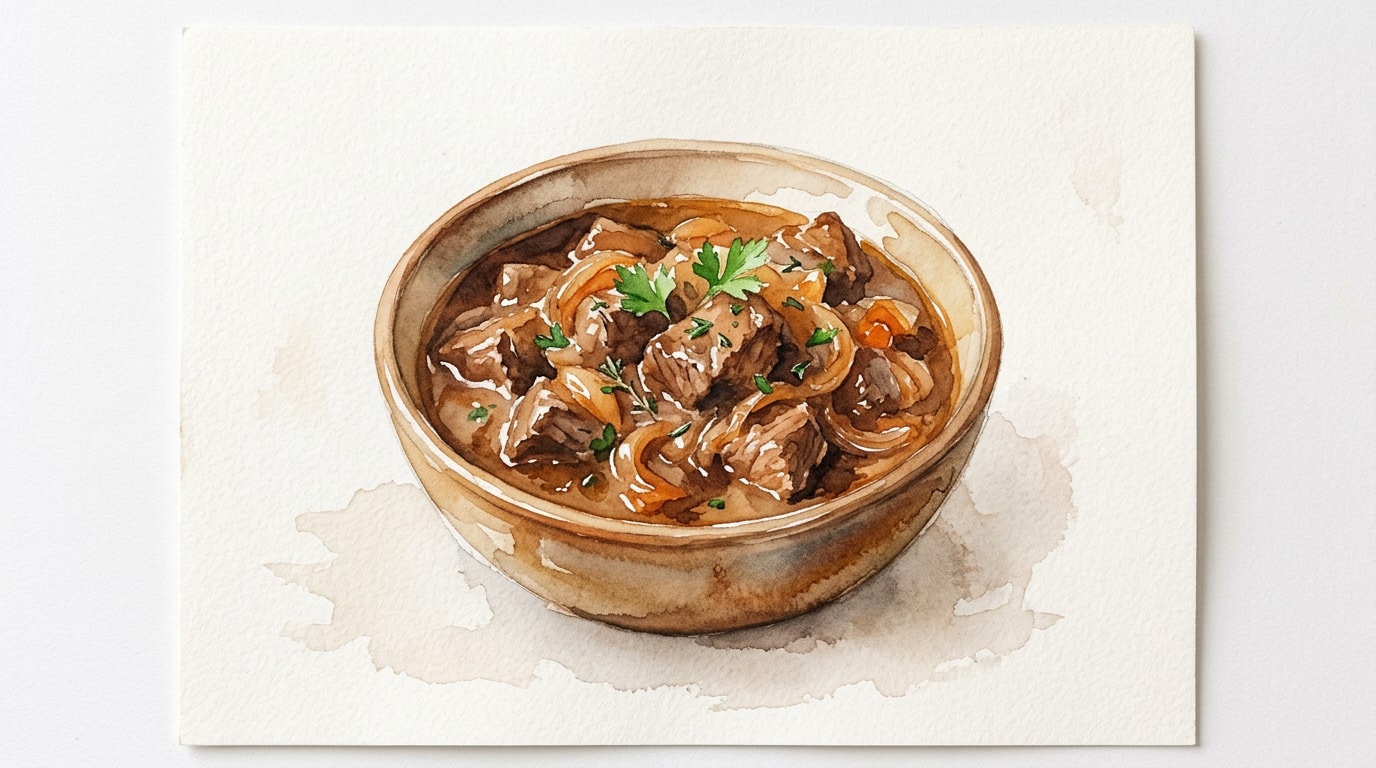
- The choice of beer is the most critical element of Carbonnade Flamande. Avoid anything hoppy or overly roasted. Look for a Belgian Dubbel, an Oud Bruin, or a classic Abbey ale for the correct malty sweetness that defines the dish.
- Do not rush the onion caramelization process. The natural sugars released from the onions form the foundational flavor base that perfectly balances the subtle bitterness of the beer.
- Carbonnade famously tastes better the next day. Making this 24 hours in advance allows the complex flavors of the mustard, beer, and herbs to meld and deepen significantly.
- While it is traditional to use a mustard-smeared slice of bread as a thickener, you can elevate the dish by using a slice of pain d'epices (French spice bread) or stirring in a crumbled speculoos cookie for a highly authentic Flemish touch.
Storage
Refrigerator: 4 days — Flavors deepen significantly on the second and third days, making it an ideal make-ahead dish.
Freezer: 3 months — Freeze in an airtight container. The sauce may need a splash of water when reheating to restore texture.
Reheating: Reheat gently on the stovetop over medium-low heat until bubbling and heated through.