Equipment
Ingredients
Suet Pastry
- 350 g self-raising flour
- 175 g beef suet, shredded
- 5 g sea salt
- 200 ml cold water
Filling
- 600 g beef braising steak, diced into 2.5cm pieces
- 200 g beef kidney, cored and diced into 1.5cm pieces
- 30 g all-purpose flour
- 4 g sea salt
- 2 g black pepper, freshly ground
- 2 g fresh thyme, leaves only, finely chopped
- 150 g onion, finely chopped
- 150 ml beef stock, cold
- 15 ml worcestershire sauce
Nutrition (per serving)
Method
Prepare the kidneys by snipping out the white fatty core with kitchen scissors, then dice into small pieces. Dice the beef into bite-sized chunks.
In a large mixing bowl, combine the all-purpose flour, salt, black pepper, and thyme. Add the diced beef and kidney, tossing well until all the meat is evenly coated with the seasoned flour.
To make the pastry, mix the self-raising flour, shredded suet, and salt in a bowl. Gradually add the cold water, mixing with a butter knife or cold hands until it comes together into a soft, slightly elastic dough.
Lightly grease the pudding basin. Roll out three-quarters of the suet dough on a floured surface until it is about 1cm thick. Carefully drop it into the basin, pressing gently to line the sides and leaving a slight overhang at the rim.
Layer the floured meat mixture and finely chopped onions into the pastry-lined basin, pressing down gently to pack it together.
Mix the cold beef stock with the Worcestershire sauce and pour it over the meat. The liquid should come up just below the top level of the meat, leaving about 2cm of empty space from the top edge of the pastry.
Roll out the remaining quarter of the dough to form a lid. Brush the overhanging pastry edges with cold water, place the lid on top, and press the edges firmly together to seal tightly. Trim any excess dough.
Cut a large square of baking parchment and a matching square of aluminum foil. Fold a pleat down the center of both. Place the parchment over the basin, followed by the foil. Tie securely under the basin rim with kitchen string, knotting a loop over the top to create a handle.
Place an inverted heatproof saucer at the bottom of the large heavy-bottomed pot to protect the basin from direct heat, then carefully lower the sealed basin onto it. Pour in boiling water until it reaches halfway up the side of the basin. Cover the pot with a tight-fitting lid.
Steam over a gentle simmer at 100 degrees C or 212 degrees F for exactly 4 hours. Check the water level every 45 minutes, topping up with more boiling water as necessary so the pot does not boil dry.
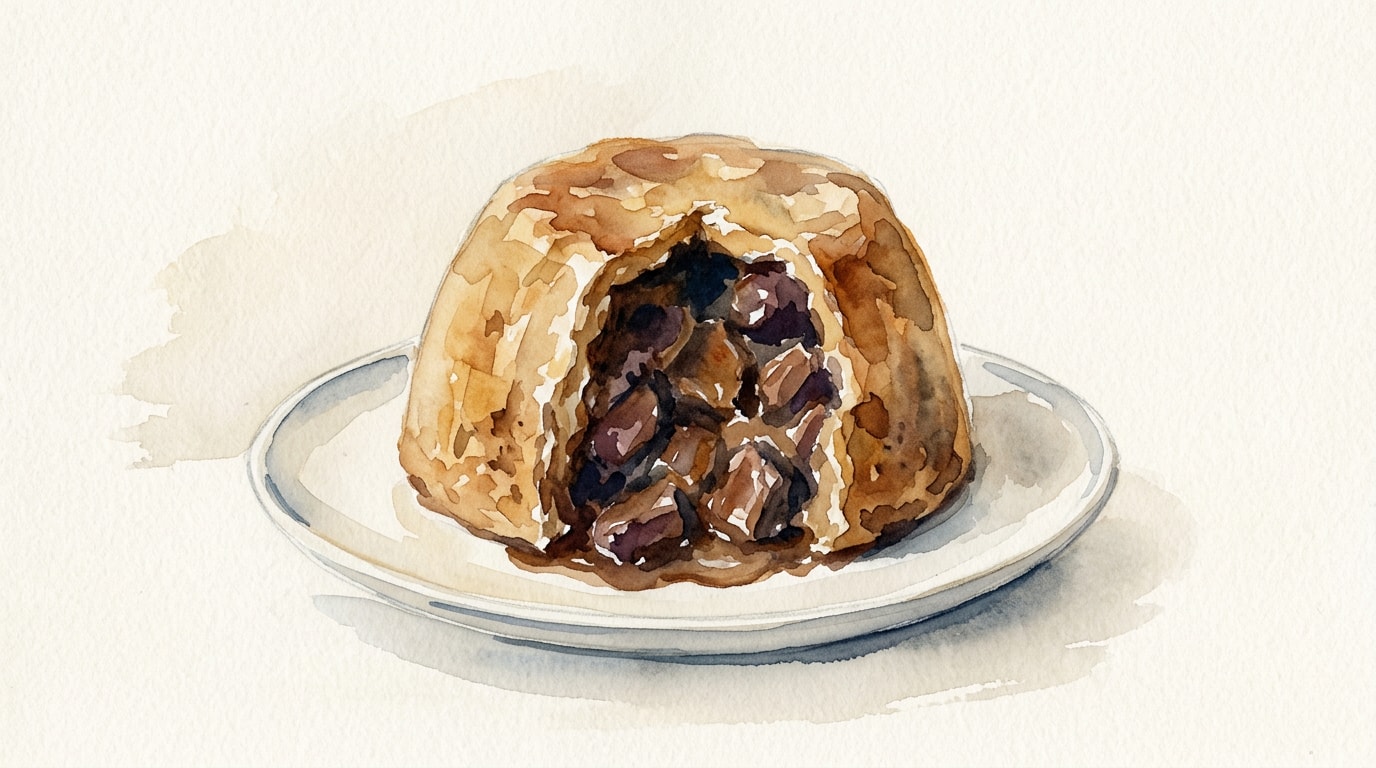
Using the string handle, carefully lift the pudding from the pot. Let it rest for 10 minutes before removing the string, foil, and parchment. Serve directly from the basin by scooping through the crust to reveal the filling.
Chef's Notes
- Leaving a substantial pleat in your parchment and foil is mandatory. Suet pastry expands significantly as it steams; a tight cover will restrict this rise and result in a dense crust.
- Removing the white central core from the kidneys is essential. Leaving it in will impart a chewy texture and an unpleasantly strong ammonia flavor to your gravy.
- The addition of flour to the raw meat before assembly is the secret to a thick, luscious gravy. As the pudding steams, the meat juices mix with the stock and flour, thickening naturally inside the pastry shell.
- Never let the steaming pot boil dry. Doing so will burn the bottom of your pudding basin and impart a scorched flavor to the entire dish. Keep a kettle of hot water nearby for easy top-ups.
Storage
Refrigerator: 3 days — Wrap tightly to prevent the suet pastry from drying out in the cold air.
Freezer: 3 months — Can be frozen whole or in individual slices once fully cooled.
Reheating: Steam for 45 minutes or microwave covered until piping hot throughout.