Equipment
Ingredients
Lamb and Seasoning
- 800 g lamb shoulder, diced into 3cm cubes
- 30 g plain flour
- 5 g fine sea salt
- 2 g black pepper, freshly ground
- 30 ml olive oil
Aromatics and Vegetables
- 200 g yellow onion, diced
- 200 g carrots, peeled and sliced
- 100 g celery, diced
- 15 g garlic, minced
- 400 g waxy potato, cubed
Liquids and Herbs
- 150 ml dry white wine
- 750 ml chicken stock, low sodium
- 5 g fresh rosemary, whole sprigs
- 5 g fresh thyme, whole sprigs
- 2 bay leaf
Nutrition (per serving)
Method
In a large mixing bowl, toss the diced lamb shoulder with the plain flour, fine sea salt, and black pepper until the meat is evenly coated.
Heat the olive oil in a Dutch oven over medium-high heat. Add the lamb pieces in batches, searing until deeply browned on all sides, about 8 minutes per batch. Transfer the browned lamb to a clean plate and set aside.
Lower the heat to medium. Add the diced yellow onion, sliced carrots, and diced celery to the pot. Sauté until the onions are softened and translucent, about 5 to 7 minutes.
Add the minced garlic and cook for 1 minute until fragrant. Pour in the dry white wine to deglaze the pot, using a wooden spoon to vigorously scrape up all the flavorful browned bits from the bottom. Simmer until the wine has reduced by half.
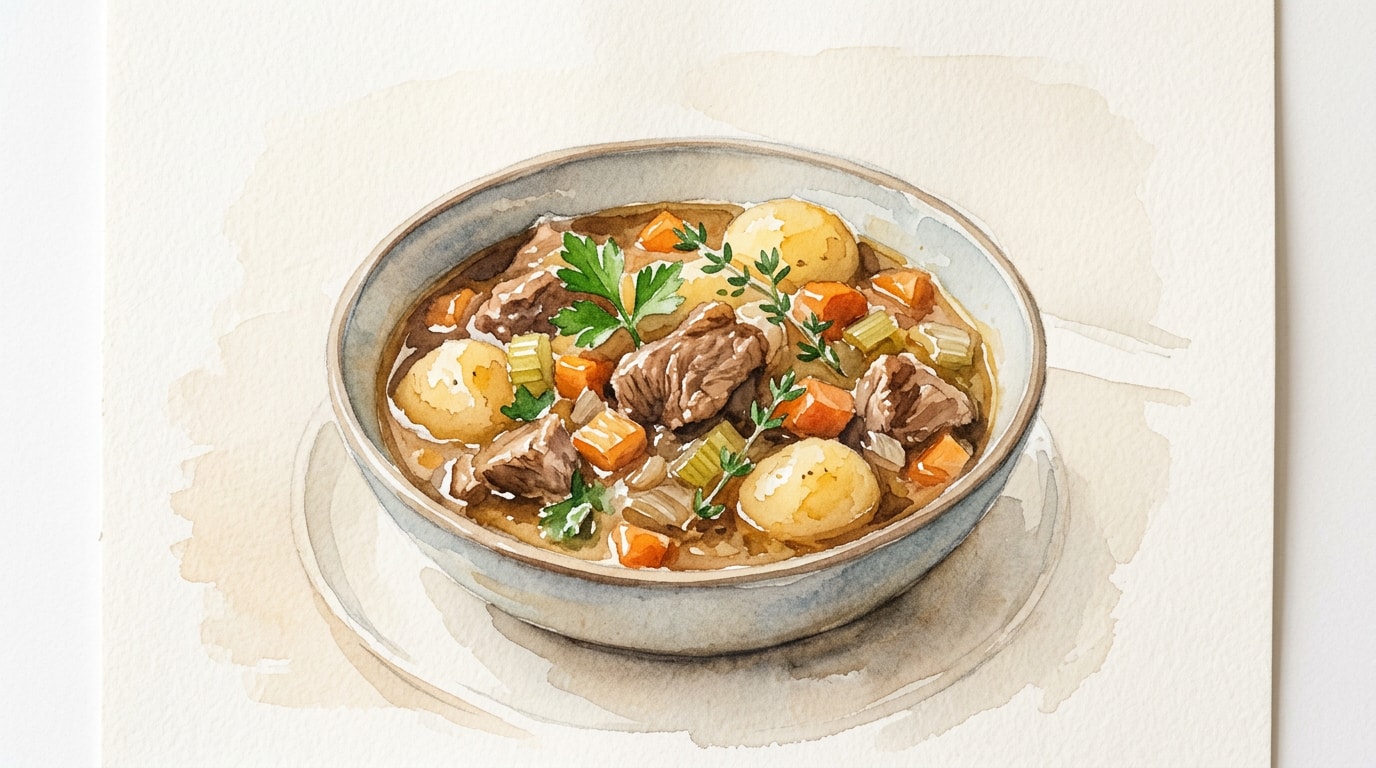
Return the seared lamb and any resting juices to the pot. Pour in the chicken stock and add the fresh rosemary, fresh thyme, and bay leaves. Bring the liquid to a boil, then immediately reduce the heat to low to maintain a gentle simmer around 90°C/195°F. Cover tightly and cook for 1 hour.
Stir in the cubed waxy potatoes. Cover and continue to simmer for another 30 to 40 minutes, or until the potatoes are tender and the lamb is falling apart. The lamb will reach well above the safe internal temperature of 74°C/165°F during this long braise.
Remove the pot from the heat. Carefully fish out and discard the rosemary stems, thyme stems, and bay leaves. Let the stew rest uncovered for 10 minutes before serving so the sauce can settle and thicken slightly.
Chef's Notes
- Using a dry white wine instead of the standard red wine keeps the flavor profile lighter and allows the delicate, pastoral flavor of the lamb to shine through without becoming overly heavy or muddy.
- Lamb shoulder is heavily marbled with fat and connective tissue. Searing it thoroughly not only builds a deep flavor base through the Maillard reaction but also helps render out some of the excess surface fat.
- To achieve a beautifully clear stew, skim off any excess fat or grey foam that rises to the surface during the first 15 minutes of simmering the stock.
- Stews like this always taste noticeably better on the second day. The overnight resting period in the refrigerator allows the natural gelatin from the meat to set and gives the aromatic compounds time to fully intermingle.
Storage
Refrigerator: 4 days — Store in an airtight container. The flavor improves significantly on the second day.
Freezer: 3 months — Freeze in portion-sized containers. Thaw overnight in the refrigerator before reheating.
Reheating: Reheat gently in a saucepan over medium-low heat until bubbling and heated completely through.