Equipment
Ingredients
Meat
- 1000 g beef chuck, cut into 4cm cubes
Rempah (Spice Paste)
- 25 g dried chilies, deseeded and soaked in hot water
- 150 g shallots, roughly chopped
- 30 g garlic, peeled
- 30 g ginger, peeled and sliced
- 50 g galangal, peeled and sliced
- 4 lemongrass, bottom white parts only, sliced
- 20 g fresh turmeric, peeled and sliced
- 45 ml vegetable oil
Simmering Liquids & Aromatics
- 800 ml coconut milk, full fat
- 6 makrut lime leaves, bruised and torn slightly
- 1 cinnamon stick
- 2 star anise
- 4 cardamom pods, lightly crushed
- 4 cloves
- 30 g tamarind paste, diluted in 20ml warm water
Seasoning & Kerisik
- 100 g unsweetened desiccated coconut, dry toasted and pounded
- 30 g palm sugar, chopped
- 10 g kosher salt
Nutrition (per serving)
Method
Place the unsweetened desiccated coconut in a dry frying pan over medium-low heat. Toast continuously until it turns a deep, dark golden brown. Transfer to a mortar and pestle or a clean food processor and pound or process until it releases its natural oils and forms an oily paste called kerisik.
Place the soaked dried chilies, shallots, garlic, ginger, galangal, lemongrass, and fresh turmeric into a food processor. Add the vegetable oil and blend until a very smooth, homogeneous paste is formed.
Transfer the blended spice paste to a heavy-bottomed wok or Dutch oven over medium heat. Add the cinnamon stick, star anise, cardamom pods, and cloves. Saute the mixture until highly fragrant and the oil begins to separate and pool at the edges of the paste.
Add the cubed beef to the wok. Stir thoroughly to coat the meat evenly in the spice paste. Cook until the exterior of the beef loses its raw color and lightly browns, ensuring a safe cooking start for the raw protein.
Pour in the coconut milk, diluted tamarind paste, and add the torn makrut lime leaves. Stir gently to combine everything, scraping the bottom of the wok to release any stuck spices. Bring the mixture to a gentle boil at around 100C/212F.
Reduce the heat to low to maintain a gentle simmer at roughly 90C/195F. Leave uncovered. Stir occasionally, every 15 to 20 minutes, to ensure the bottom does not burn. Cook until the liquid has heavily reduced, thickened, and the beef has reached a safe internal braising temperature well over 74C/165F and begins to tenderize.
Stir in the prepared kerisik, palm sugar, and salt. Continue cooking over low heat as the remaining moisture fully evaporates. The coconut milk will eventually split, turning into clear oil. The meat and spices will begin to fry in this highly spiced oil.
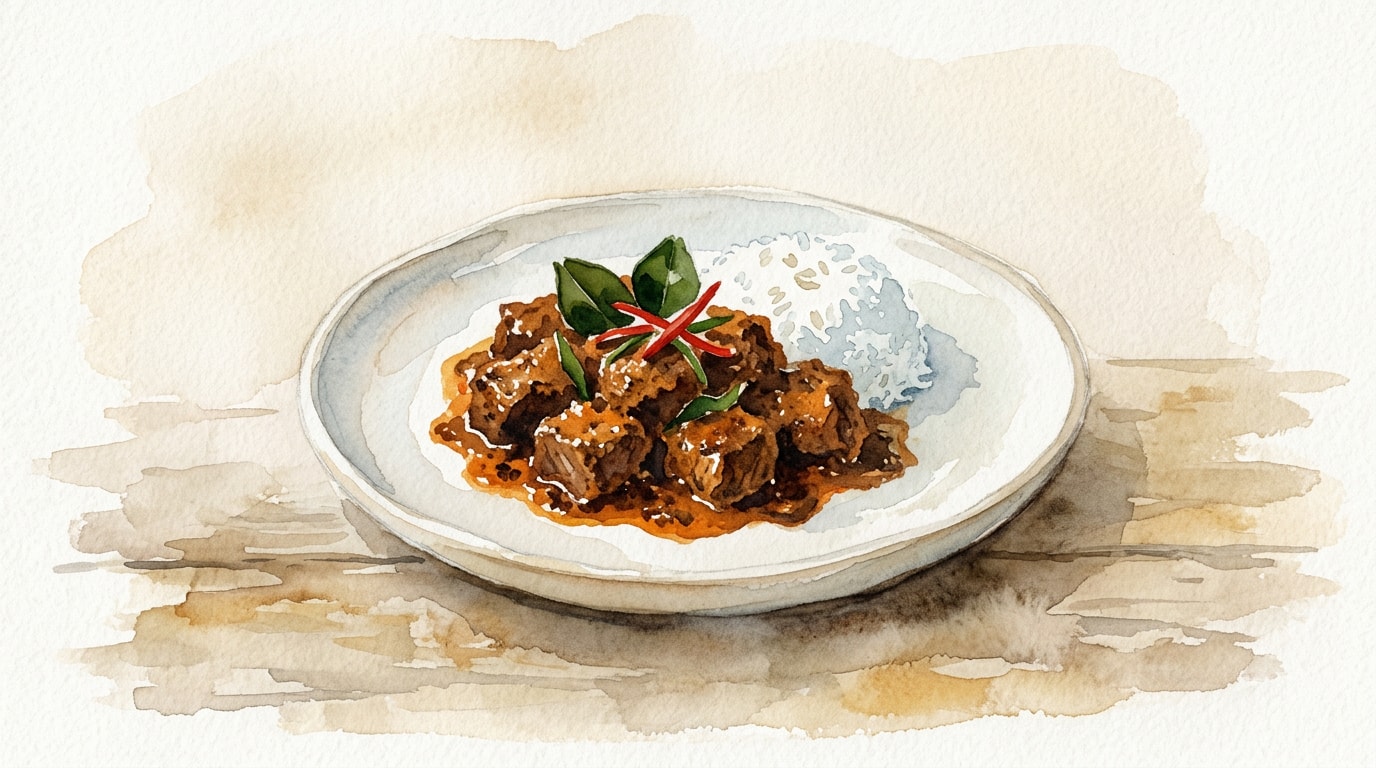
Stir continuously during this final stage. Scrape the bottom and sides to fold the darkening spice paste back over the meat, preventing bitter scorching. Cook until the beef is extremely tender and coated in a dark, dry, deeply caramelized crust. Remove from heat and rest before serving.
Chef's Notes
- The kerisik (toasted coconut paste) is the secret to an authentic rendang. Take your time toasting the coconut until it is deeply brown; pale coconut will result in a flat flavor.
- Galangal is woody and tough to blend. Slice it as thinly as possible across the grain before processing to prevent tough fibers from ruining your paste.
- Rendang technically isn't a curry, but a slow-cooking method. The dish transforms from boiling, to simmering, to frying in its own fats. The final frying stage requires constant vigilance.
- Do not use lean cuts of beef. Chuck, shin, or brisket are essential because their high collagen content breaks down during the long cook, keeping the meat succulent.
Storage
Refrigerator: 1 week — Store in an airtight container. The flavors deepen significantly after resting for a day or two.
Freezer: 3 months — Freeze in portion-sized airtight containers. Thaw overnight in the refrigerator before gently reheating.
Reheating: Reheat gently in a pan over medium-low heat with a splash of water to prevent the bottom from burning, stirring frequently.